OSU’s turfgrass program hits global stage for FIFA World Cup Final
On July 19, two international soccer teams will play against each other for the FIFA World Cup Trophy at MetLife Stadium in East Rutherford, New Jersey.
The game will be the culmination of the monthlong 2026 FIFA World Cup Tournament, hosted across North America in 16 cities. It will also serve as the culmination of another accomplishment by the Oklahoma State University Turfgrass Team.
The final game will be played on Tahoma 31, a warm-season bermudagrass developed by OSU Agriculture researchers that has become the industry standard for sports complexes worldwide.
Of the 16 host venues for the games, three are played on Tahoma 31. Estadio BBVA in Monterrey, Mexico, hosted four games; six were played at Levi’s Stadium in Santa Clara, California; and eight — including the final — were held at MetLife Stadium.
Tahoma 31 isn’t the only OSU variety to grace the global stage. NorthBridge, the predecessor to Tahoma 31, was used at Arrowhead Stadium in Kansas City, Missouri, and Estadio Akron in Guadalajara, Mexico.
Of the 104 World Cup games this year, 28 were played on OSU-developed bermudagrass. And when an expected 1.5 billion people tune in to watch the final game on July 19, Tahoma 31 will be on the world stage.
“Seeing OSU-developed Tahoma 31 bermudagrass being used for the world’s biggest stage in soccer reflects years of research, innovation and dedication by our faculty and scientists to develop turfgrass that delivers exceptional performance, resilience and sustainability,” said Dr. Jayson Lusk, vice president and dean of OSU Agriculture. “This achievement showcases how land-grant university research can make a global impact, and it underscores OSU’s commitment to developing solutions that serve communities far beyond our campus.”
Athletic complexes are drawn to Tahoma 31 for several key features. With its fine texture, dark color, drought and shade tolerance, high density and cold hardiness, the bermudagrass variety is primed for high-traffic areas like a sport field.
Player safety is a crucial aspect, explained Dr. Yanqi Wu, a professor in the OSU Department of Plant and Soil Sciences. As players run and pivot quickly, Tahoma 31’s dense and solid stands provide the needed surface to prevent slipping and injuries.
“Once a high-visibility, top-notch stadium that gets a lot of traffic has success with something, things can spread like wildfire,” said Dr. Dennis Martin, OSU Extension and research turfgrass specialist. “That’s what we’ve seen with Tahoma 31. The grass is performing, and as long as it continues to perform, I think we’ll continue to see it in those facilities.”
Since its release, the list of facilities using this variety has continued to grow. Because Tahoma 31’s features are adaptable to many climates, the grass works in many locations from coast-to-coast.
Tahoma 31 isn’t new to the spotlight.
The bermudagrass variety is featured at the U.S. Capitol. The Olympics have used it. The PGA Championship has used it. Central Park, the most famous urban park in the world, uses it.
“Tahoma 31 has been used in many sports and golf facilities in many countries on six continents in the world,” Wu said. “Billions of people have watched this grass perform well on sports fields, especially in the 2026 FIFA Soccer World Cup matches. This is because Tahoma 31 combines fine turfgrass qualities with desirable resistance to some important environmental and biological stresses. It is exciting that it is used for multiple cultural landmarks.”
More than 150 golf courses across the county have added the variety. Dozens of universities have followed suit, employing the variety to varying degrees at their sports complexes.
In the 2026 NFL Players Association report card, Tahoma 31 was graded by NFL players as their favorite grass to play on, with fields in Baltimore and Philadelphia scoring the highest. Of the 10 highest-graded fields, six use OSU-developed grass.
Add FIFA World Cup Final to the ever-growing list of accolades.
Homeowners will soon be able to experience the same quality. Endarra 81, a residential bermudagrass built on drought resistance and water conservation, will be available for homeowners to purchase next year. The same team behind Tahoma 31 worked on this variety.
To continue to impact the turfgrass industry, OSU Agriculture is creating the Agronomy Discovery Center as part of the Agronomy Research Station to modernize the facilities. Plans include creating a new headhouse, research greenhouse and a multipurpose classroom and lab building.
“Conserving water is becoming increasingly important, especially in regions where drought occurs frequently,” Wu said. “Developing and using drought-resistant turfgrass varieties, such as Endarra 81, is an effective strategy to conserve irrigation water. Homeowners will enjoy Endarra 81’s fine quality and a much smaller water bill for irrigation.”
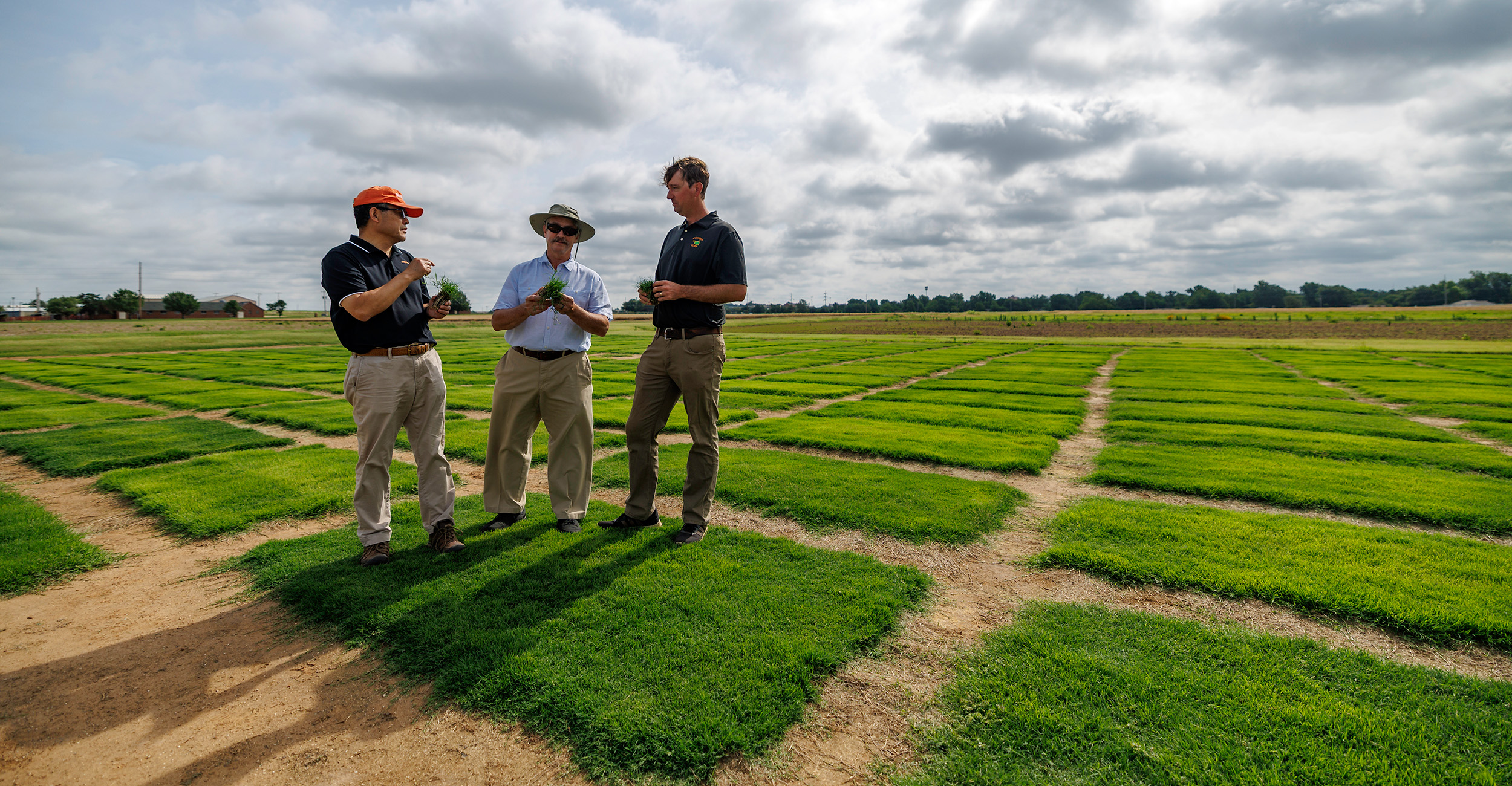
PHOTO: The World Cup Final will be played on Tahoma 31, a warm-season bermudagrass developed by OSU Agriculture researchers that has become the industry standard for sports complexes worldwide. (Photo by Mitchell Alcala, OSU Agriculture)