We are in the midst of a fundamental land-use change.

I went looking for the amount of land that hyper scale artificial intelligence data centers consume. I am not talking about the size of the buildings, but rather the infrastructure to support the centers which, in many cases, started being constructed 10 years ago.
For example, in Barber County, Kansas, the high voltage transmission line came in 10 years ago, followed by wind development and then thousands of acres of solar panels. Finally, officials permitted a 2,100-acre building for AI data. This has zero to do with generating data and everything to do with removing our ownership of land and pulling people into their cities, in my opinion.
I have been putting pieces of the puzzle together all around the country with similar strategies coming together when Secretary of Agriculture Brooke Rollins sent out a press release on Oct. 14, with the following heading:
USDA Makes Historic $3.3B Loan to Build Electric Generation Facility in Georgia
In the release, officials tried to make it sound like the best move ever for farmers and related businesses in Georgia. It just so happens that this region of Georgia is home to the fastest-growing hyper scale data center region in the nation.
Thankfully, I found the Altus Group report that provides information to potential investors in the data center industry. The Altus Group recently released an analysis called “Where value is created in data center land.” It has evaluated all local zoning ordinances in the nation and has penned the summary of where and how to build value through industrial development. Directly from their report:
In Northern Virginia, entitled land without power can sell for roughly $4 million an acre, compared with at least $6 million an acre for powered land, Andril said. Entitlements, infrastructure and other site characteristics also affect prices, so the comparison does not isolate the value of electricity alone.
“The premium is increasingly payment for uncertainty removed, not just for megawatts nearby,” said Neil Osnato, an industry analyst who has examined data center land transactions.
Data center development is moving fast, and land values are moving with it. But the pricing signals that matter most aren’t always the ones transaction records make obvious. This analysis draws on 80 verified land transactions from RCA and infrastructure data from Cliff, a platform that tracks zoning, permitting, and power interconnection data for data center sites, to identify the three variables that drive data center land value: committed power capacity at the market level, physical proximity to electrical infrastructure, and parcel size.
Sites within half a mile of a high-voltage substation trade at roughly twice the price of comparable sites two to five miles away, making infrastructure proximity a primary comp adjustment.
Combine that with a statement from Larry Fink, CEO of BlackRock and chairman of the World Economic Forum, just last week:
“If we have a moratorium of some sort in this country, we will be in a recession,” Fink told CNBC Wednesday, after BlackRock reported better-than-expected third-quarter earnings early Wednesday.
For quite some time, people have been figuring out that this has nothing to do with building AI data bases, it has nothing to do with strengthening our defense and it has nothing to do with beating China to the punch. It is 100% about taking land ownership away from American citizens, in my opinion.
Land values, even in areas seemingly not targeted for AI development, are beyond what the land will yield in production. “Retirement sales” are at an all-time high and the ag economy is being supported by the next round of payouts from the U.S. Department of Agriculture.
In closing, that wind, solar or AI data center project you hear about in your local area isn’t about creating or supporting the rural American economy. Instead, it is about a “transmission” of the men and women off the land they’ve built their family legacies upon, in my opinion. Take a stand with your neighbors and friends to put a stop to the madness.
Editor’s note: The views expressed here are the author’s own and do not represent the view of High Plains Journal. Trent Loos is a sixth generation United States farmer, host of the daily radio show, Loos Tales, and founder of Faces of Agriculture, a non-profit organization putting the human element back into the production of agriculture. Get more information at www.LoosTales.com or email Trent at [email protected]
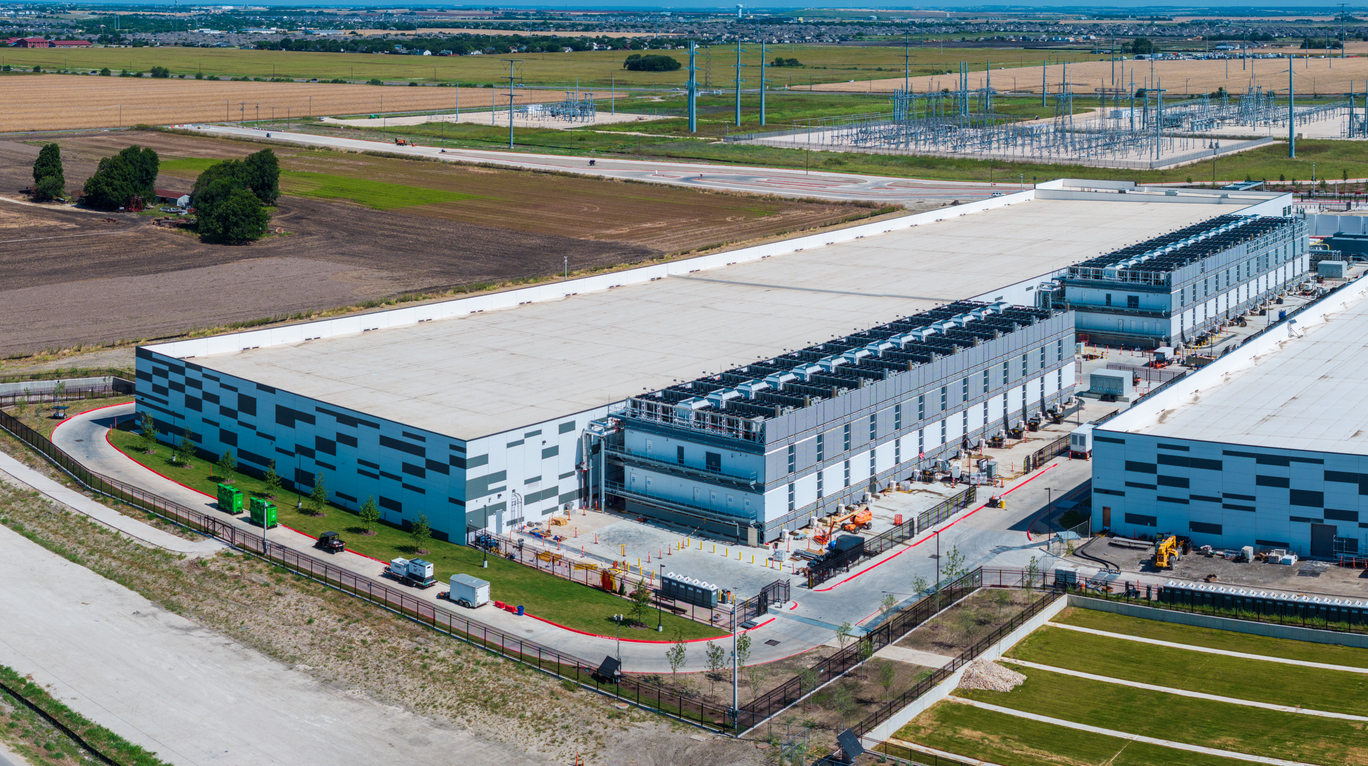
PHOTO: Aerial view of a large data center campus with focus on the processor hosting area and power and cooling infrastructure being built in Hutto, Texas. (iStock-#2284670826 │ BackyardProduction)