A rain garden designed to capture and filter stormwater. The garden uses native plants and engineered soil to slow runoff and reduce localized flooding. (Texas A&M AgriLife)
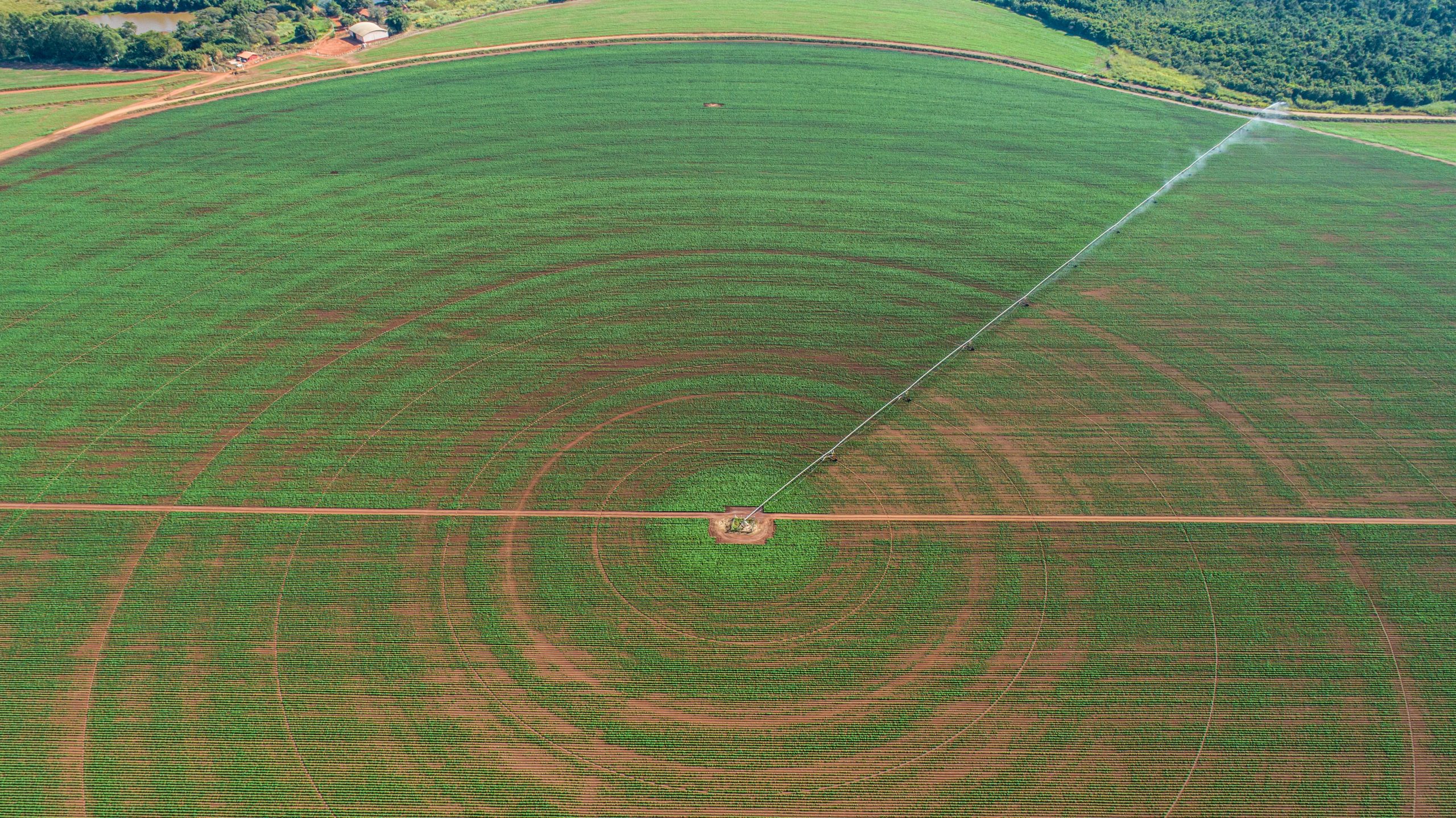
Agricultural irrigation system watering soy bean field in summer. (Adobe Stock │ #523881875 - Solid photos)

Why measuring nitrate matters to water quality

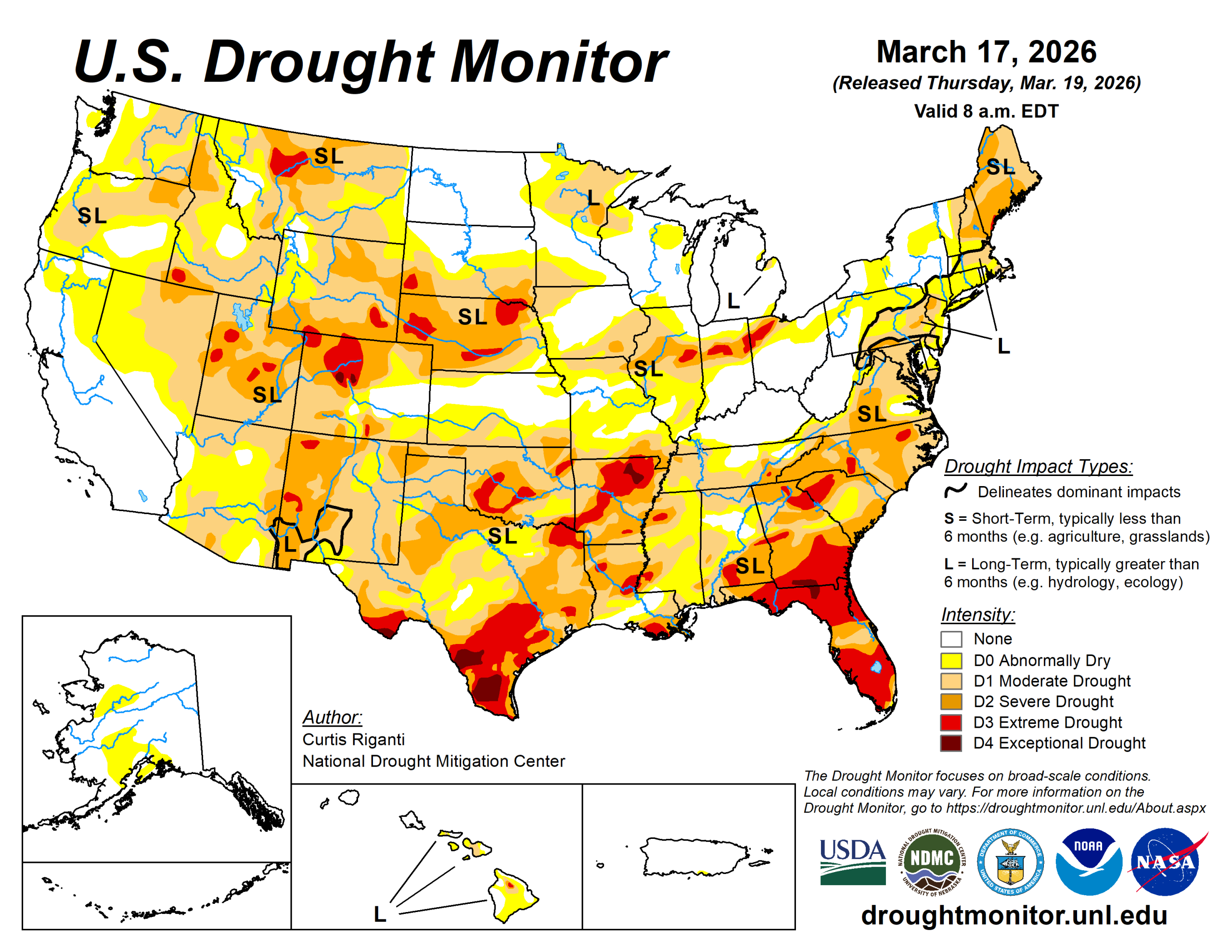
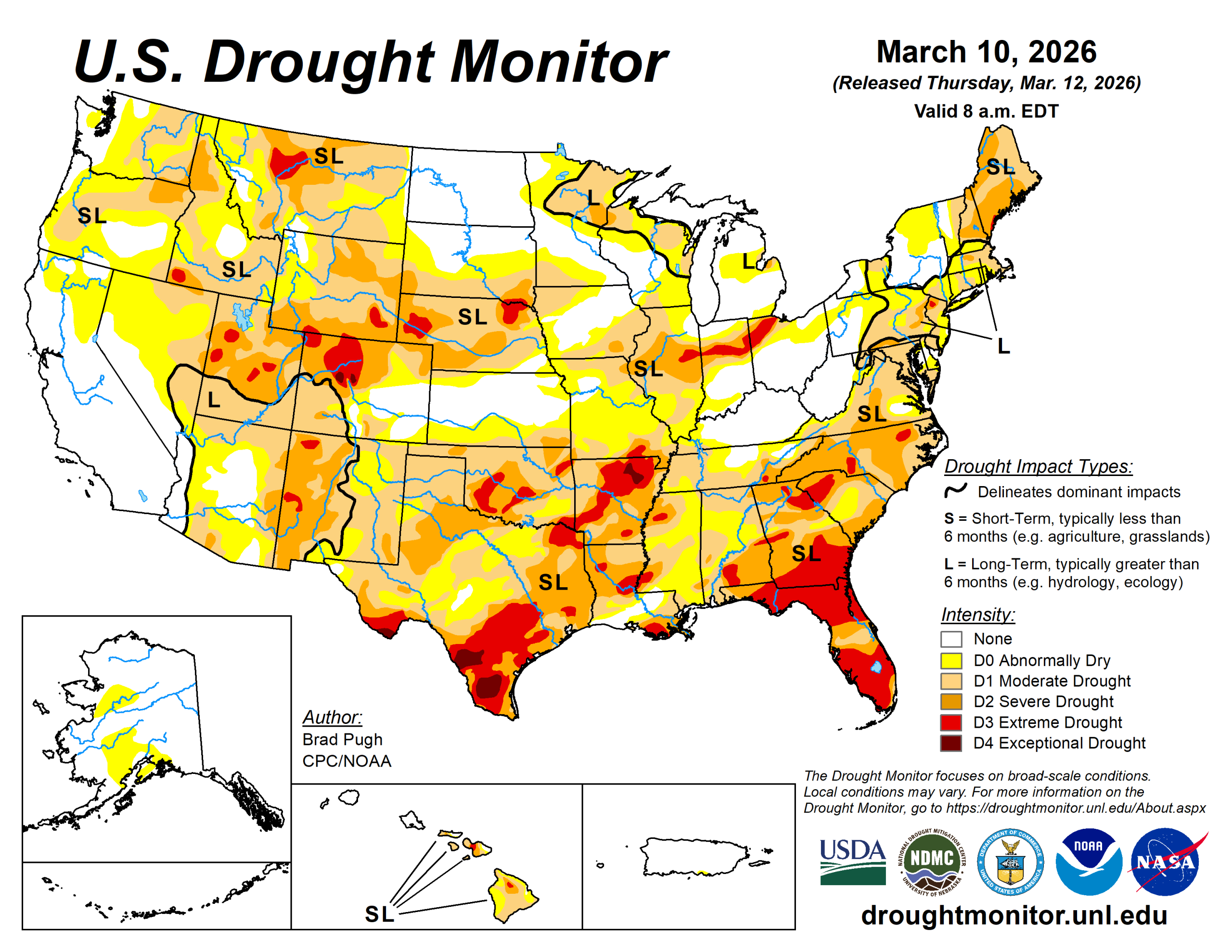
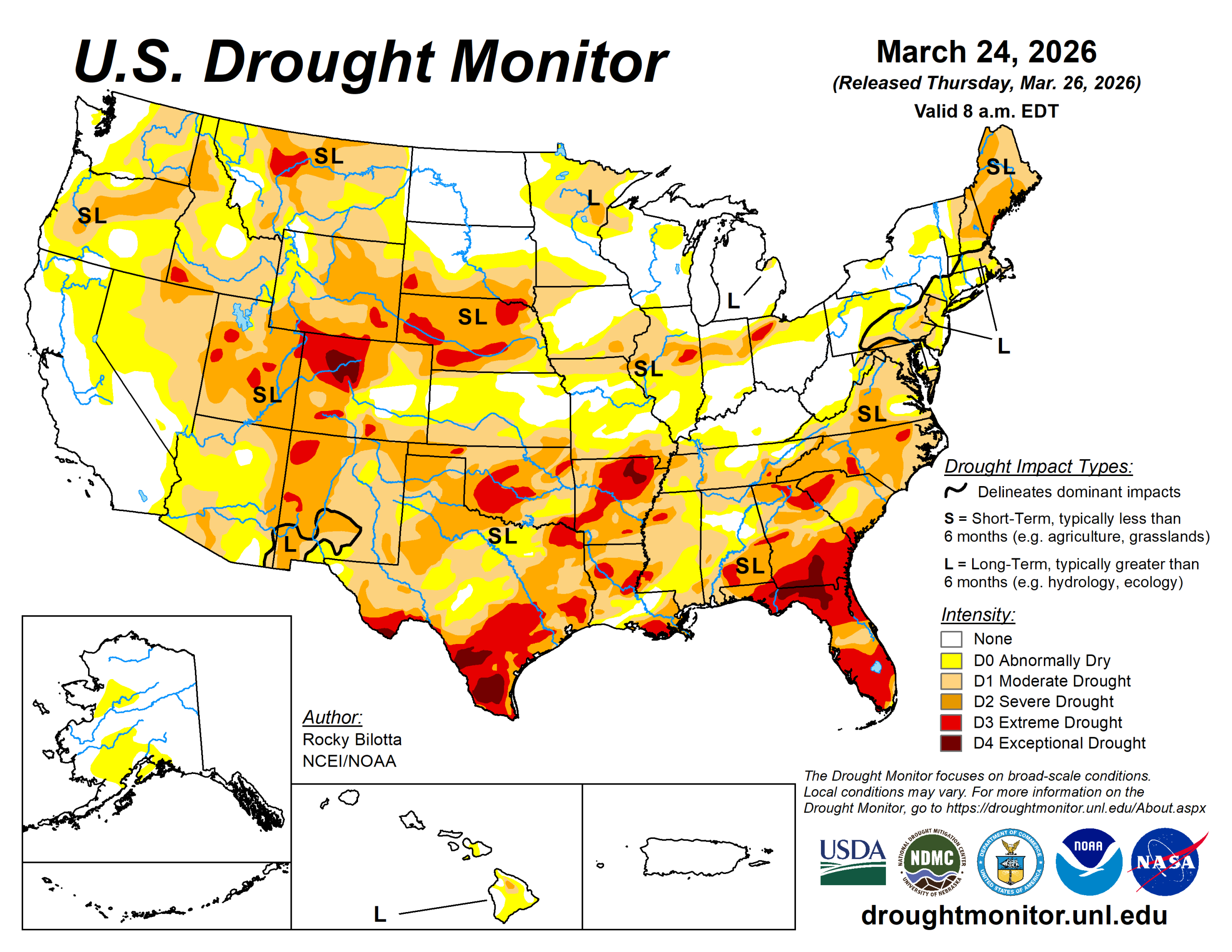
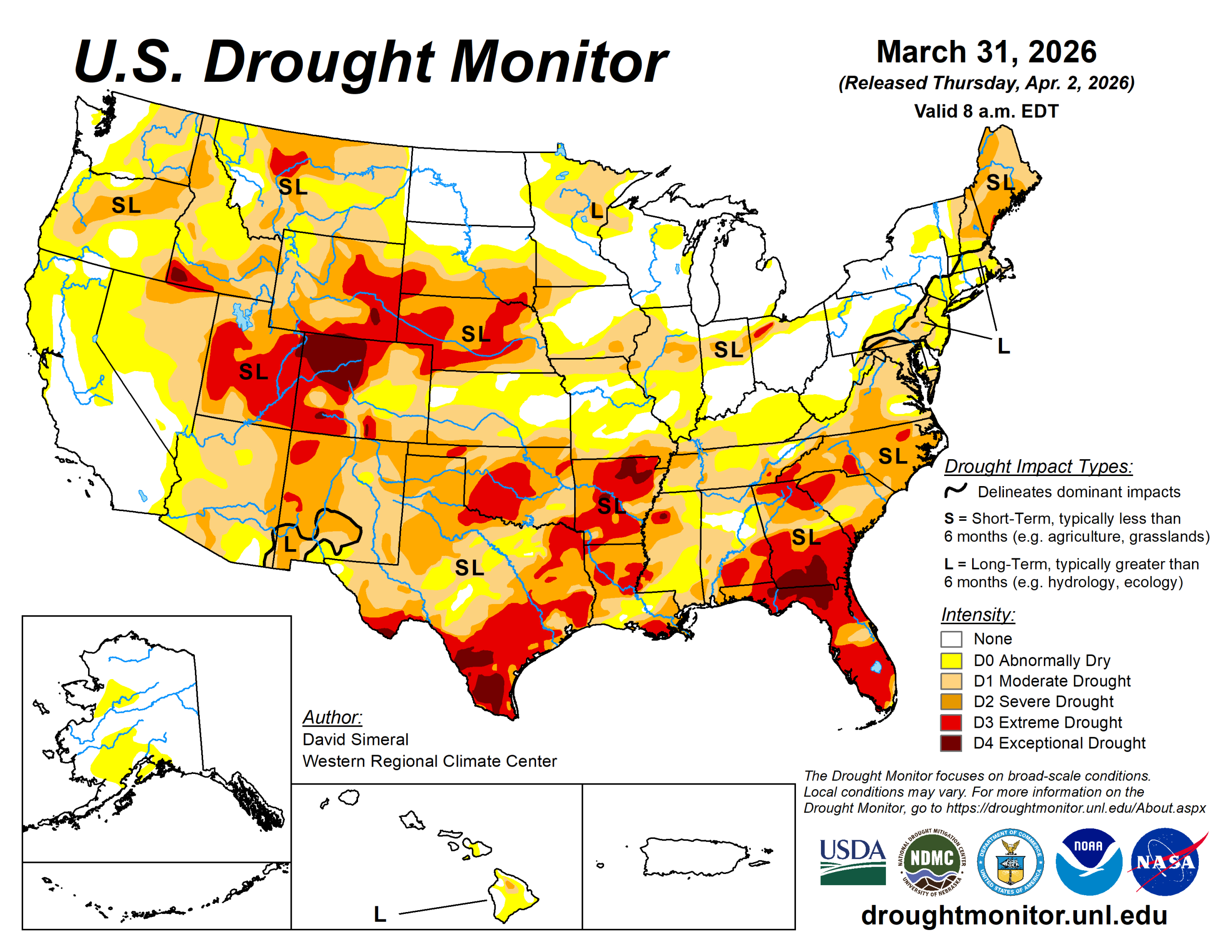
The U.S. Drought Monitor is jointly produced by the National Drought Mitigation Center at the University of Nebraska-Lincoln, the U.S. Department of Agriculture and the National Oceanic Atmospheric Administration. (Map courtesy of NDMC.)
Texas cotton producers face early drought concerns and shifting market conditions heading into the 2026 planting season. (Michael Miller/Texas A&M AgriLife)

Texas drought, shifting markets shape 2026 crop outlook

Irrigation supplies along the U.S.-Mexico border are tightening as regional watersheds that replenish critical reservoirs have not received rainfall. (Sam Craft/Texas A&M AgriLife)

Drought conditions intensify across Texas