Arthur Erickson founded Hylio, a United States drone company, when he was in college in 2015, while he was earning a degree in aeronautical engineering from the University of Texas-Austin.
It was a good time to start a drone business. “It was a combination of luck and tailwinds that kept us growing. Our business has been growing year-over-year since 2018,” Erickson told High Plains Journal. “Sales have grown 30% to 40% a year—100% in some years.”
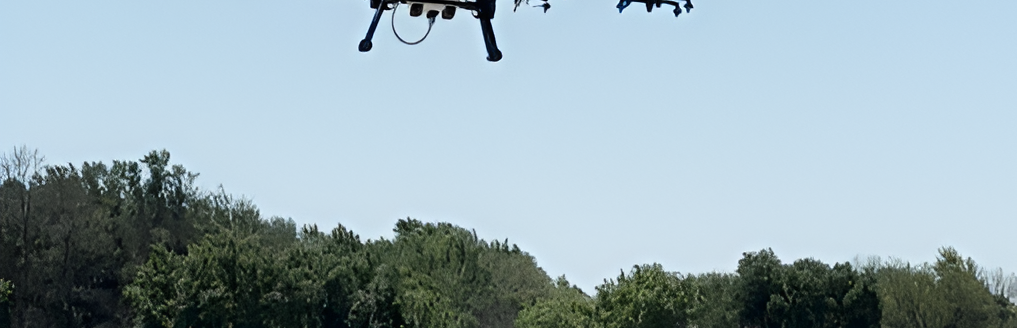
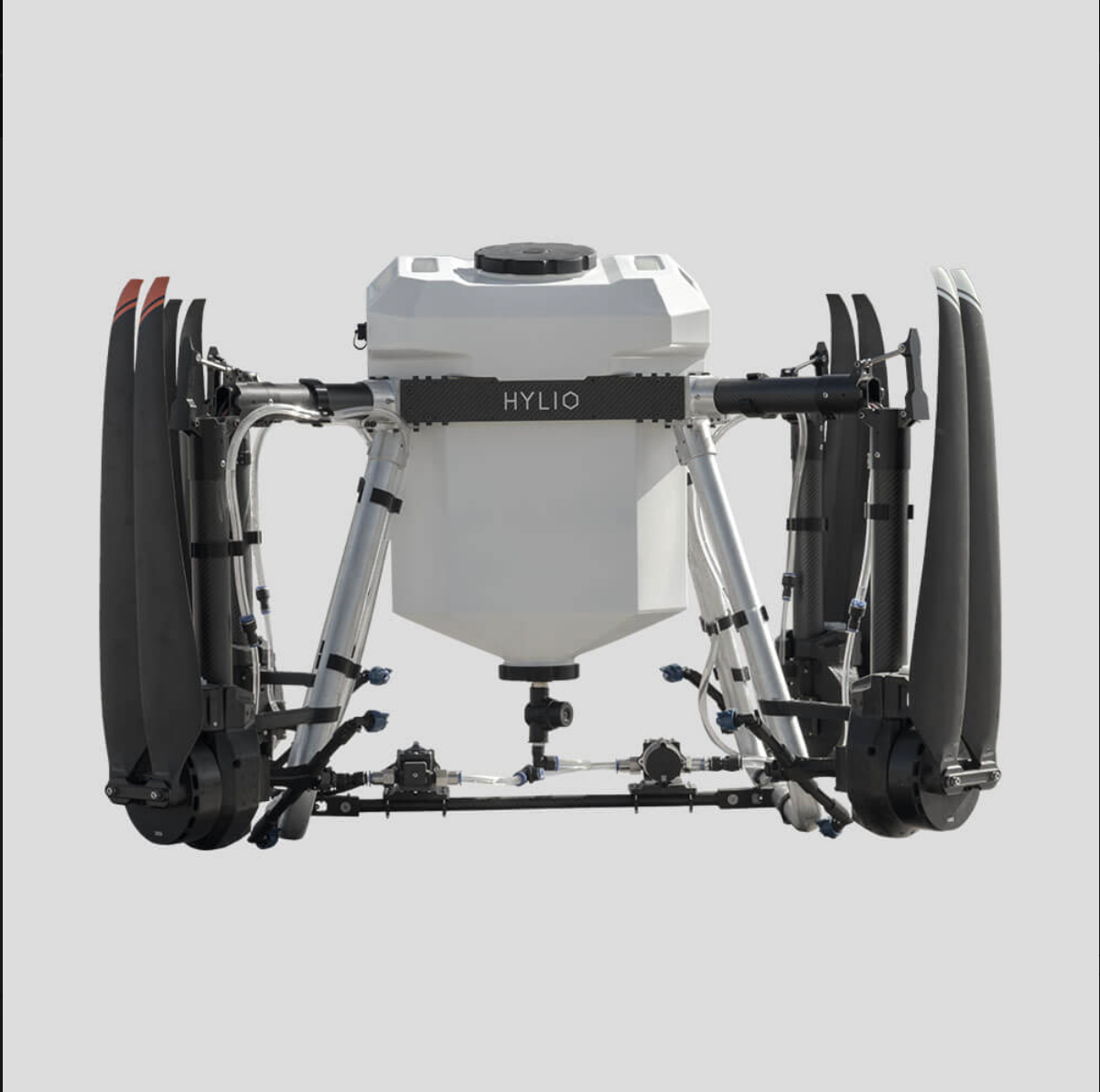
Today it’s one of the largest domestic maker of spray drones for farmers. One of the drones is pictured above.
Hylio concentrated on the ag drone market from the beginning. Its AgroDrone was lauded as “revolutionizing the agriculture industry” in 2019. His first market was Central America, where his precise-application drones quickly replaced less efficient and more expensive helicopter spraying in Honduras, Guatemala and El Salvador.
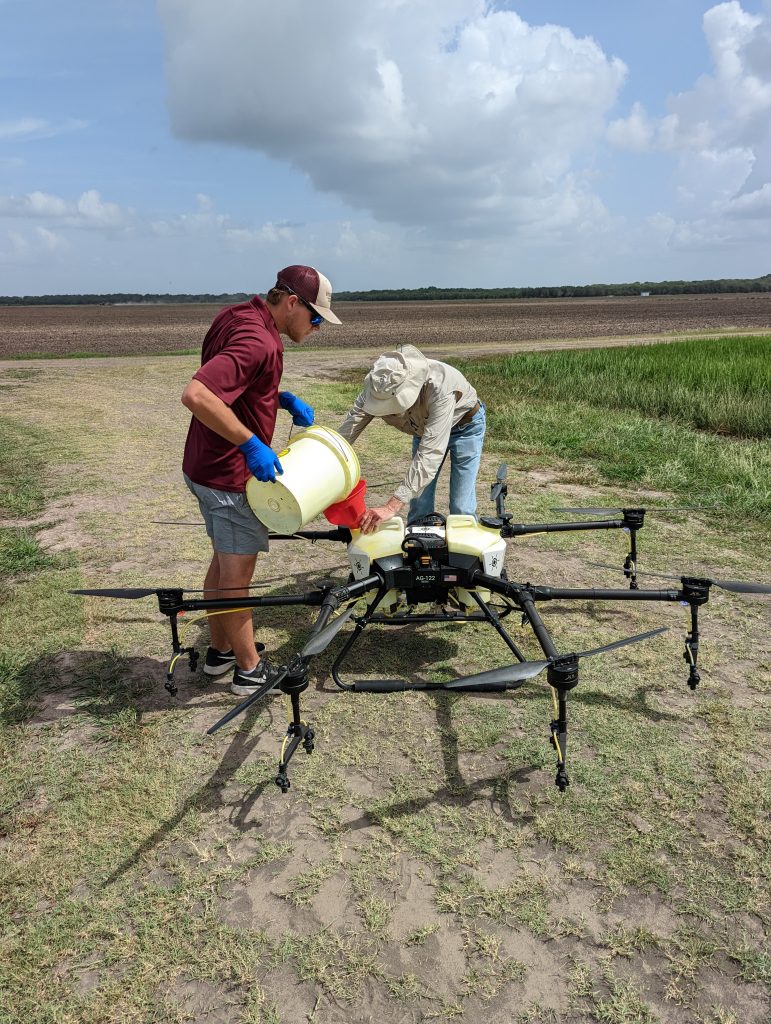
From the beginning, Hylio developed its own software in-house that allowed operators to fly complex polygon flight patterns. Hylio’s drones are portable and designed to be carried in pickup trucks.
Those “tailwinds” that turned out to be good for drone makers because of pressure on U.S. farm producers. “COVID was a turning point for us, because it devastated the supply chains of a lot of large farm equipment makers,” Erickson said.
Drones can also automate some labor that used to require farm workers. “Farmers recognize that these [farm labor] jobs are not designed for people to do forever,” Erickson said. “We need a solution that is sustainable over the long term.”
When the cost of fertilizer and chemical inputs soared due to the war between Ukraine and Russia, that again boosted demand for ag drones, since they apply chemicals more precisely, saving volume costs.
Drones are also popular among first responders like police departments, forestry workers and firefighters. Real estate agents and architects find them useful for surveying buildings, lots and sites. But Erickson said the ag market makes up about 97% of his business.
During this time of explosive drone growth, the biggest beneficiary was Chinese drone-maker Da-Jiang Innovations or DJI, founded in Shenzhen, China, in 2006. DJI’s low-cost and feature-packed camera drones stormed U.S. and global markets. DJI is the world’s largest commercial drone maker, with about 70% of global markets and 80% of the U.S. drone market, according to the Atlantic Council. Hylio has 10 to 15% of the domestic spray drone market, Erickson said.
However, federal legislation, Defense Department policies and a recently passed National Defense Authorization Act have excluded foreign-made drones and drone components from federal contracts. DJI was targeted due to concerns about laws in China requiring all Chinese companies to provide access to its data to Communist Party officials. DJI has tried to fight the bans and restrictions in court, but it seems likely that they will begin to take effect soon.
Erickson says DJI will enjoy a “lame-duck” period or “off-ramp” during which farmers will still be able to use existing DJI drones as U.S. producers expand their operations and are able to take DJI’s place.
Hylio drones are fully NDAA-compliant and 80% of its components are made either in the U.S. or in approved allied countries, he said. Federal agencies still allow some parts not containing computer chips to be imported from overseas. It’s unclear as yet how increased tariffs might affect those components and supply chains.
Hylio is building a new factory in Richmond, Texas, not far from Houston, which Erickson calls a ripe market for drones—and for the young workers he is recruiting. “There’s nothing sexier than a flying robot,” he jokes. Erickson says the U.S. market absorbs 5,000 to 8,000 spray drones a year and can easily sustain 10,000 to 15,000. “Our factory can produce 3,000 to 5,000 a year. We can’t supply all of the market just yet, but we do intend to ramp up in the future.”
The Richmond factory will start out with 60 to 70 employees, but Erickson wants to expand to 250. According to BCC Research, the overall global drone market is projected to grow from $33.9 billion in 2024 to $61.2 billion by the end of 2029.
David Murray can be reached at [email protected].
Related coverage and resources
- Related on HPJ: Domestic drone maker ramping up to meet long-term demand
- Related on HPJ: Drone-maker ponders AI on the farm
- Outside resource: Texas A&M AgriLife Extension Service