
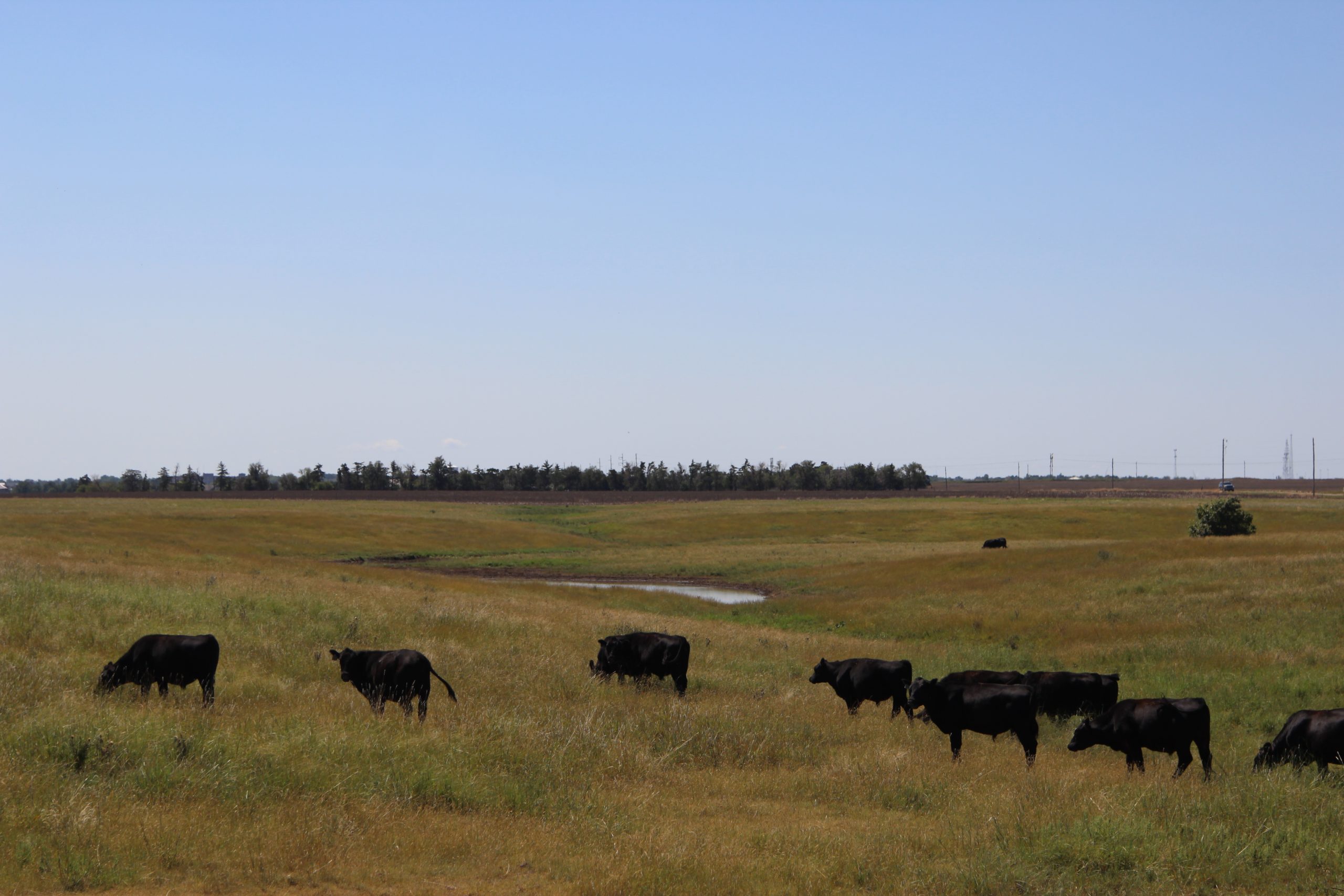
Several highly anticipated cattle reports were issued by the federal government provided a snapshot into the beef industry, but shed no light into when the nation’s herd might expand.
The U.S. Department of Agriculture’s National Agricultural Statistics Service released its cattle inventory and cattle on feed reports in late July.
More eyes were on the cattle inventory report because a year ago the USDA announced it had canceled the July 2024 report due to budget constraints. Earlier this year, the agency said it was going to reinstate the report.
“The latest reports confirm suspected cattle supply tightness will continue and that we may have some limited or initial efforts at herd expansion via measured heifer retention,” said Glynn Tonsor, a professor in the department of agricultural economics at Kansas State University. Tonsor specializes in livestock and meat marketing and price analysis.
James Mitchell, an assistant professor and Extension livestock economist in the department of agricultural economics and agribusiness at the University of Arkansas, said the industry was watching for three key numbers. The July cattle report provided estimates for the 2025 calf crop and the number of beef heifers being held for replacement. The cattle on feed report gave a quarterly estimate on the number of heifers in feedlots.
“The overall takeaway: We’re not there yet,” Mitchell said. “Herd rebuilding has not begun in any significant way.”
Cattle inventory
All cattle and calves on July 1, 2025, totaled 94.2 million head, which was 1% below the 95.4 million head count on July 1, 2023.
Similar to the January report, Mitchell said the USDA can revise prior-year numbers. “What caught my eye was the revision to the July 2023 beef cow inventory—USDA lowered it by 1.2 million head. That’s a big revision.”
Beef cows were estimated at 28.7 million head, which was down 1% from two years ago.
Since there’s not a 2024 estimate, this revision made the decline from 2023 to 2025 appear smaller than it otherwise would have been, Mitchell said.
Looking ahead to 2027 (two years from now), when asked by High Plains Journal, Tonsor expects that beef heifer retention may be rather strong, noting producers have to get to that point first.
“In short, I think it will be the summer of 2026 before much herd expansion occurs and if that indeed is a multi-year effort, it could well be July of 2027 or 2028 when we see ‘peak retention’ occur,” Tonsor said.
The report noted that calves under 500 pounds on July 1 totaled 25.8 million head, which was 2% lower than in 2023. All heifers, 500 pounds and higher, totaled 14.6 million head, which was below the 14.9 million had recorded two years ago.
Beef replacement heifers, at 3.7 million head were down 3% from two years ago. To reverse that trend it will take several factors that Tonsor will be watching.
“A combination of ongoing Mother Nature support (moisture and forage availability), elevated feeder cattle prices and expectations, and likely some reduced concerns on broader uncertainties maybe necessary to trigger substantial expansion efforts,” Tonsor said.
The major uncertainties include trade disputes, cost of production and input inflation, he said.
Tonsor said none of the numbers was a surprise, adding it was harder to compare numbers because of the two-year gap in the reports.
“Most analysts were probably expecting a larger decline in cattle numbers, but the estimates were generally in line with pre-report expectations,” Mitchell said.
Cattle on feed
The number of cattle on feed was down 2% with processing market for the United States for feedlots with capacity of 1,000 or more head totaling 11.1 million head as of July 1, which was 2% below the July 1, 2024, count of 11.3 million head. The inventory included 6.88 million steers and steer calves, up 1% from the previous year. That group accounted for 62% of the total inventory.
Heifers and heifer calves accounted for 4.24 million head, which was down 5% from 2024.
Tonsor said that may only indicate incremental evidence of heifer retention. He noted that 38.1% of total cattle on feed are heifers versus a low of 30.95% back in 2015.
“We have a long way to go before the cattle on feed reports suggest substantial expansion efforts are underway,” he said.
Mitchell also noted the 38.1% mark, which he said was down from 39.6% in July 2024, which does suggest a pullback in heifers going to feedlots, and he also referenced the 2015 figures, adding he won’t overact to the estimate.
“It does suggest some heifer retention, but nothing by historical standards would that imply a major rebuild of the cowherd,” Mitchell said.
The top three states in inventory continued to be Texas, 2.57 million head; Nebraska, 2.44 million head; and Kansas, 2.27 million head. The report indicated that both Nebraska and Kansas were both up slightly when compared to July 1, 2024, but Texas was down 8% from a year ago.
Placements in feedlots during June totaled 1.44 million head, which was 8% below 2024 and net placements were 1.39 million head.
“Indeed this suggests notable tightness in feeder supplies and reflects past herd-size decisions that were impacted by drought, but also adverse margins a few years back,” Tonsor said.
It also caught Mitchell’s eye.
“We’ve had smaller calf crops over the past few years so supplies outside feedlot remain tight,” he said. On top of that the southern border closure to feeder cattle imports—due to New World screwworm in Mexico—has further limited placements, he added.
“This situation is likely to get worse before it gets better from the feedlot’s perspective,” Mitchell said.
To increase feeder cattle supplies the industry needs more calves. “But to get more calves, we have to grow the cowherd, which means retaining more heifers.”
That means fewer heifers need to head to the feedlots, Mitchell said. “As a result, competition for feeder cattle will likely intensify this fall and into next year.”
Marketings of fed cattle during June totaled 1.71 million head, which was 4% below 2024 and marketings were the lowest since series began in 1996. Mitchell said the New World screwworm’s impact might be a factor in the Texas region.
“We’ve stretched cattle in the feedlot about as far as we can be feeding them to heavier weights, but at some point, beef production is going to turn the corner and decline significantly. I think we are just starting to see the signs of that.”
Strategies
Cattle producers recognize the historically high cattle prices across all weight classes, Tonsor said. How they approach and think about that widely varies.
“There are a suite of resources available today to help lock-in and mitigate downside risk for those interested,” Tonsor said. “I never ‘promote hedging,’ but certainly ‘promote doing the homework’ to assess if those price risk management tools are favorable for a given producer to implement.”
Prices are strong, Mitchell said, but they are still subject to seasonal swings. Uncertainties he cited include U.S. trade policy, New World screwworm, pressures on the U.S. consumer, and drought potential.
“It’s important to have a marketing place in place that includes strategies for managing price risk,” Mitchell said.
While there has been good profitability the past few years, Mitchell said, expansion still has not occurred. “Be strategic about reinvesting in the operation,” he said. “This doesn’t mean you have to go buy cows.”
Dave Bergmeier can be reached at 620-227-1822 or [email protected].



