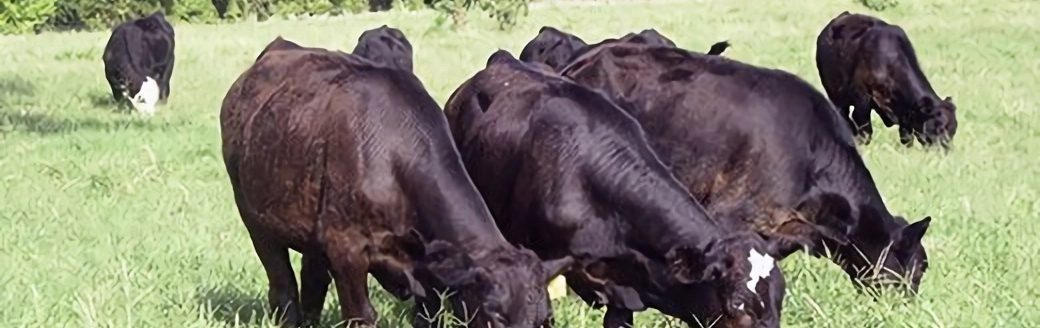
The American beef cattle herd is at its lowest level since 1973, with the U.S. Department of Agriculture reporting the total herd at 86.7 million in January, one of the lowest inventories since the early 1950s. Beef cows—breeding females—totaled 28.7 million as of July 1.
The American beef cattle herd is at its lowest level since 1973, with the U.S. Department of Agriculture reporting the total herd at 86.7 million in January, one of the lowest inventories since the early 1950s. Beef cows—breeding females—totaled 28.7 million as of July 1.
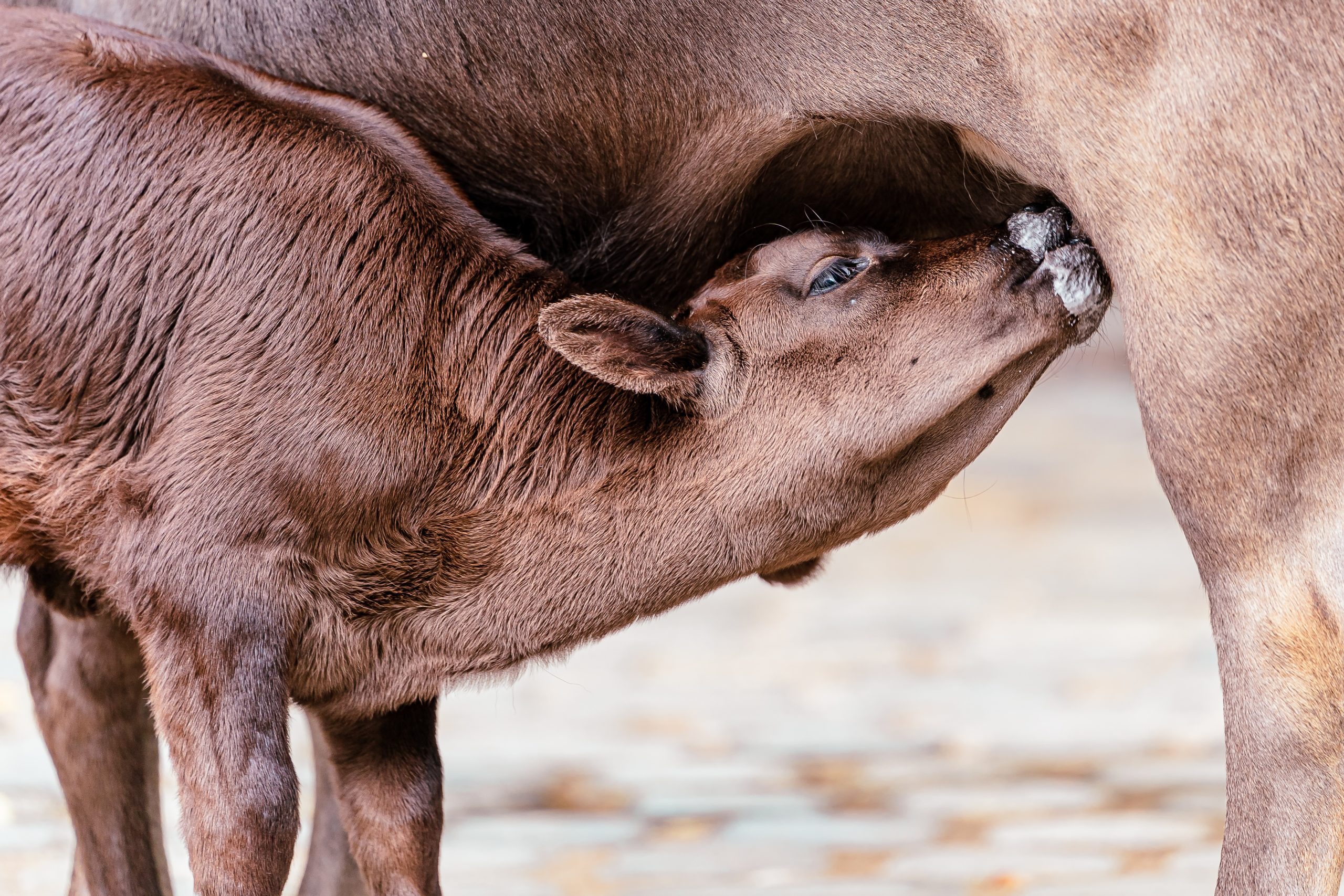
The cattle herd has been declining overall through ups and downs over the past 50 years. The latest decline is mostly due to the extended drought in cattle-growing regions, which forced ranchers to liquidate their herds, resulting in fewer cattle and contributing to record-high beef prices. It’s become more expensive to raise cattle even as prices have increased because feed, fuel, land, and fertilizer costs have all gone up. Pictured above, a nursing calf, credit dashcorsch with courtesy from Pixabay.
“A lot of people are taking animals to market” in this environment to realize gains in this high-price environment, according to Kip Karges, technical service director, Americas at Lallemand Animal Nutrition. The increasing age of some ranchers and producers is a factor in slowing herd rebuilding, said Karges, as many can’t find heirs to take over the demanding business. Once ranching land is sold and switched to other uses it rarely goes back.
“Will those 28 million cows climb back into the mid-30s anytime soon?” he wondered.
Consumers have definitely noticed the higher beef prices, which remain higher than their pre-COVID pandemic level. The prices have driven some protein-shifting to chicken, especially among lower-income consumers. Price aside, though, Americans show few signs of losing their taste for beef. According to a recent study by the National Cattlemen’s Beef Association, demand for beef remains robust. A large majority of surveyed consumers in one NCBA study reported eating beef (72%) and chicken (84%) at least once per week, with those numbers up slightly compared with previous years. While consumers perceive beef to be second to chicken in terms of value for money, beef leads in taste, eating experience, and versatility, driving consumption and preference.
“The resilience of the American (beef) consumer boggles my mind,” said Matt Spangler, professor of animal science at the University of Nebraska-Lincoln. “I hope it continues.”
Economists like to say that high prices cure high prices. But when it comes to cattle, the correction process is slow. Herd expansion is constrained by cows’ life cycle, the costs of feed and supplements, and many other factors, according to Spangler.
That brings heifers to the fore as potential chokepoints that must be managed carefully, Karges said. “At a time of high prices, producers have to retain breeding heifers” instead of selling them for cash.
A prime breeding heifer may produce eight calves over her breeding life. That timeline requires careful planning, Spangler said. If you are going to retain a heifer for breeding, you should calculate when you reach break-even and when you expect to profit.
Genetic selection is the first step. Key genetic selection tools for breeding cattle include Expected Progeny Differences, which estimate genetic value for traits like fertility, growth, and carcass quality. The target is for a breeding heifer to reach 65% of her mature body weight by breeding age of 14- or 15 months, Karges said.
About four to six weeks prior to breeding, a heifer’s reproductive systems will be examined and scored, with hip height and pelvic scores measured.
Heifers “require a lot of TLC,” Karges said. “Nutrition is going to be the single most important factor in optimizing a breeding heifer’s potential.” Since nutrition costs can represent up to 90% of all input costs in raising cattle, any gains in nutrition efficiency will show up in the bottom line.
Most heifers are raised on forage, with occasional supplements, he said. Lallemand’s portfolio includes forage inoculants and its rumen-specific live yeast supplement that have been shown to improve cattle’s forage efficiency by 4 to 6% by enhancing both feed preservation and rumen function, Karges said.
By stabilizing the rumen, the supplement improves nutrient absorption and supports animal performance, he said.
What Karges calls “the bugs in the digestive tract” are “doing all the heavy lifting for us” when it comes to maximizing forage efficiency. It can take up to 10 years of research to isolate an effective organism, test it and scale it up. That measurable improvement, said Karges, “shows up in the bottom line.”
Traditionally, gut-flora-enhancing products for cattle have been used most intensively on the dairy side, Karges said. “On the beef side, we haven’t pushed them that hard, but that’s changing. The microbiome is the top of the iceberg.”
More gains remain to be made on the nutrition front, however. “Genetics is way ahead of what we can do nutritionally,” Karges said. That’s especially true as more consumers prefer cattle raised on all-natural feed programs and producers look for ways to reduce antibiotics use.
“I can do a lot for that animal with decent forage and the right microbiome encouragement,” Karges said. “Optimizing feed costs until that replacement heifer calves drives production and economic efficiency.”
David Murray can be reached at [email protected].