National Farm Safety and Health Week reminds all to stay safe
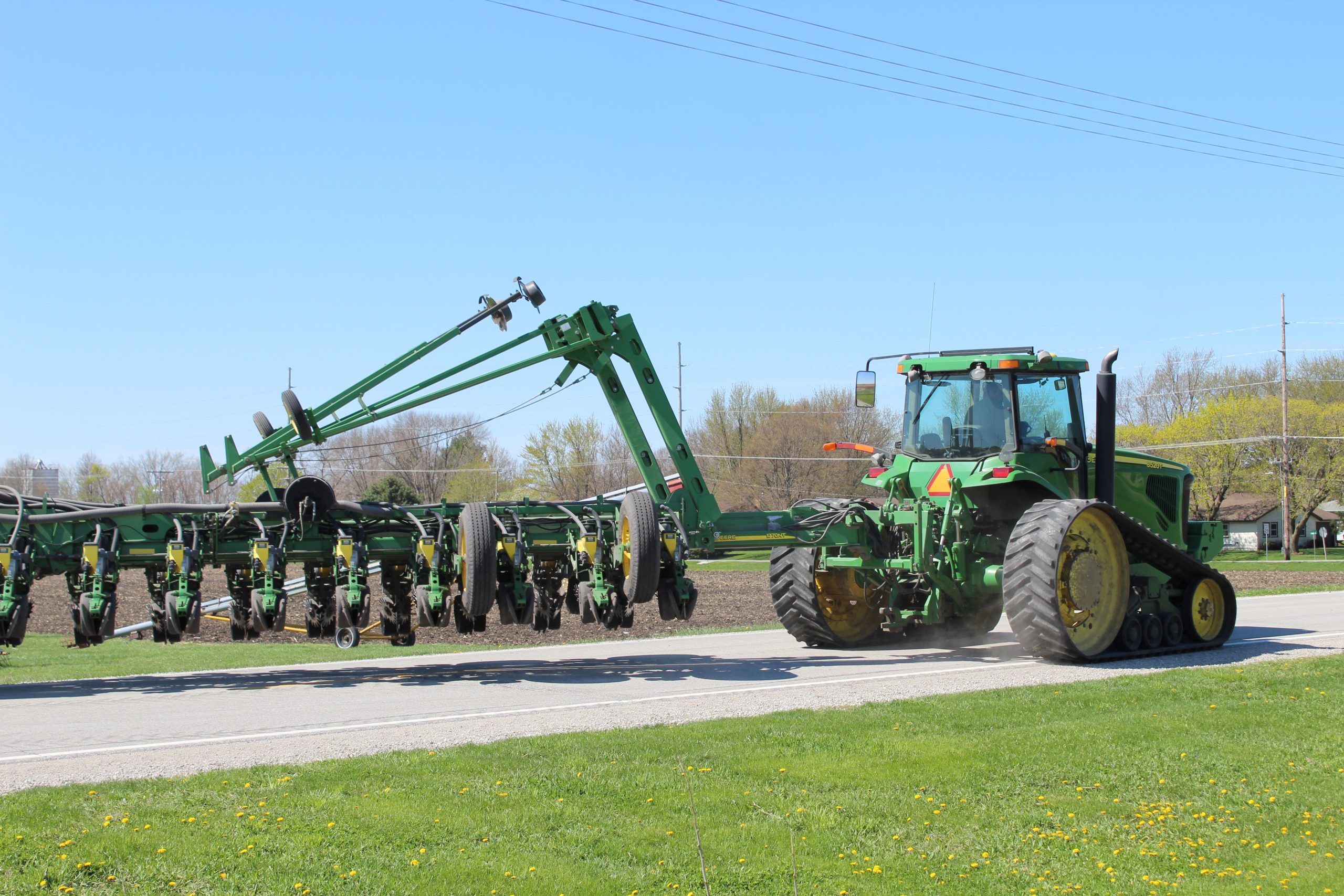
Fall harvest is quickly approaching and soon combines and other heavy farm equipment will be on the roads or highways across the High Plains.
National Farm Safety and Health Week 2025 is set for Sept. 21 to 27, and the National Education Center for Agricultural Safety is offering a series of webinars focusing on several important topics.
Dan Neenan, director at NECAS for safety and transportation, said this organization has been around since 1997, focusing on providing hands-on safety and rescue training to the ag community.
“To date our grain bin rescue program has trained 44 fire departments nationally that have had successful grain bin rescues,” he said.
It’s imperative to have safety reminders, and for Neenan, having a week to recognize safety makes it easier to spread the word.
“NFSHW was formed around the harvest season to remind the farming communities of the dangers that exist right around harvest time,” he said. “It is the one time per year that the media has a focus on farm safety unless there has been a local incident.”
Each year there’s a new theme and daily topics focused on. this year’s theme is “Safety First, Avoid the Worst.” Starting Sept. 22 and during each day of the week, webinars will focus on equipment and rural road safety; health and wellness; generational farming; confined spaces; and ATV/UTV operations.
“This year has several important webinars that someone can choose to watch depending on the dangers that they face on their own farm,” he said. “I am doing a session on confined spaces in ag dealing with grain bins and manures pits, which is timely this year after the multiple fatality manure pit incident in Colorado in August of this year.”
Neenan said each webinar will be recorded and available for viewing at a later date.
There’s not one subject that’s more important than another when it comes to safety on the farm or ranch, but there’s aspects often overlooked.
They include lighting and proper marking for equipment driven on the road, he said. Having a stocked first aid kit on hand and making sure the fire extinguishers are charged and ready to go is a must, too.
Check www.necasag.org for more information.
Roadway reminders
Iowa State University professor in agricultural and biosystems engineering Steven Freeman offered roadway tips for motorists and highlighted how important it is for motorists to be aware of when sharing roadways with farm machinery.
“We all rely on farmers who are in the fields planting and doing their job. It is important for them to get to those fields safely to do what they need to do,” Freeman said in a news release. “Both farmers and motorists need to be reminded that they need to share the roads.”
When approaching farm machinery, motorists need to remember they’re traveling at a much higher speed than those operating heavy equipment. Highway speeds make the gap between farm equipment and motorists close very quickly.
Patience is important too—pass with care and honking is unnecessary, Freeman advised.
“The reason the farmer may not be pulling over could be due to unforeseen safety concerns,” he said. “For example, the edges of roadways along county highways cannot always support the weight of the machine to allow the farmer to pull over.”
For farmers
For farmers, it’s important to make sure the machine’s lights and reflective markers are working, visible and clear. At certain times of the year when the sun is low in the sky, it’s often hard to see what’s in front of a vehicle at dusk. It’s best not to travel during that time of the day with farm equipment.
Don’t forget to take care of yourself, Freeman reminded. Getting enough sleep and eating healthy can help minimize accidents.
Operators need to be aware of the following:
- Only allow licensed, or appropriately trained, operators to take farm machinery onto the road. Youth who are able to operate machinery in the field may not be able to deal safely with traffic and other road hazards.
- Make sure farm machinery is equipped with the lighting and marking safety devices recommended by the American Society of Agricultural and Biological Engineers and required by state and local laws. Be sure to remind all operators to use the appropriate hazard lights and turn signals when traveling on roads.
- Minimize total vehicle width and secure equipment in the transport position before entering roadways.
- Watch for approaching traffic and vehicles trying to pass. If possible, pull over and let traffic pass safely, but be alert for roadside hazards.
- Obey all traffic laws and signs.
- Signal intentions to motorists and avoid sudden or unexpected maneuvers.
- Exercise additional care when entering roadways, approaching unsigned or “blind” intersections, crossing narrow bridges, going around sharp corners or going over hills.
Rural drivers
Drivers in rural areas need to be prepared to encounter farm vehicles and recognize the speeds those vehicles operate.
“You may only have a few seconds to react and slow down before overtaking a farm vehicle,” Freeman said. “Be prepared to slow down and follow; you may not have room to pass.”
Keep a safe distance and rural drivers shouldn’t assume the farmer can pull over and let them pass. Shoulder conditions don’t always allow for this.
“Be sure of the farmer’s intentions before passing,” he said. “Don’t assume that a farm vehicle is turning right or pulling over to let you pass if it pulls to the right side of the road. A farmer may have to swing right in order to make a left turn. Wait until you know what the farmer is planning to do.”
Freeman suggests patience and enjoying the scenery if a driver has to follow a slow-moving vehicle for very long.
“Even if you have to follow a farm vehicle for a couple of miles, it will only take a few minutes of your time,” he said.
Kylene Scott can be reached at 620-227-1804 or [email protected].