Marshall on MAHA at Ag Forum
What are the implications of U.S. Secretary of Health and Human Services Robert F. Kennedy’s “Make America Healthy Again” agenda for agriculture? That question has spurred many conversations in the ag world—including many behind the scenes.
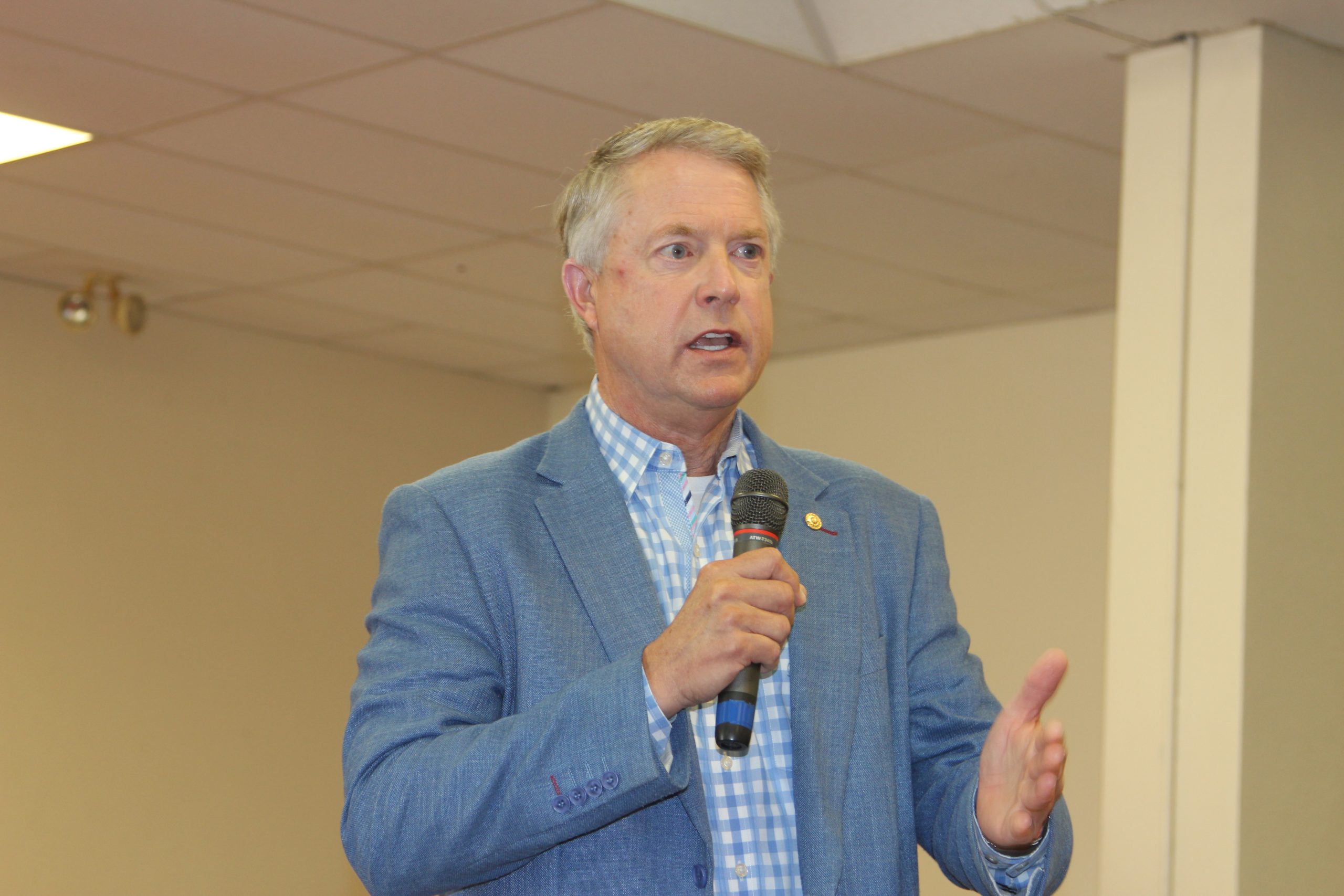
U.S. Sen. Roger Marshall shed some light on that topic at the recently concluded Ag Forum Outlook in Kansas City, Missouri. Marshall, R-KS, practiced medicine for 25 years after getting his medical degree at the University of Kansas. In the Senate, he chairs the Subcommittee on Conservation, Forestry, Natural Resources, and Biotechnology and has a seat on the Senate Committee on Agriculture, Nutrition, and Forestry, so he is well-qualified to discuss all issues related to MAHA and agriculture.
James Nguyen, director of legislative affairs for the Farm Credit Services of America, who introduced him and moderated his talk, said Marshall is known as the Senate’s “MAHA whisperer.”
Nguyen began by asking Marshall why he felt it was necessary to start a Senate caucus on food as medicine.
“There were more farmers lost to suicide than accidents last year,” Marshall said. Producers are facing “Farmageddon.” The food as medicine caucus overlaps many of the same concerns as those motivating the MAHA movement. “Twenty percent of Americans have a chronic disease. Almost 20% of children are on a prescription drug. We have an obesity epidemic. We have a ‘sick care system’ instead of a health care system.”
Four pillars
Marshall said the food as medicine caucus has four pillars: Healthy soil, decreasing exposure to toxins, affordable access to primary health care, and addressing mental health in children and young adults.
Nguyen pointed out that the first version of the MAHA platform was written without much input from the ag community. “Brooke Rollins has been very important in the education process” in Washington, Marshall said, and he reminds Trump and his team that 90% of rural Americans voted for him, and they had some legitimate questions about the MAHA agenda.
Seed oils, for example, have been targeted by Kennedy, but Marshall said, “There is nothing unhealthy about seed oils themselves. I do have some concerns about some ultra-processed foods that contain seed oils. What we need are more reproducible studies. That’s why we need the National Academy of Sciences.”
Nurses are nutrition solution
It’s well known that many physicians don’t learn much about nutrition and its role in health in medical school. Marshall said he took a voluntary, no-grade course in nutrition as a medical student. While it’s true that doctors need to learn more, he said, it’s nurses who will be on the front-line. “Nurses are the ones who will solve this problem. We need to invest more in nursing and nutrition coaching”.
Asked about the progress of the farm bill, Marshall said, “We’re on ‘Trump time’ now. We have a package of bills to address each of those four pillars. We must protect fertilizers so that the EPA can never take them away from producers—even if I want to see us use less of them. We’re going to use federal pre-emption to avoid states imposing a patchwork of standards for their application.”
How does the ag community best engage Kennedy? “He’s been educated on precision agriculture. We explained the differences between organic and regenerative ag. Only 10% of farmers are really embracing precision ag. We have to make it more affordable. We educated Kennedy about farm practices. We don’t apply glyphosate to wheat the day before harvest,” he added, “We [government officials] aren’t driving this conversation—the American people are.”
Value-added exports
Asked about biofuels, Marshall said the “No. 1 priority for the White House should be year-round E15. If Trump says yes, it will go.” As far as the rest of the farm bill goes, Marshall noted Congress already included some provisions in the One Big Beautiful Bill, including fixes to crop insurance, death taxes and reference prices.
Asked about foreign trade and trade deals, Marshall said the future of U.S. ag exports lies in value-added products. “Let’s turn corn into beef and ethanol,” he said. “We’re not going to sell a lot of wheat to India. Let’s bet on ethanol, focus on interest rates and lowering interest costs.” On all these fronts, he said, “I see paths to victory.”
David Murray can be reached at [email protected].