
An introduction to drones on the farm or ranch
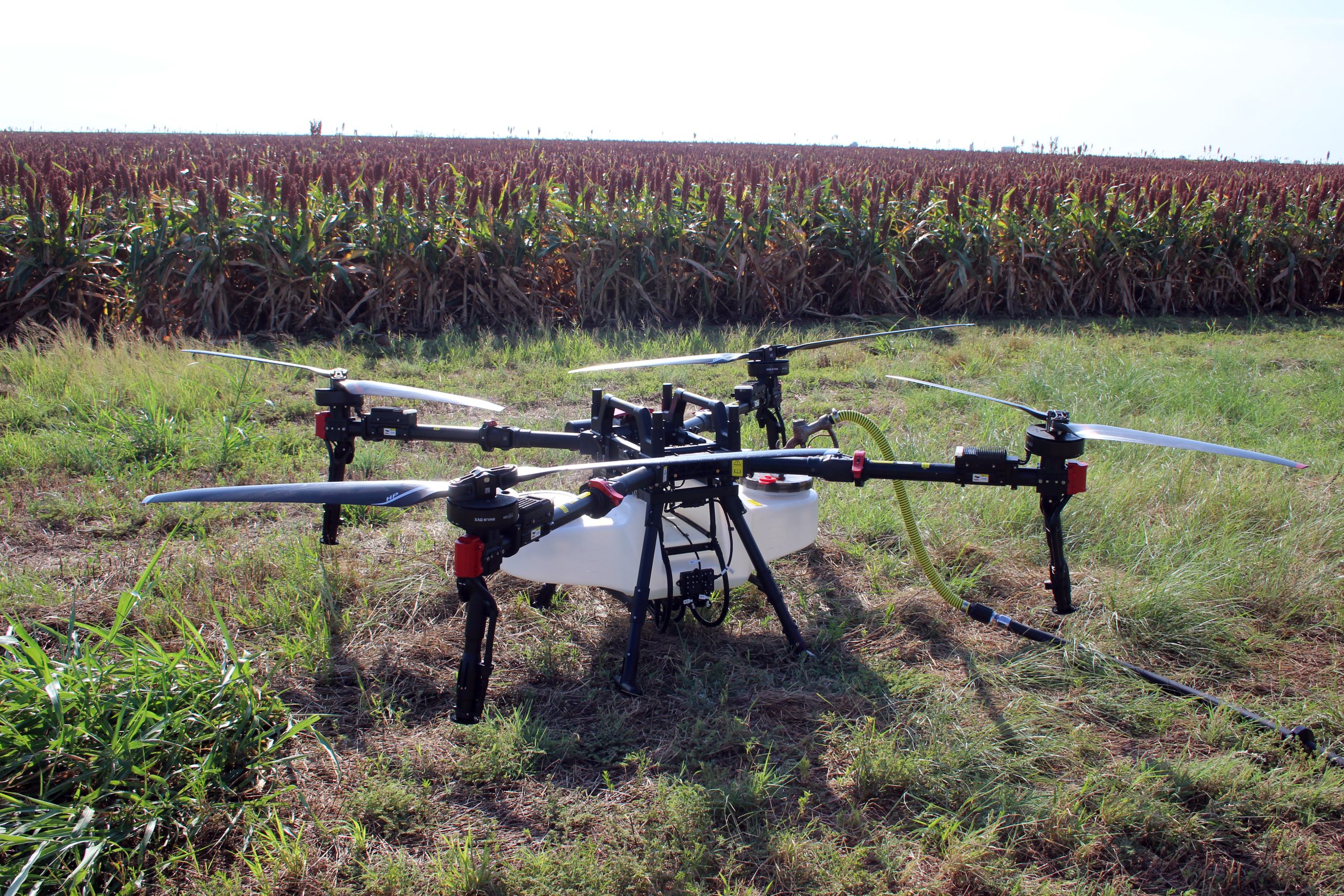
Once upon a time drones or unmanned aerial vehicles were only used by the military during a war, but as time has progressed, their application has expanded to multiple industries, including agriculture. Incorporating drones on the farm or ranch can seem daunting to the novice, but they can be a valuable tool in production agriculture. However, operators must understand the rules and primary considerations of drone ownership prior to taking flight with this technology.
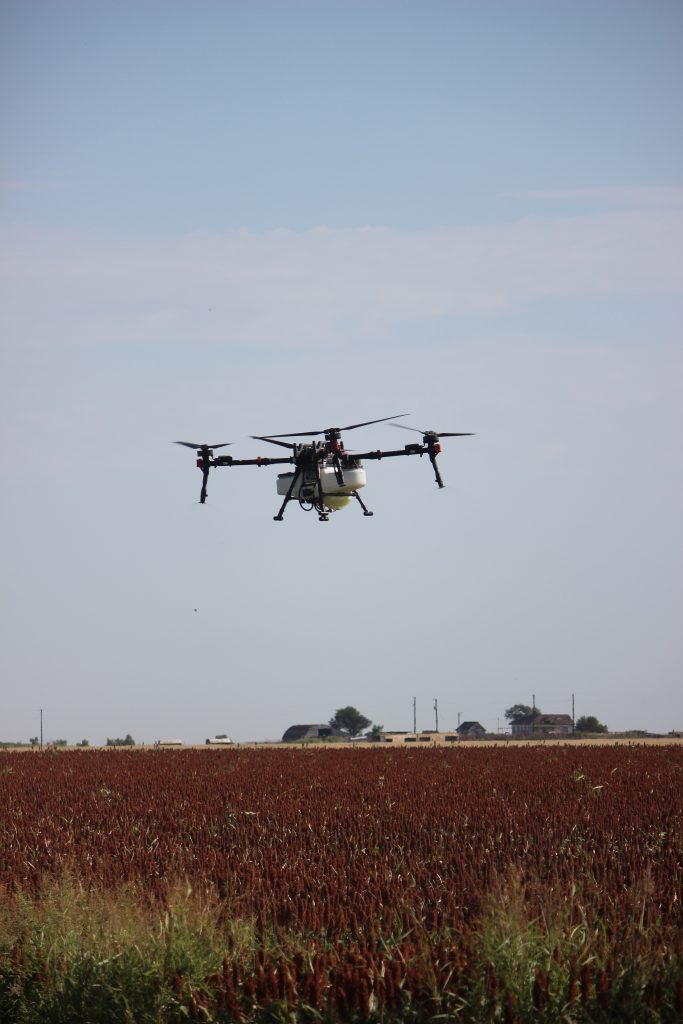
Doug Houser, digital agriculture Extension specialist at Iowa State University, often educates farmers and ranchers on drone technology. He said the value in agricultural drones is that they are a unique and versatile piece of equipment offering features other machines in the farm shed cannot provide.
“Instead of climbing up on top of your grain leg and taking a look across the field, you can stop by end of the road, take up a drone and see all over the field,” Houser said. “Is there any damage? Are there any green spots in the middle versus all the dry areas that you’re seeing from the road?”
Houser also championed a drone’s capability to deliver timely chemical applications to fields that are too wet or crops that are too tall for ground rigs.
“It also reduces soil compaction when you’re not running over crops,” he added. “When you fly over them, you don’t have that destruction underneath the wheels. You still use your ground rigs, but some fields are just not configured for that equipment to make sense and sometimes airplanes can’t reach them. Drones just give you another piece of equipment that you can leverage on your farm.”
Drone operator categories
Houser said the most important question to ask before buying a drone is what tasks you want to accomplish with it. There are two different drone operator categories—hobbyist or commercial—which affect the type of licensing required by law. However, every drone, no matter the use, must be registered with the Federal Aviation Administration, and the license number must be visible on its side.
Houser said recreational or hobbyist drone operators buy imagery drones with a camera to take photos of their home, kids, or family events. These drone operators are required to take a free, five-question online safety test for a hobbyist license if the drone weighs 0.55 pounds or more. The only caveat is that hobbyist operators cannot sell or profit from the images captured with the drone.
“It’s important to point out if you post them on social media, and you are getting likes or hits on photos, that could be considered a value that you’re getting,” Houser explained. “It’s kind of a gray area. But in that case, the operator would need to switch from a recreational hobbyist to a part 107, or commercial drone operator.”
Another question Houser often hears is if farmers can operate drones under a hobbyist license if they are only using an imagery drone to get a bird’s-eye view of their crops or check cattle for their own use, without plans to sell the images or post them online?
“If you’re making value for a business, which you are as a farmer, you are automatically into that part 107, or commercial pilot, and that’s not widely understood,” Houser said. “If I use it for my farming operation, to improve my management, then you need a commercial operator license.”
Houser said the commercial operator or part 107 license is a significant step up from a hobbyist and requires much more preparation and expense. He compared the exam to a ground school test that a manned aircraft pilot would have to pass. The cost of the test is $175 and drone operators must pass it prior to operating a drone.
“It’s a real FAA test that you have to study for,” Houser explained.
He said there are three recommended options to prepare for the test. There is free material on the FAA website that can be used for studying. Houser said web trainers also offer videos that pupils can watch and take online quizzes in preparation. He said certain companies also offer one, two and three day in-person training workshops for those prepping for the test.
Spray drone considerations
Another element farmers should consider if they plan to use a spray drone, is securing a part 137 exemption. This FAA exemption is needed for drones weighing more than 55 pounds to enter the airspace. Although the 137 exemption has no cost, Houser said many producers opt to hire an expert to complete the complicated paperwork required to receive it, which does incur additional expenses.
Once a producer has determined they are in the market for a spray drone, it is important to consider tank size, because this will affect efficiency and price of the drone.
“How big of an area are you trying to fly,” Houser said. “Do you have some large acres out there? If so, the bigger tank size is something I’d consider.”
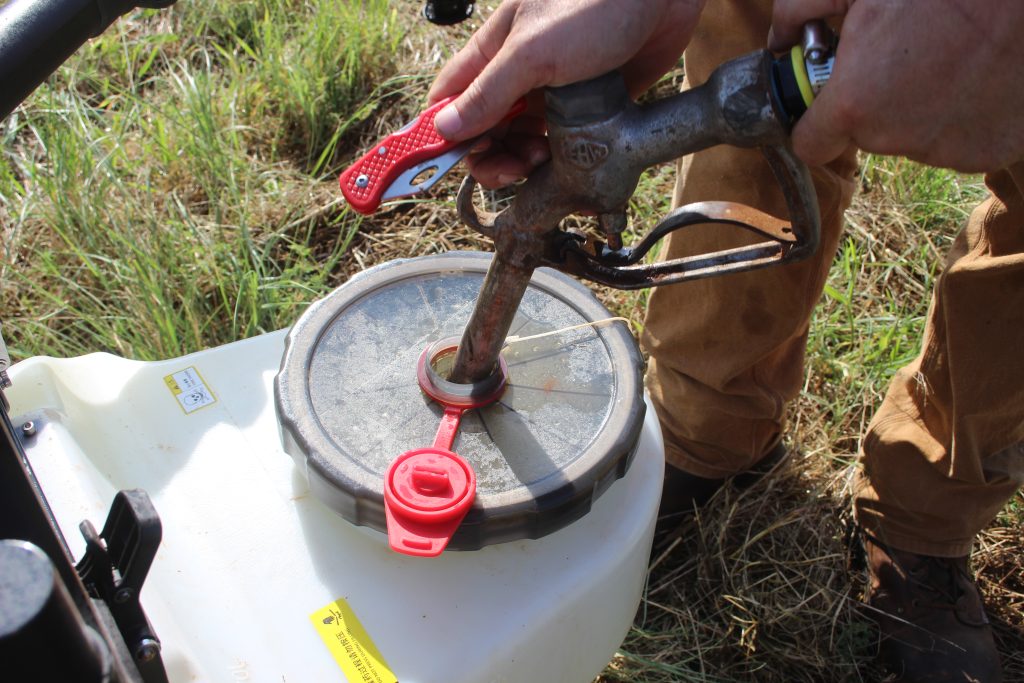
Batteries are another important element for any spray drone operator. Most drones need a new battery installed every 10 to 12 minutes. Efficiency on the part of the operator each time the drone returns to the landing area for a battery swap and a chemical refill is key to best utilizing these machines.
“It’s like NASCAR when the car comes into the pits,” Houser related. “The best operators will have a battery and nozzle in the hand. The battery and fluid go in, and that drone gets back up in the air as quickly as possible.
To be efficient with time, Houser recommends purchasing three to five sets of batteries and having them ready and charged at all times when operating the drone.
“I like to have two is in the charger and three is cooling,” he said. “Lots of times when you charge them, those batteries heat up, and I like to cool them down before I put them in.”
Operations and safety
The thought of operating a flying robot over a field is rightfully intimidating to some, but Houser said if farmers can successfully navigate an iPhone, they can learn to fly a drone with ease. However, just because pilots use a remote that looks like a video game controller, it does not mean running a spray drone is not laborious. Operators must lift a 30–pound battery and rustle a nurse tank hose every 10 minutes in the heat, and they often feel those efforts in the morning.
“The good thing about drones is that most of them have autonomous flying features,” Houser said. “I hit go or start on the controller, and it flies the flight plan for me without me touching it.”
Houser said the accuracy of drone software is extremely precise, which equates to efficiency of inputs applied to a field.
“Most of the drones use GPS points where they stop spraying and return to home, and then once they go back out, they will pick up at that point and keep going.”
Houser said most accidents that occur are due to user error, meaning the operator took manual control of the drone instead of letting it fly autonomously. One of the reasons the FAA has set up so many requirements for commercial drone operators is because they can be extremely dangerous for those in close proximity, and producers need to understand the liability they take on as a pilot.
“Just like any other tractor, sprayer, or combine you’re using, there’s a lot of moving parts, and you as the remote pilot in command, are responsible for everybody and everything that’s happening,” Houser said. “You can’t have any distractions, because animals, kids and observers do not understand that those propellers can kill you. They can actually cut off limbs. As a pilot in command, you are responsible for making sure the safe operation of it.”
Economics of drone ownership
Expenses associated with drone ownership can fall across a wide price range depending on the use and quality of equipment. For imagery drones, producers can expect to pay between $1,000 to $3,000 for the technology. Spray drones, on the other hand, can be quite pricey. Houser said producers should expect to pay $40,000 to $50,000 for a spray drone, depending on the model and features. However, there are additional costs to consider with a spray drone.
“I tell most farmers you’re going to expect probably between $80,000 to $100,000 in costs with the drone, the accessories, nurse tank, trailer, and generator to get started,” he explained. “If you already have some of those then you can wiggle those costs down.”
Although getting started with a spray drone is certainly expensive, producers who go this route are crunching the numbers long-term and seeing the advantages of expenses savings on crops dusting and other spraying costs.
“It’s a cost savings versus hiring custom applicators or purchasing large equipment,” Houser said.
Houser’s advice to beginners with spray drones to keep it simple when starting off with a drone and work their way up if they want to invest more capital in advanced equipment.
“A lot of people have a generator, a trailer and a nurse tank that they can set up,” he said. “They can easily put a nice platform on top of an existing trailer. Start small and then work your way up into the more elaborate things they make.”
What once seemed like technology for the distant future is now being used across the High Plains to great effect, and Houser said more unmanned technology is on the horizon for production agriculture.
“I think that farmers should expect more autonomous equipment, whether it’s an aerial drone or other autonomous equipment,” he said. “With the labor shortage really hitting hard for a lot of farmers, we need to get more done. Now is a good time to start getting your hands on it, understanding the technology and how it works, because I think this will only increase as it goes forward. Technology is the future that the ag community really needs to start understanding and it’s easier to start when it’s young, like it is now, and then build on it in the future.”
Lacey Vilhauer can be reached at 620-227-1871 or [email protected].



