Consumers still may not understand danger of raw flour
It’s good advice that, during the holidays, is often hard to follow.
Don’t eat raw cookie dough.
Kansas State University food scientist Karen Blakeslee acknowledges that it’s often difficult for many to resist the temptation to sample cookie dough before the cookies are baked.
“Unfortunately, consumers may learn the hard way about eating raw flour or raw eggs, and they get foodborne illness,” Blakeslee said.
Consumers seem to be better educated on the risks of consuming products with raw eggs, which may contain Salmonella and lead to diarrhea, fever, vomiting and abdominal cramps.
They are, however, less savvy about the risks of consuming products with uncooked flour, which can also cause sickness due to E. coli and Salmonella. A 2021 survey conducted by the National Center for Biotechnology Information noted that 85% of more those surveyed were aware of flour recalls or outbreaks, and only 17% believed they would be affected by flour recalls or outbreaks.
The NCBI study was similar to a 2019 survey from the U.S. Food and Drug Administration.
“Flour is a raw food, and even though it is milled from grain, it is still a raw food after milling. It has always been that way,” Blakeslee said.
Food scientists have been especially focused in recent years of educating consumers about the link between raw flour and foodborne illness. Blakeslee said E. coli and Salmonella are pathogenic bacteria that can be introduced to grain or flour at several points from the farm to the consumer.
The best way to avoid foodborne illness due to raw flour, she added, is simply “don’t consume products containing raw flour.”
Blakeslee also urged consumers to be aware of potential food recalls related to flour products in the United States. That information is available online at FoodSafety.gov, which provides alerts from the U.S. Department of Agriculture and the U.S. Food and Drug Administration.
“Remember that cake and cookie mixes contain raw flour and should not be consumed for baking,” Blakeslee said. “Just make it and bake it.”
Handling raw cookie dough
Blakeslee said it is safe to handle raw cookie dough with bare hands, “but it is very important to wash your hands with soap and water after handling the product.”
“You want to prevent the chance of cross contamination with other ready-to-eat foods, or contaminating other equipment or surfaces,” she said. “Bake the cookies before consuming them, for the safest result.”
Blakeslee also cautioned against making raw cookie dough for children to use for crafts, sometimes called ‘play clay.’
“This is risky,” she said. “Even if they don’t eat it, they may put their hands in their mouths after handling it. If you choose to do this, supervise children and be sure they wash their hands after playing with raw dough.”
Children, older adults and immuno-compromised individuals are at higher risk of getting foodborne illness.
More food safety tips are available online from K-State’s Rapid Response Center for Food Science. Blakeslee publishes a monthly newsletter, called You Asked It!, with timely tips for safe food in and out of the home.
More information is also available at local extension offices in Kansas.
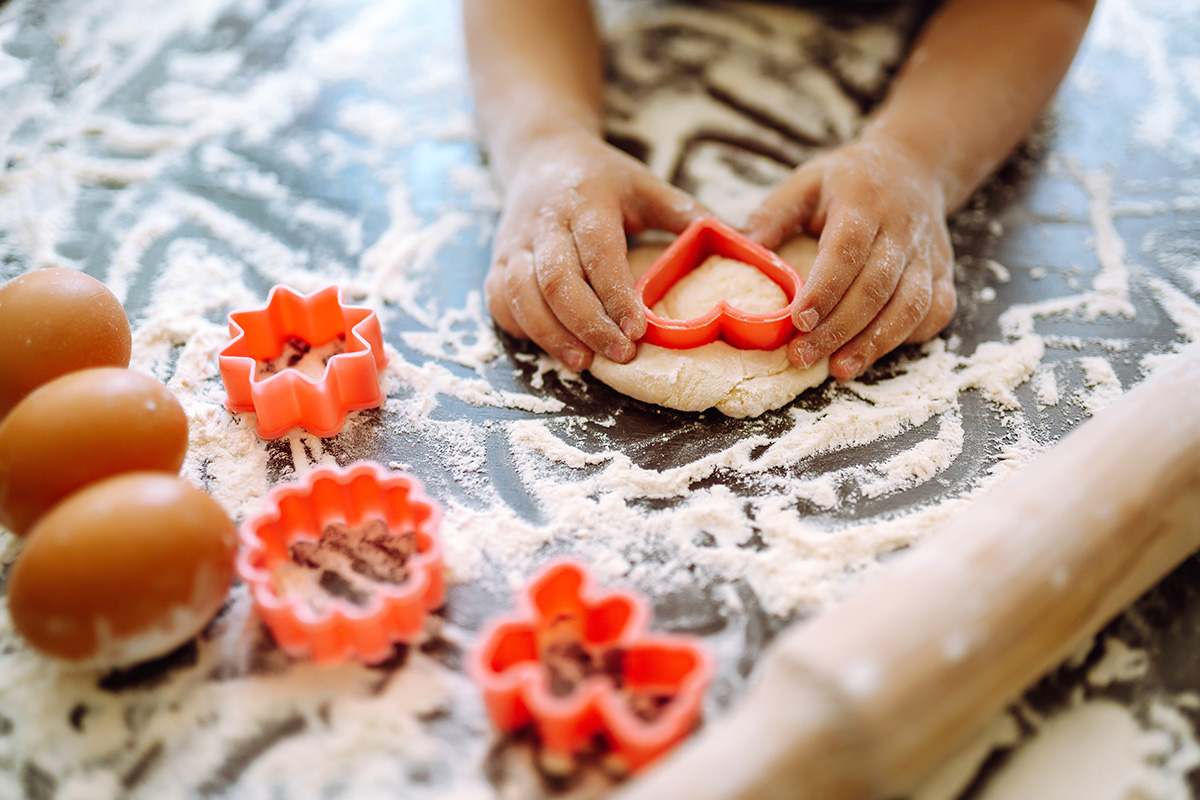
PHOTO: Close up of boy hands carving dough with cookie heart cutters. (Adobe Stock │ #409674758 – maxbelchenko)