West Texas A&M breaks ground on new feedlot, education complex
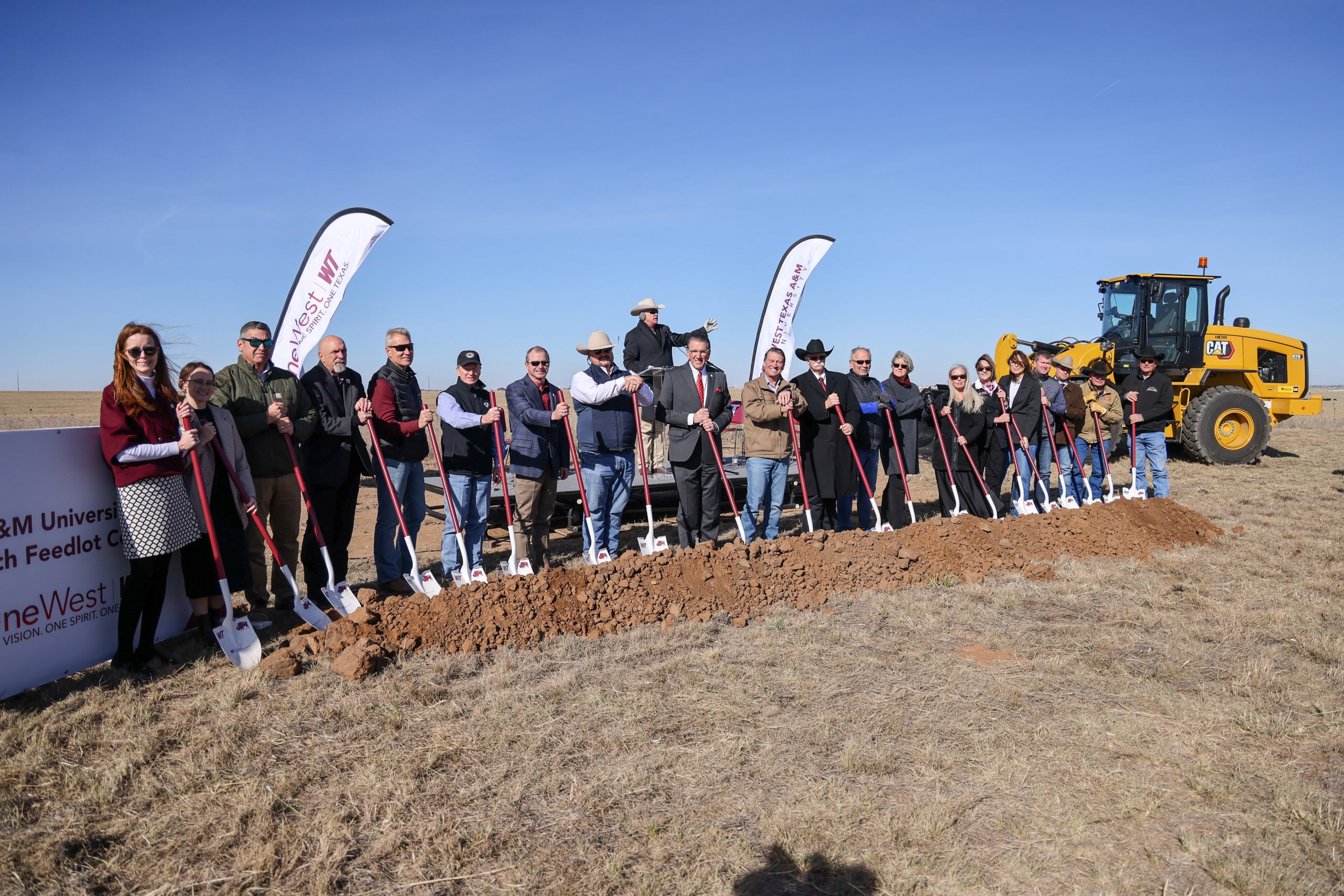
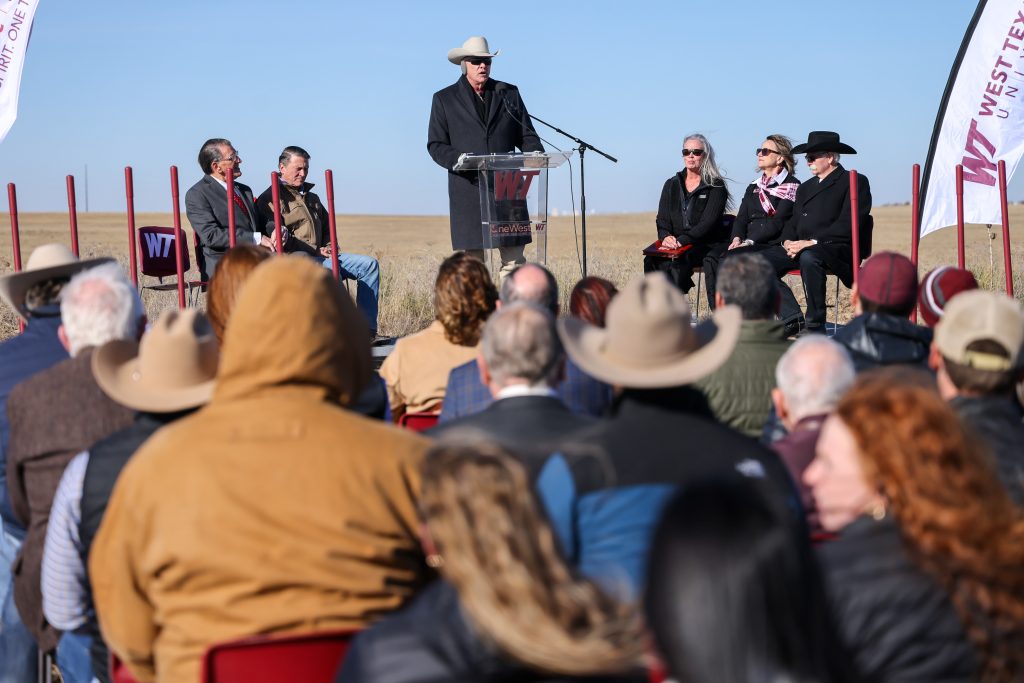
On a cold, windy day in west Texas, a couple hundred people showed up to break ground on a feedlot and education facility near Canyon.
Kevin Pond, dean of the Paul Engler College of Agriculture and Natural Sciences at West Texas A&M University, said the groundbreaking event was one for the record books.
“It was the coldest day we’d had so far. It was windy and miserable, and it was outside, of course, on the top of a hill,” he said. “The wind blew so much, we had to take down some of our display boards.”
But the people stayed, even with the less-than-ideal weather. They were there for an important announcement—a $15 million facility that will deepen the university’s commitment to the cattle feeding industry that’s engrained in the region’s landscape.
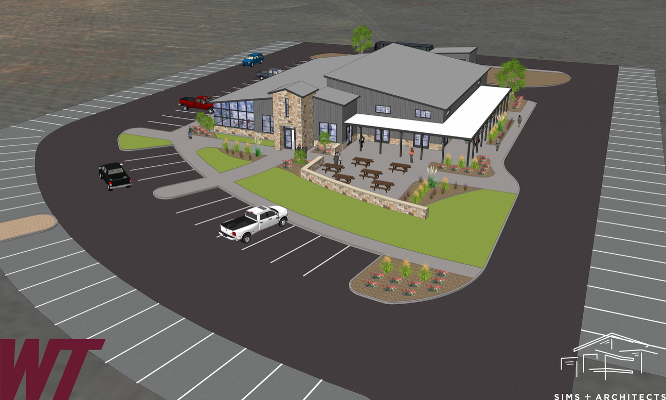
According to WT, the WTAMU Foundation Research Feedlot and the Paul F. and Virginia J. Engler Foundation Feedlot Education Facility will provide state-of-the-art education for its students, as well as directly benefiting the beef producers in the Panhandle region, Texas and across the globe.
Background
John Richeson, professor of animal science at WT, said it’s been a long process to get to the groundbreaking. Initially, the conversations for an upgrade began about nine years ago when the feedmill at the existing research feedlot needed upgrades, he said.
“It’s a great facility. There’s been awesome research conducted there with great faculty members, but the facility is starting to age, and particularly the feed mill,” he said. “The feed mill was actually shut down around that time.”
Discussions progressed about how to renovate the existing feed mill, and as faculty numbers at WT increased, they realized a larger facility might be beneficial.
“We could definitely use a facility that’s just larger capacity to facilitate more research with more faculty,” Richeson said. “And shortly after the initial discussions we realized that we wanted to expand our pen counts as well as the number of pens.”
Paul Engler was a “huge supporter” of the project, according to Richeson, and gave the team great input. Pond agreed. The College of Ag at WT is named after Engler, who made much of his income from the cattle feeding business.
“He was pushing for us to be the leader of research and of education in the feedlot arena,” Pond said. “His view was to have WT be the premier spot for that. During his life, he pushed very hard for us to find a location and then raise money to put in the feedlot.”
Engler, who died more than a year ago, was involved with the site selection, and his foundation also provided funds for the education center, which will be named after his foundation. The team decided to build the best facility possible.
“We identified a better location that’s not far from the existing research feedlot and made the transition to building an entirely new facility,” Richeson said.
Specs
The new facility will be on 42.84 acres donated in 2024 by the Nance Ranch. A $2.1 million U.S. Department of Agriculture grant has been secured as well as $2 million from the Engler Foundation. Champion Feeders gave an additional $1 million to the effort.
According to WT, construction is expected to begin in the winter on the education center and later in 2026 on the feedlot. The USDA grant requires the recipient to own the education facility; thus, the WTAMU foundation will own the building and feedlot, and both will be managed and operated by the university.
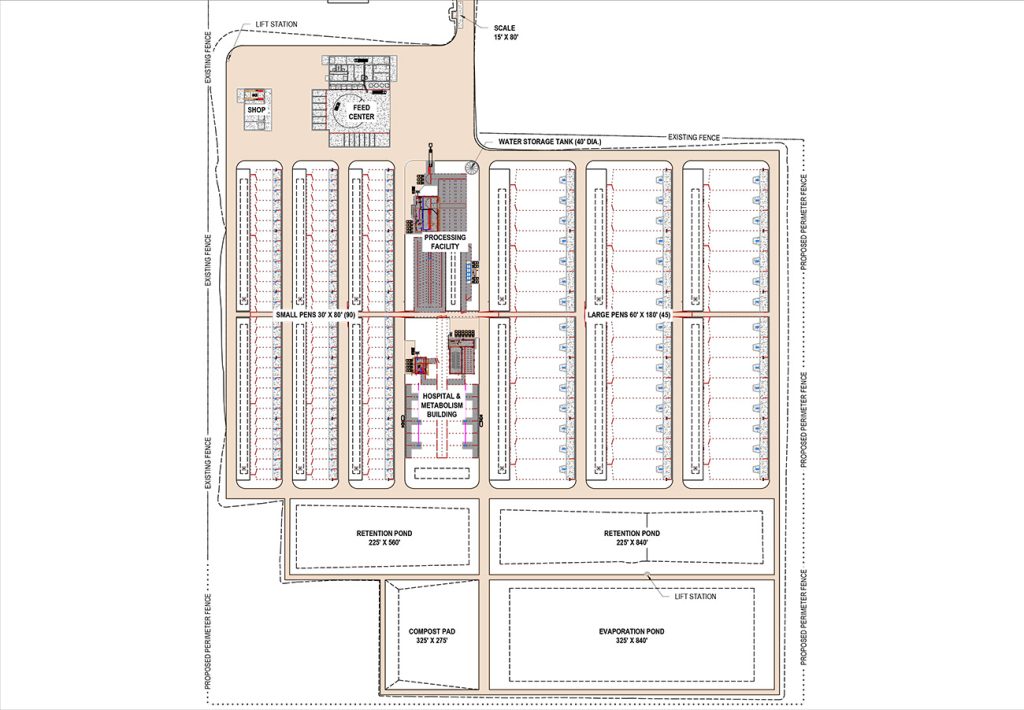
The facilities will be built southwest of the existing WT feedlot near Nance Ranch, which is east of Canyon. Plans are set to include the educational center with a classroom and small auditorium. The feedlot is expected to include 90 ten-head pens, 40 70-head pens, as well as state-of-the-art technology for monitoring and feed manufacturing and delivery; and a top-of-the-line animal-processing facility and feed mill.
Richeson said additional funds have been raised, but they’ll need to collect more.
“It’s been awesome to see an effort between both commercial feedlots who have donated, companies have donated, individuals and different foundations have donated,” he said. “It’s really been a diverse effort. We’ve made a ton of progress on fundraising, but we still have some to go.”
Importance to feeding, region
At WT, which has about 9,000 students enrolled, 1,200 of whom are in the college of ag at the university. Canyon is smack dab in the middle of cattle feeding country. Pond said about 25% of the nation’s cattle are fed out and harvested within 150 miles of WT.
“So, we provide a lot of the beef for the nation and everywhere else. This is part of our culture,” he said. “It’s an obvious spot to have a center that can teach and also do research on cattle to provide the industry with their needed knowledge.”
Richeson believes students come to WT and are drawn to cattle feeding for several reasons. And the new facilities will help with that.
“Well, the facility itself is going to be unlike any other research feedlot in the world,” he said. “Because we’re going to have research capability all the way from the individual animal level, looking at individual measurements and intense measurements, all the way to large pen replicated research that more closely mimics what a typical commercial feedlot pen size is and gives us a large sample size to be able to do certain type of research.”
Research to replicate typical commercial pen size requires larger numbers of cattle and everything between, according to Richeson.
“I think the facility be a huge draw,” he said. “There’s going to be an educational center located adjacent to the feed yard, which will be a great learning environment for students as well.”
When it comes to the regional draw, there will be cattle needed to fill the pens. Cattle producers within 100 miles will have one more place to feed out their cattle.
“Just the location of WT is a huge advantage, and always has been,” he said. “But now with this new facility and all the capabilities with that, I think it’ll be a huge benefit to our students and a huge benefit to the industry as we train students and send students out into industry or into academia to help support cattle feeding.”
Pond said most of the students who will utilize the new facility come from Texas, but there’s others from Colorado and surrounding states—and potentially all across the nation.
“We have a large draw for those interested in agriculture. Those interested in cattle and cattle feeding also tend to come our direction, because we’re located in the area where they can get great internships, great work experience, and really get both industry exposure and involvement while they’re going to school,” Pond said. “It is a drawing card for students to come this direction.”
Pond said the meat science program at WT is excellent and because meat is the end-product of the feeding business, and it’s important for students to have proper experience and education around meat science.
“Having a feedlot that feeds into that meats program is a perfect combination,” Pond said. “We expect this to attract students to come to the university. We also expect others be attracted to the education center to learn more about cattle feeding, whether they be from out-of-state or in-state, community groups or people from around the country or even around the world that want to know more about cattle feeding.”
Richeson said the background of students who come to learn about cattle and cattle feeding is diverse.
“Some have very little experience with cattle or cattle feeding. Some have a lot and I’ve had a grad student whose father was a general manager at a big commercial cattle-feeding entity, and he grew up and around it his entire life,” Richeson said. “So, we definitely see a range. We take on great students with huge potential that maybe don’t have as much industry experience or cattle experience.”
Many undergraduates move on to feedlot management trainee positions or lower-level management positions in the feedlot and work their way up to positions like a general manager.
Graduate students often head to industry positions, he said, but some go into academia.
Current conditions
Currently the beef business is seeing record prices with some of the lowest herd numbers in 70 years. Richeson said that it creates challenges and opportunities for cattle feeders.
“We’re paying a lot for feeder cattle, so there’s even more capital risk involved,” he said. “That’s both a challenge and an opportunity.”
There’s a lot of competition for purchasing cattle and keeping pens filled to keep feedlots at maximum operating capacity.
“There’s definitely been some changes, and the beef on dairy cattle have played a huge role during this really low beef cow inventory time,” Richeson said. “And I think, I think cattle health has been it’s always been important, but keeping cattle healthy and minimizing death loss becomes even more important as the price of cattle increases.”
Kylene Scott can be reached at 620-227-1804 or [email protected].