As Valentine’s Day approaches, many people focus on roses, chocolate and greeting cards. But a Kansas State University child development specialist says the holiday also offers an opportunity to practice kindness.
Bradford Wiles said Valentine’s Day celebrates love, and a key part of love is kindness — toward partners, children, siblings and peers.
“I always implore people to be kind to themselves (because) it’s really easy to not be kind to ourselves,” Wiles said. “We make mistakes, but then we ruminate on them. We allow them to dominate thoughts about something that otherwise would be just fine. We need to learn to be kind to ourselves, as well.”
Listen to an interview by Jeff Wichman with Bradford Wiles on the weekly radio program, Sound Living
Wiles said children learn how to express love and empathy from the adults in their lives. Teaching children early to understand what others are feeling and thinking can make kindness a lifelong habit.
“The reality is that the earlier you learn about expressing feelings about empathy — especially understanding what other people are doing and feeling and thinking — and making a habit of being kind, then the easier it is for you to do that throughout your lifespan,” he said.
Wiles added that research shows people who practice kindness and gratitude tend to be healthier and better adjusted.
“And I can tell you that people who practice kindness, people who practice gratitude, are just healthier, happier and better adjusted people,” Wiles said. “The research bears that out unequivocally. And it’s not that they’re kind because they’re healthy and happy. They’re healthy and happy, because they’re kind.”
He noted that children who develop an outlook shaped by fear or suspicion often do so because of early experiences. While those tendencies can be overcome, Wiles said practicing kindness early in life can make challenges easier to navigate.
For young children, Valentine’s Day is typically not about romantic love. Instead, their first experiences with the holiday happen within the family.
“At home, it’s really a chance for parents and primary caregivers to express love, comfort and support for their child in ways that are very healthy, that clearly don’t have the romantic component,” Wiles said. “The home is a great place to leverage the chance to really talk about how much you love and support your child, while making them feel loved and included.”
Wiles encouraged parents to involve children in expressing love and gratitude toward family members.
“Valentine’s Day gives you a chance to provide gratitude for the love you feel toward them, but also the love you receive from your children,” he said.
Helping children understand they contribute to family relationships can be empowering, Wiles added. It reinforces that love and support are not one-directional, but shared.
More information on child development is available online through K-State Extension.
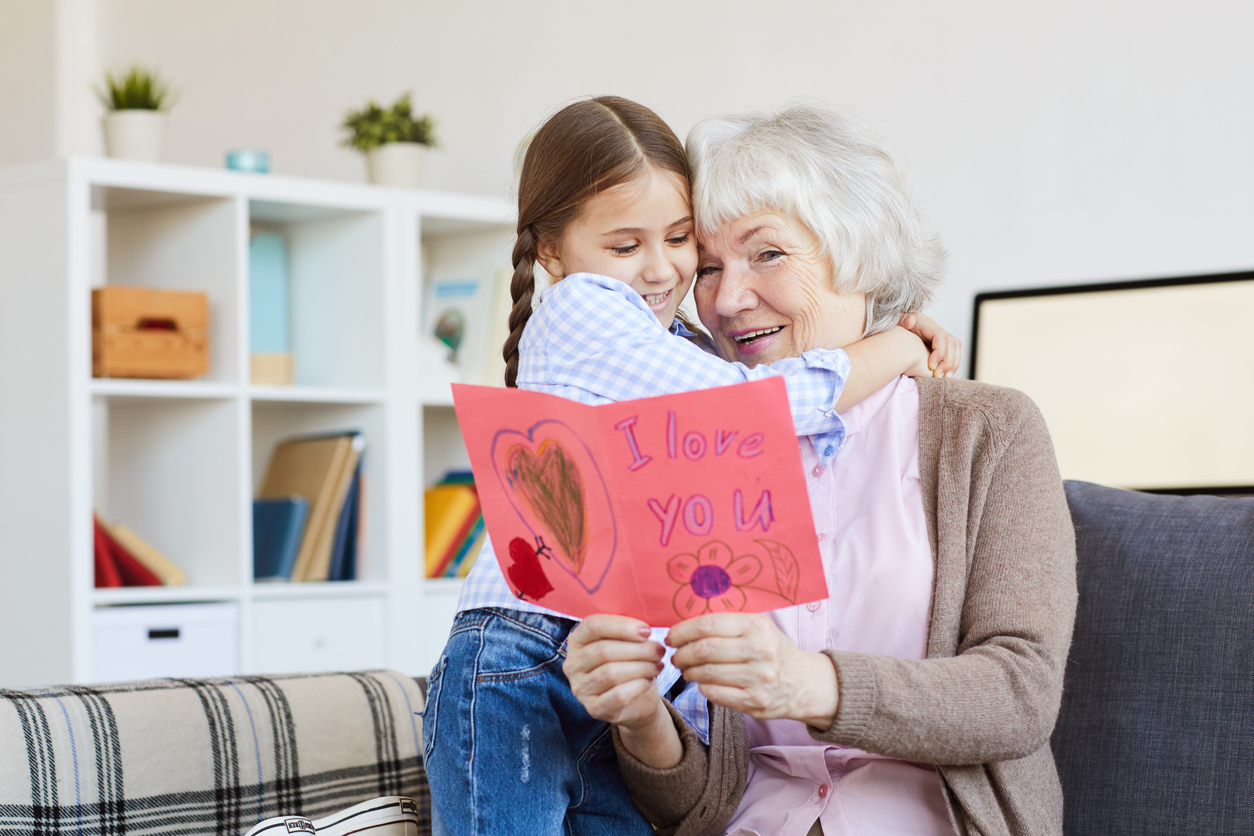
PHOTO: Portrait of cute little girl hugging grandma and giving her handmade I love you card on Valentines day. (iStock │ #1141513700 – SeventyFour)