For some organizations, no news is good news, but for the Swine Health Information Center, it takes a proactive approach.
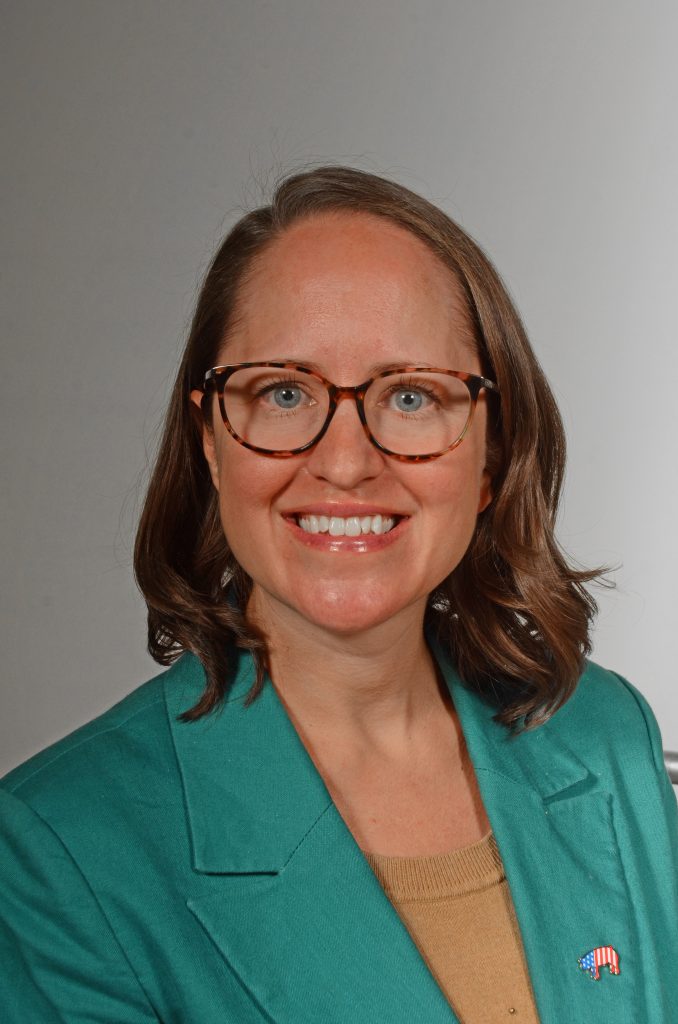
Executive Director Megan Niederwerder, who is also a veterinarian, said the mission of SHIC since its inception in 2015 has been to focus on how to mitigate and identify any emerging disease threat that could have impact on the production, economics and health of the United States swine herd.
It was formed as a proactive organization to address future threats after the introduction of porcine epidemic diarrhea virus in 2013. PEDv is a coronavirus that affects swine, causing diarrhea and vomiting, and death of 50 to 100% of infected piglets, according to the U.S. Department of Agriculture.
Niederwerder credited the nation’s pork producers for their advocacy. They wanted an organization like the Swine Health Information Center that could be out front and be able to say, “Let’s be prepared. Let’s identify the next emerging disease risk, and let’s make sure that we do everything that we can to reduce the impact.”
SHIC recently released its 2025 Annual Progress Report to the National Pork Board.
SHIC started as a five-year pilot program with funding from the Pork Checkoff, which was renewed in 2021. In 2025, the National Pork Board voted to provide $2.5 million to fund SHIC, affirming the value to producers whose checkoff investment funds a significant portion of the operation.
She said collaborative grants from multiple sources are used to leverage success. SHIC noted in its report that from 2022-25, it secured $5,041,094 in matching funds and external grants. That means external funding sources are equal to $0.49 of non-Checkoff funding for every $1 of Checkoff support. In 2025 alone, SHIC contracted $4,434,466 across 32 research projects.
“We take the Checkoff investment that we’re given as very precious and very judiciously we want to stretch the producer dollar as much as possible by leveraging other entities whose research objectives align with ours,” Niederwerder said. “What we’ve seen over the last four years is that we’ve really had a lot of success with federal public dollars that also align with the producer priorities that have been developed through the Swine Health Information Center.”
Producer and veterinarian leadership have been the cornerstone, she said, as the Manhattan, Kansas-based organization looks for ways to provide the most value to producers, while protecting herd health and being transparent.
“We look at every dollar to make sure it is really stretched as much as possible so that we can get information back to producers and utilize their dollar most effectively,” Niederwerder said.
This past year SHIC celebrated 10 years of working to mitigate swine disease threats on behalf of pork producers with its partners: National Pork Board, the American Association of Swine Veterinarians and the National Pork Producers Council.
An important service
Emerging diseases have to be aggressively attacked, including respiratory diseases, Niederwerder said. Threats of porcine astrovirus and porcine sapovirus can cause significant production impacts on piglets.
The introduction of African swine fever in China in 2018 and its spreadto many parts of Asia and then later expansion into the Dominican Republic and the island of Hispaniola are on SHIC’s radar.
“As we think about many of these diseases, they continue to be introduced or reintroduced into new countries. We have lessons to be learned as far as what happens when a foreign animal disease is introduced into a country outside of the U.S.,” she said. “We learn how they contained it, how they mitigated it and how they eradicated it.”
When foot-and-mouth disease virus was introduced into several European countries in the past year, including reported cases in Germany, Hungary, and Slovakia, those countries quickly controlled it with new strategies.
She said by being proactive, U.S. producers and swine veterinarians can learn from other countries, but also to assess risk factors, modifications to protocol, and ultimately to protect America’s U.S. swine herd.
New World screwworm
SHIC also works closely with other organizations that deal with animal health that can have an impact on swine health. While the New World screwworm has mostly been associated with beef cattle, she noted that it also can affect swine, other livestock and even humans. The Southern Border was closed to livestock imports in 2025 and remains closed.
The swine industry also has much at stake in keeping NWS out of the U.S., along with cattle producers.
“We want to make sure that our industry is able to identify a potential incursion of a foreign animal disease or transboundary animal disease as quickly as possible so that we can contain and eradicate it,” Niederwerder said.
Multi-species diseases remain top-of-mind conversations for veterinarians and animal health organizations, she said.
After the discovery of highly pathogenic avian influenza in the nation’s poultry herd, dairy cattle operators also reported cases of H5N1 in affected livestock in 2024, Niederwerder said. That led SHIC to invest in a research program so the swine industry could be prepared. So far there have been no cases of H5N1 reported in the nation’s commercial swineherd.
Pork producers needed to know if it could affect suckling piglets, growing barns, and breeding pigs. Another question was could it impact lactation in the sow barn.
“We want to learn from our dairy and poultry colleagues,” Niederwerder said. “They’re multi-species diseases and so collaboration across the barnyard is important.”
SHIC’s work is noted across the livestock industry.
When the dairy industry was first exposed to the H5N1 virus, one of the resources the industry turned to was SHIC’s standardized outbreak investigation program. Found on SHIC’s website, it includes a web-based application form that can be used to identify potential risks with the introduction of pathogens. The form can collect data to help identify the greatest risks for the introduction of a disease.
For swine managers, the form can touch on personnel, feed sources, equipment, maintenance technicians and crews, contract crews, and potential impact on pigs.
“Understanding the risks for pathogen introduction can apply to those endemic and emerging diseases while also reducing the risk of foreign animal disease,” she said. “We always want to close the gap, from a biosecurity perspective, to prevent the entry of any pathogens.”
Resource at their fingertips
Niederwerder encouraged pork producers to sign up for the newsletter at https://www.swinehealth.org. The newsletter comes out once a month, and it includes a global disease monitoring report that provides a snapshot of what’s occurring with diseases in other countries and if they have been spreading. She added that a second report also tracks domestic diseases.
The newsletter and website also include research outcomes that are summarized and provide information that producers can apply to their own farm operation and also assist their veterinarians, Niederwerder said.
“We always want to make sure that anything (knowledge, data, or tools) is being generated, and that information gets out to producers to provide the greatest value on their farms,” she said.
The website also includes information on diseases, a fact sheet on the New World screwworm, and images to help producers with identification.
Dave Bergmeier can be reached at 620-227-1822 or [email protected].