
Prices and demand for red meat remains strong
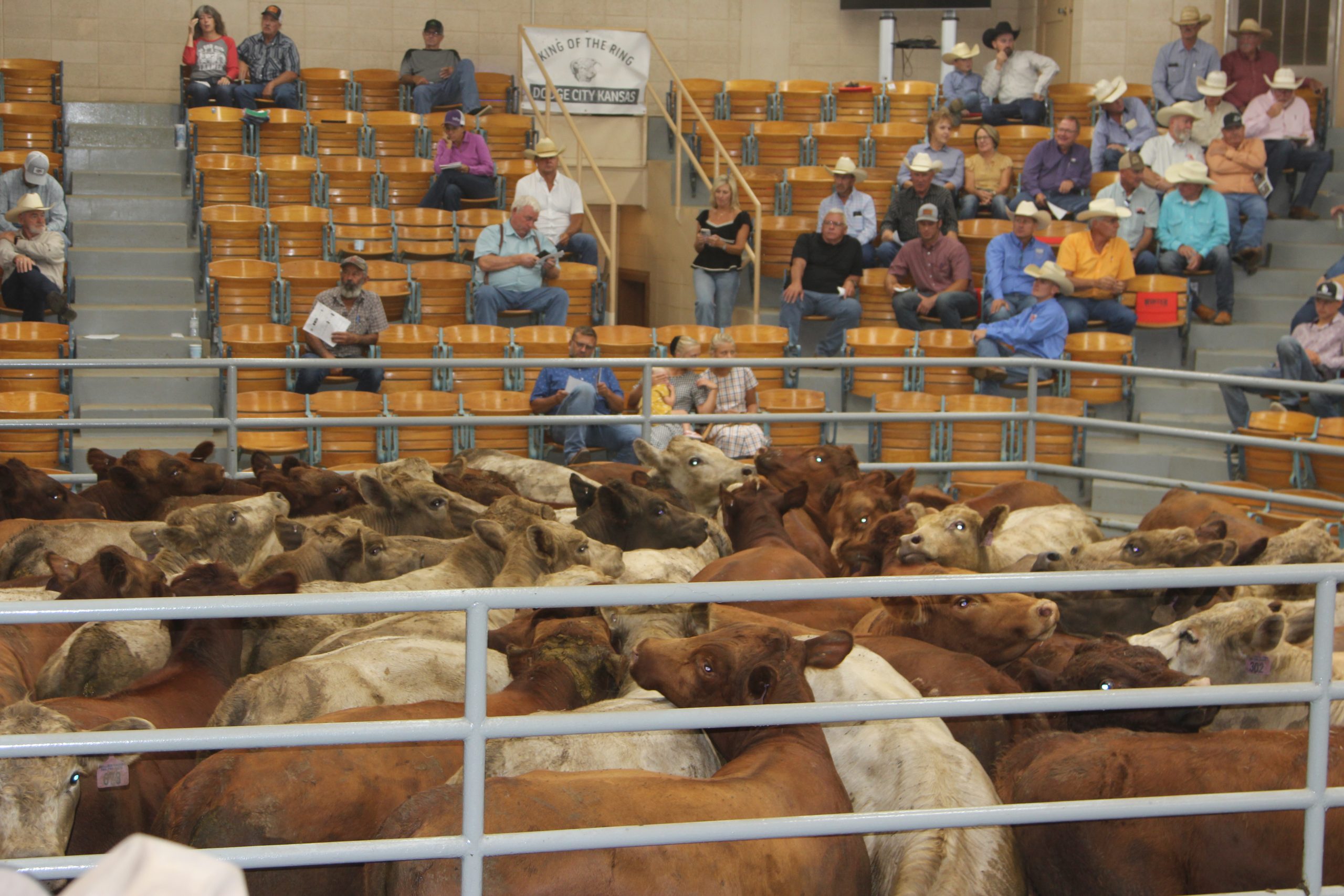
Beef and pork sectors are expected to produce more red meat and prices are expected to hold strong, according to the Feb. 10 U.S. Department of Agriculture’s World Supply and Demand Estimate’s report.
For 2026, total red meat and poultry production was raised as higher beef and pork production was partially offset by lower broiler and turkey production.
Beef production was projected at 25,920 million pounds on an annual basis and pork at 28,275 million pounds, up from last month’s projection of 25,735 million pounds and 28,215 million pounds, respectively. Total annual poultry production was estimated at 54,010 million pounds compared to 54,120 million pounds a month earlier.
Beef
The report noted that beef production was raised on a higher processing of steers and heifers, increased cow slaughter, and slightly heavier dressed weights. The report also noted an overall decline in beef production the past two years.
The Livestock Marketing Information Center has suggested the United States’ domestic production in 2026 will be 1.87 billion pounds lower than in 2024, according to Glynn Tonsor, a professor in agricultural economics at Kansas State University. Imports may be up 865 million pounds, but exports down nearly 500 million pounds leading to a net and total disappearance of about 500 million pounds.
Tonsor said it means that heavier weight cattle have been going through processing plants but that has been an ongoing trend.
“In short, 2024 domestic beef consumption was higher than 2023 and would not have been without an increase in dressed weights,” Tonsor said. “That more weight per animal trend continues and is important—simply counting the number of beef cows is not sufficient for appreciating the supply situation.”
The USDA’s Jan. 30 cattle report estimated the 2025 calf crop was lower than the previous year, but as of Jan. 1, more cattle held outside feedlots were available to be placed during the first half of 2026.
For 2026, fed cattle prices were raised for all four quarters on recent prices and continued demand strength, according to the WASDE report. Steers, based on the 5-area direct report, on an annual basis averaged $240 per hundredweight, an increase of $4 per hundredweight a month earlier.
Beef imports were raised for 2026 based on continued strong demand for lean processed beef and the recent agreement between the U.S. and Argentina that increases its beef import quota. Conversely, beef exports were unchanged.
“I expect rather small national impacts from this latest announcement,” Tonsor said. “The broader uncertainty around international market access, curation and terms is arguably a bigger market mover as most agricultural markets do not desire elevated uncertainty.”
During the recent National Cattlemen’s Beef Association’s CattleCon, top of mind for the industry was the continued lockout of U.S. beef in the China market, according to two spokesmen with U.S. Meat Export Federation.
USMEF Vice President of Economic Analysis Erin Borror explained there has been little progress on the issue.
China continues to refuse to renew registrations for U.S. beef production and cold storage facilities, she said. Most U.S. beef production has been locked out of China since March. Borror explained that, even with low cattle inventory, access to China is vital for maintaining value across the carcass.
USMEF Chair Jay Theiler of Agri Beef Co. recently traveled to Washington with other USMEF leaders to talk with USDA and Office of the U.S. Trade Representative officials about the importance of regaining China access. Theiler said the government is fully engaged on the issue and understands the importance to U.S. producers.
Pork
Pork production was raised on higher processing and slightly heavier dressed weights during the first half of the year based on recent slaughter data.
Hog prices were raised for all four quarters on strong pork demand and higher prices in the cattle sector. Prices on an annual basis was set at $69 per hundredweight, which was $2 per hundredweight higher than the January report.
Tonsor said beef and pork prices could continue to be supported if consumer demand remains stable in 2026 relative to 2025.
“Noteworthy here is the role of consumer demand—while overlooked—it is truly mission-critical to economic viability of the broader industry,” Tonsor said.
Pork exports were raised on more exportable supplies and improved competitiveness. On an annual basis, in February exports were projected at 7,135 million pounds, up from 7,085 million pounds a month earlier.
As beef and pork producers evaluate reports, Tonsor said his advice is for them to be aware and informed of broader trends but ultimately focus their efforts on things they can control that also have a direct influence on their operation. Those include knowing their operations margin costs of production and making incremental gains in quality of production that makes economic sense, he added.
Dairy
Milk production was raised for 2026 on faster growth in milk per cow, more than offsetting lower expected cow inventory. The production was estimated at 234.5 billion tons for 2026.
Fat basis imports are reduced primarily on lower imports of butter. Imports on a skim-solids basis are unchanged. Exports are raised on a fat basis on higher exports of butter and cheese, but reduced on a skim-solids basis on lower casein and lactose.
Annual price forecasts for cheese, butter, nonfat dry milk, and whey are all increased for 2026 on recent prices. The Class III and IV price forecasts are also raised on higher product prices. The all-milk price for 2026 was raised to $18.95 per hundredweight, which is 70 cents per hundredweight higher than a month ago. A year ago, the price was $21.17 per hundredweight.
Dave Bergmeier can be reached at 620-227-1822 or [email protected].


