Succession planning is a process
Many families have stories about what goes wrong when transition planning is ignored.
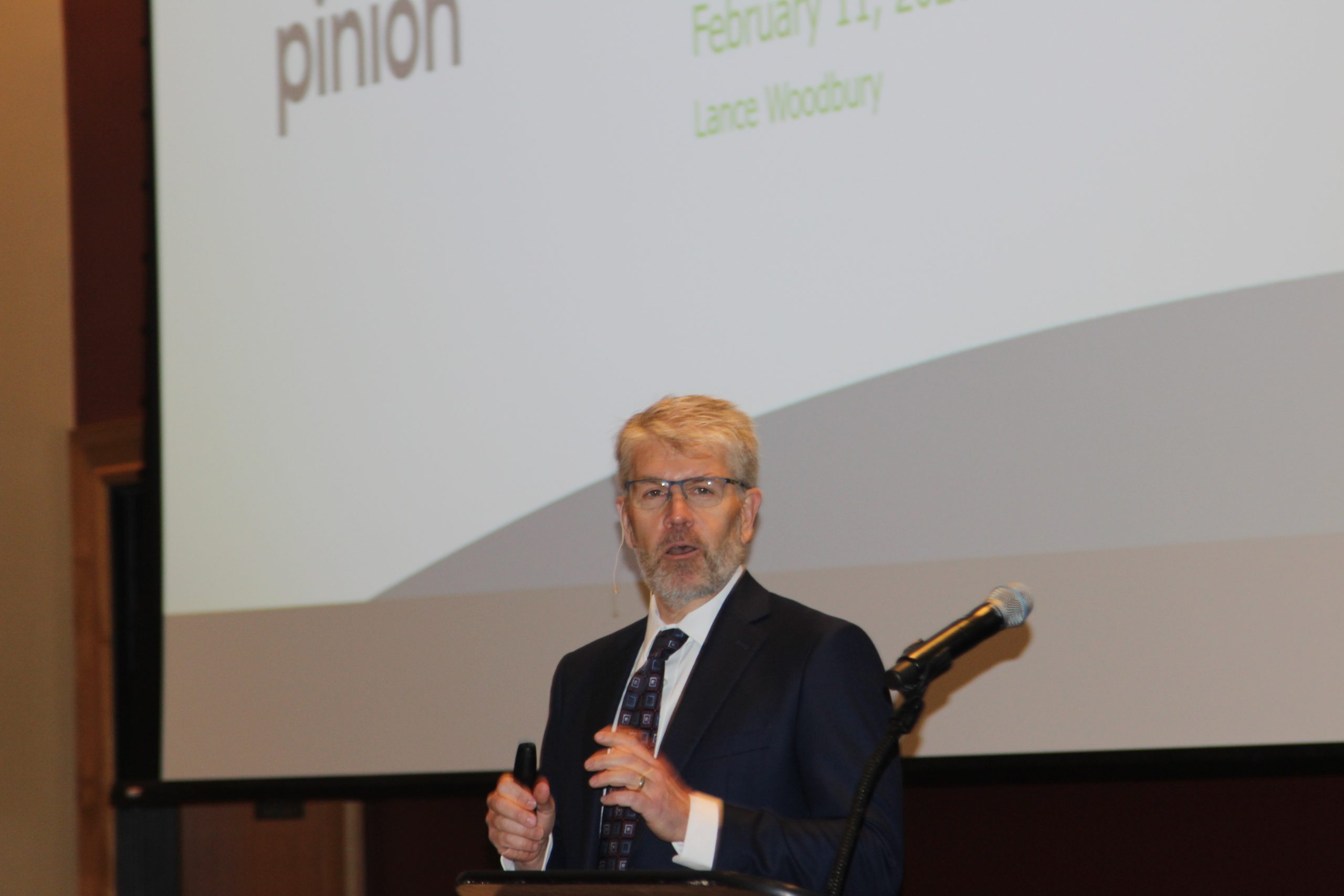
Lance Woodbury (pictured at top) specializes in legacy planning, land transitions and succession for more than 25 years, says he also has experienced that too.
Woodbury, a principal at Pinion, was raised on a farm and ranch in Wichita County, Kansas. Woodbury was a featured presenter at Crop Quest’s Grower Focus Feb. 11 at the Boot Hill Casino and Resort in Dodge City, Kansas.
Conflict revolves around an unwillingness for those in charge to let go of control, he said, as he remembered a quote, “Death destroys a man, but the idea of death saves him.”
Families with farm and ranch operations face problems when they do not set aside time to talk about the future. Woodbury said he understands the dilemma. A farmer-rancher not only is the owner, he or she is also running day-to-day operations. That means marketing crops and livestock, plus working with people and technology.
Succession planning also means not only thinking about an estate, but also a return on investments that will allow a family to preserve, protect and grow its base, he said. Keeping a farm and ranch in the family also has challenges with on-farm and off-farm members, he said.
His advice is always to try separating out each important segment. With estate planning, it requires an accountant and attorney. When focusing on management strategies, stick to operational needs and do not bring it home to the dinner table.
Family discussions need to adhere to family guidelines.
Woodbury said patience is important.
“Why is it hard?” the Pinion adviser said. “Because when your business is growing, it takes time—often many years.”
Nearly all farm and ranch businesses have a similar footprint, he said. The early years are known as a time of survival, but as they grow, they advance to the stable period. If they continue to expand, it moves to the professional stage that requires more employees and formalized roles in the management. If that continues, it can enter the enduring legacy phase.
He termed it the laddered approach. The family is a key part throughout all the phases and communication is important. In some cases, legacy planning may take a family beyond what makes sense to the members.
“If you decide as family the right answer is to do something different, the most important thing to do is to do it as a family,” he said. “If you get to the point where no one comes back, then what will you do?”
Woodbury said estate planning is different from succession planning, although they may share some common links. Estate planning is a process to determine how to move wealth from one generation to the next. The succession plan revolves around the psychological ownership of vision and goals to the next generation and may need regular updates.
Glossing over important matters and making assumptions does not work, he said. Woodbury encourages the older generation to take a mentoring approach to help the younger generation.
He noted that communication is a two-way process.
When helping families it generally takes up to five years because of so many facets although it can take longer depending on the complexity of the operation.
Preserving family relationships is a must, he said.
He often suggests that a family should develop a guiding principles plan and put it down in writing and share it with an attorney or trusted adviser. Woodbury also believes it is important to incorporate in-laws into a planning process because they will have direct influence, too.
“Think about you first next step,” he said. “If you do that, the next step will happen. Just take the step.”
Dave Bergmeier can be reached at 620-227-1822 or [email protected].