Kansas Farm Bureau highlights mental health awareness in agriculture
In response to widespread mental health challenges in the agriculture sector, Kansas Farm Bureau launched the Rural Minds Matter initiative several years ago, to raise awareness of mental health resources available to farmers and ranchers. The Farm Family Resiliency Task Force was created with a group of passionate Farm Bureau members who wanted to provide outreach for rural people who were struggling with the stress and mental health strain farmers and ranchers often carry.
“At Kansas Farm Bureau, our mission is to strengthen agriculture and the lives of Kansans through advocacy, education and service, and part of that we feel is to shine a light on mental health and agriculture,” said Sheridan Wimmer, director of communications at Kansas Farm Bureau.
Rural Minds Matter
Steve McCloud is the Kansas Farm Bureau fourth district director and a member of the FFRTF. McCloud is also a real estate appraiser specializing in agricultural and commercial real estate and a cow-calf producer, so he recognizes the pressure farmers and ranchers are under.
“Things are pretty tough in the agricultural sector right now, particularly on the crop side of it, and I’m seeing folks that are certainly having to restructure debt and come up with some different ways to keep going.”
McCloud said the current economic situation has developed from a variety of factors, including long-term drought, low commodity prices, high interest rates, trade decisions and increased input costs, among others.
“Farmers have found themselves in a classic cost-price squeeze, where the income side is down and the expense side is up,” he explained. “I don’t care what your business it is, if income is going down and expenses are going up, you’re going to find yourself under some stress, mental and otherwise.”
Both Wimmer and McCloud cited the high suicide rate for farmers, which is one of the reasons Kansas Farm Bureau chose to develop the task force.
“We know farming and ranching are really hard occupations,” Wimmer said. “Suicide rates among farmers are three and a half times higher than the general population.
According to U.S. Centers for Disease Control and Prevention, suicide rates among rural residents almost doubled from 2000 to 2020. McCloud said since agriculture is often a generational business that is passed down through the family, the stakes are high to keep the operation in business. That weight to maintain legacy farms and ranches can put additional mental strain on producers when times are tough.
“Nobody wants to be the one to lose or mortgage Grandpa’s farm,” he said.
Reaching out to rural Kansans
KFB introduced the Rural Minds Matter Advocate of the Year awards a few years ago to give credit to those who are helping others in their rural communities handle mental health challenges and normalize talking about these issues.
Wimmer said there are two awards, one for the 18- to 35-year-old group and one for the 35 years and older category. The awards are presented through Farm Bureau’s Young Farmers and Ranchers program. The nominations for 2026 will open in May to commemorate Mental Health Month and can be found on the Rural Minds Matter website.
“That’s been a really great addition to our mental health resources,” Wimmer said. “It provides a way for people to share the work that they’re doing for farmers and ranchers and it’s a really good opportunity to find the people who are making the differences in their communities and reaching our farmers and ranchers in really meaningful ways.”
McCloud said the FFRTF has been meeting quarterly to discuss ways to normalize mental health concerns in agriculture through the outreach programs and KFB’s mental health digital campaign.
“Right now, it’s easier to shine a light on mental health, because we’re just getting better about talking about it in general,” Wimmer explained. “I know there’s a stigma behind it, but I do think that there has been a lot of work done to share the message with farmers and ranchers that ‘It’s OK to not be OK,’ and that there are resources out there for them.”
McCloud said agriculturists can be difficult to reach on a topic such as mental health.
“Farmers tend to be a pretty self-sufficient, pull yourself up by your bootstraps, type of folk,” he said. “We’re trying to break through that.”
McCloud said the task force is also addressing the need for adequate mental health care, particularly in rural areas.
“There’s a lot of work that’s been done and there’s a lot of work yet to do,” he said.
Addressing mental health concerns
Agriculture is often a lonely occupation. It can include long hours by oneself in the field, feeding cattle or fixing fence. But just because a producer drives a tractor alone, doesn’t mean he or she has to face mental health conditions by himself or herself. Help is available when life becomes too much to manage.
“I think the first step is just acknowledging that something may not be quite right, and reaching out to someone they trust, whether that’s a significant other, a neighbor or someone in their church,” Wimmer said. “Reaching out is probably the hardest part.”
Wimmer said anonymity is often important to rural citizens and makes it easier for them to take the first step. She said there is a program called Togetherall, which is a free, anonymous, online community that empowers farmers and their families to get and give support. More information on this program can be found on the Rural Minds Matter website.
“As rural and agricultural folks, we tend to think we can handle it all on our own, and many times that isn’t the case,” McCloud said. “Things can look really bleak, but there is help available, and please don’t be afraid to reach out.”
Both Wimmer and McCloud said everyone should be looking out for their friends and neighbors that could be experiencing a mental health crisis and try to help, if possible.
“If your friend all at once stops showing up for coffee in the morning, or maybe he doesn’t show up for church or Bible study or a basketball game, that can be a warning sign,” McCloud said. “Check on your friends and look for things that don’t seem quite right and then don’t be afraid to reach out.”
Wimmer agreed.
“Our farmers and ranchers are important parts of our society, especially in Kansas, where agriculture is the economic backbone, but they are also our neighbors and our community members,” she said. “More than that, our farmers, ranchers and rural community members are the backbone of families and loved ones. They face unique challenges like weather, market swings and financial uncertainty—and through the work KFB and others are doing in this space, we hope to build hope.”
To learn more about mental health in agriculture and access the resources provided by Kansas Farm Bureau, visit www.kfb.org/ruralmindsmatter. If you or someone you know is struggling with suicidal thoughts, contact the Suicide & Crisis Lifeline by visiting www.988lifeline.org, or by calling or texting 988.
Lacey Vilhauer can be reached at 620-227-1871 or [email protected].
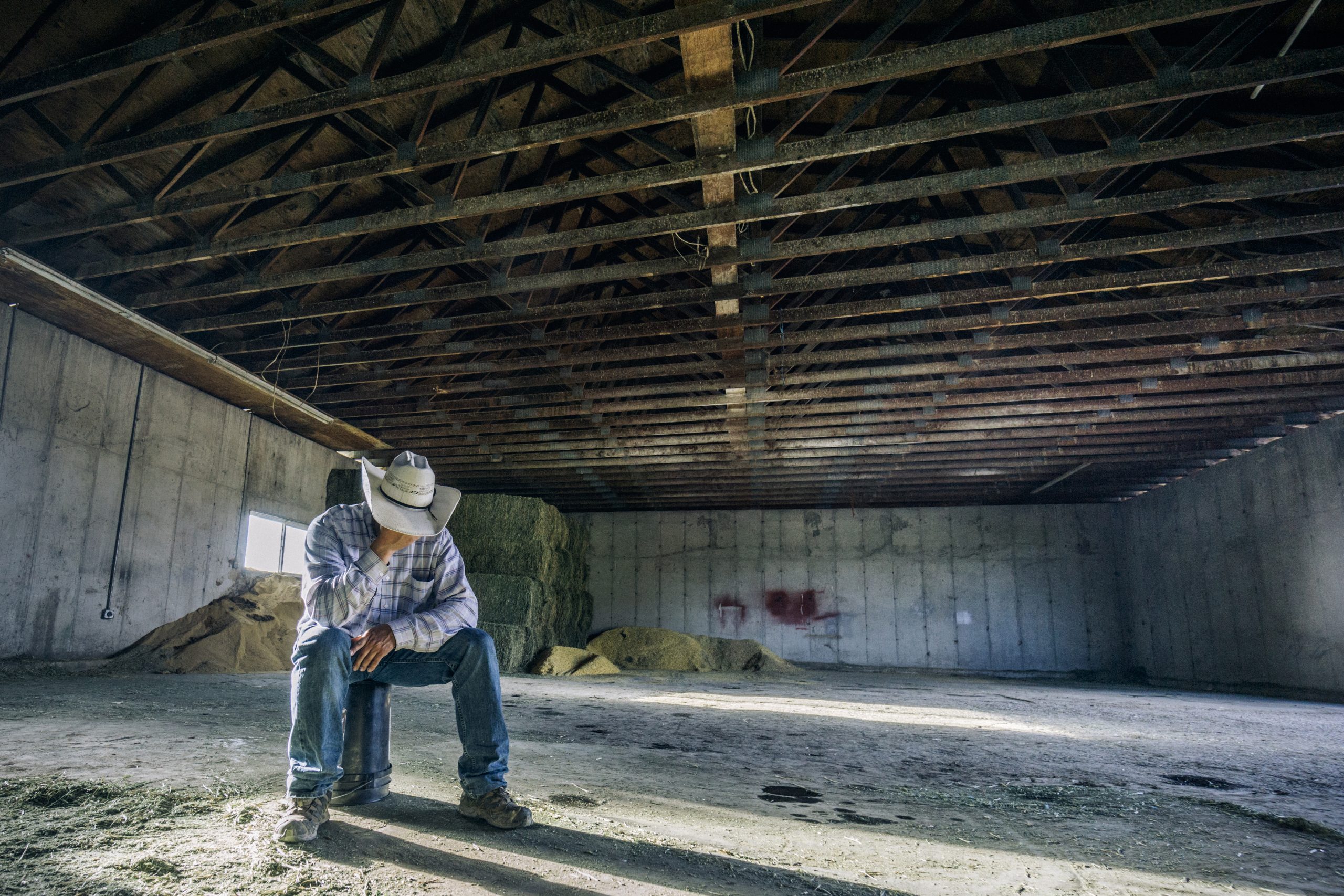
(Photo courtesy Kansas Farm Bureau.)