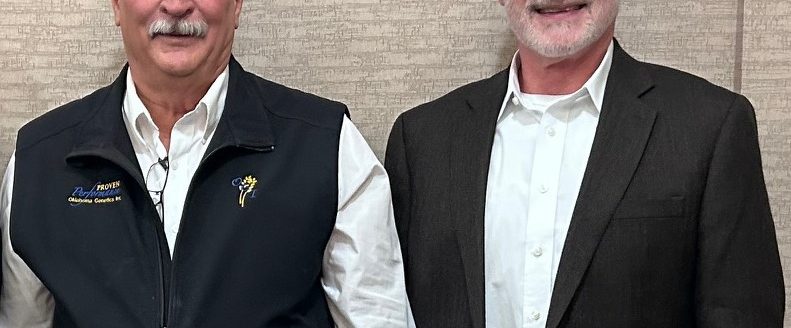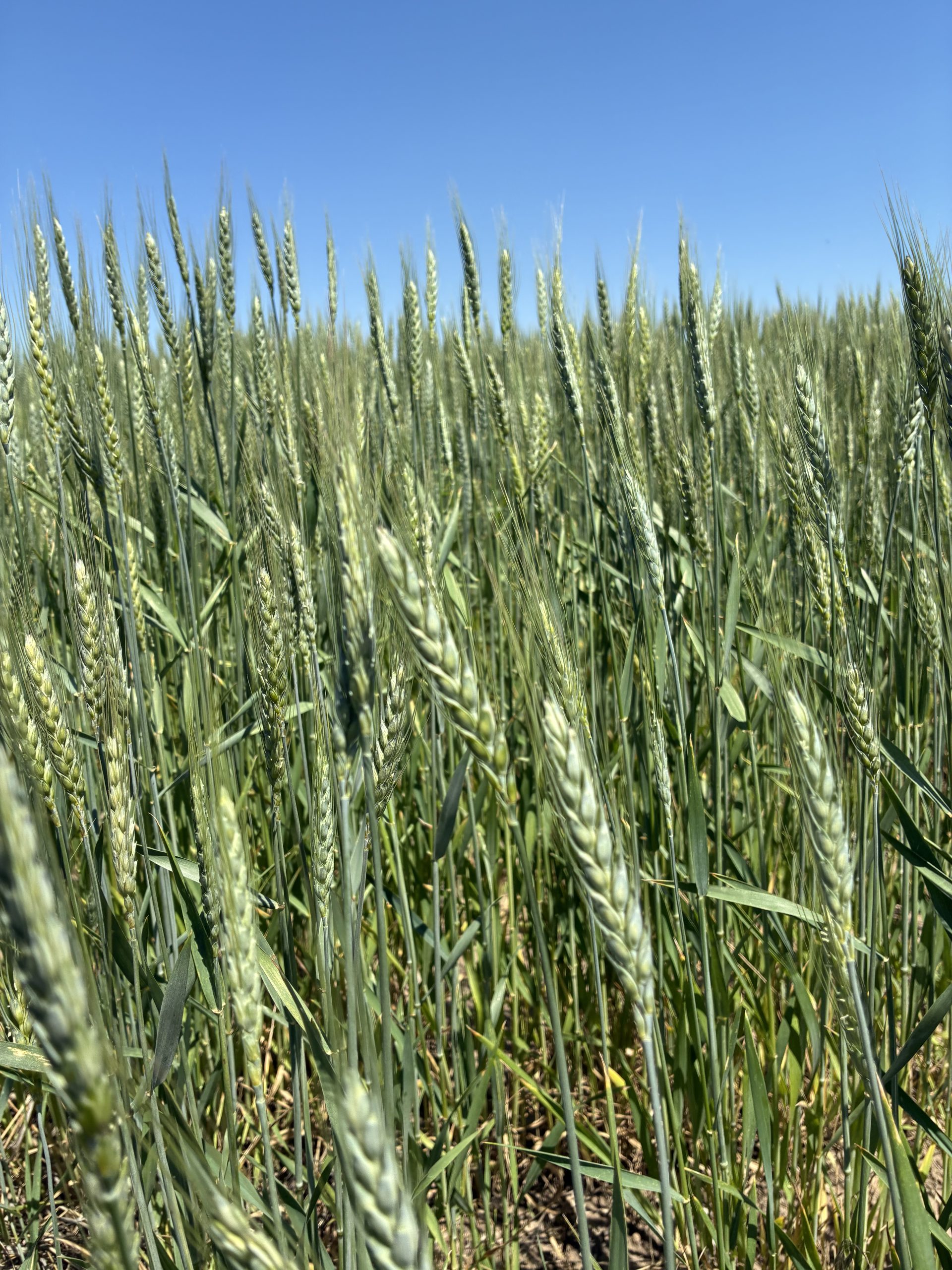
Continued nutritional advances and new weed management tools are on the horizon for the wheat industry in Oklahoma, but getting the full benefit of these innovations will require collaboration among research institutions and supply chain partners, according to speakers at the annual meeting of Oklahoma Genetics, Inc., the nonprofit entity that licenses and distributes wheat varieties bred by Oklahoma State University.
OSU has released 36 varieties since OGI was formed in 2005, most recently, Wyatt, a top yielder that shows wide adaptation from central Texas to the Dakotas.
OSU’s chief wheat geneticist Brett Carver said it has the broadest geographical range of any new release since Duster in 2006. As the latest generation in the popular Smith’s Gold lineage, it outperformed all other OSU varieties in recent field trials.

It adds to OGI’s diverse portfolio that encompasses yield leaders suited to tough climatic environments, preferred performers in the milling and baking industry, and innovative lines with healthier fiber and enhanced antioxidant content.
Change could bring opportunity
Several speakers at OGI’s annual meeting joked that their crystal balls were hazier than usual. Still, a few common threads emerged as they gave their perspective on the future of food and agriculture.
When the U.S. Department of Agriculture and the Food and Drug Administration introduced a new food pyramid in January, decades-long dietary advice was literally flipped on its head. USDA brought back the triangle, originally used in the 1990s, but inverted it, placing protein and vegetables at the top and whole grains at the bottom. Refined grain foods were left off the diagram entirely.
According to Brian Walker, who grew up and worked in the milling industry his entire life and now serves on the board of the National Wheat Foundation, it makes sense to consider the health impact of added sugar and fat and preparation methods like frying, but bread is an ancient food that goes back to the dawn of human civilization.
“We’ve been eating bread for 20,000 years, and we started sifting the bran out of flour at least 15,000 years ago,” he pointed out.
What consumers want and need varies widely depending on the context, he added. In Nigeria, which he visited three months ago, people are grateful to have high quality U.S. wheat to blend with poorer quality supplies to feed a hungry population.
In the U.S., per capita consumption of flour has been trending downward since 1997, to where it’s now around 128 pounds, roughly equivalent to 256 loaves of bread per person per year. The latest dietary guidelines cut the recommended daily servings of grain foods by a third, from 6 to 11 servings a day to two to four.
In August, a citizen’s petition was filed with the FDA that would revoke refined wheat flour’s status as “generally recognized as safe.” Multiple states are also pushing bans on common food additives, including a few used in bread making.
In Oklahoma, a bill to ban 21 processed food ingredients died in committee last year but is expected to be re-introduced.
“This has started to snowball a little bit,” Walker said. “We need to formulate a better story for our business.”
Oklahoma Secretary of Agriculture Blayne Arthur echoed that message, noting the revised food pyramid is influential because it dictates menus for schools and other federally funded programs.
Maintaining stable markets and farm profitability is a matter of national security, she said. USDA formalized that position last July by introducing the National Farm Security Action Plan, which elevates American agriculture to a key role in defense strategy.
Germinating new markets
The attention on food, agriculture and health could present an opportunity to re-envision the industry and explore new opportunities, according to long-time public wheat breeder Allan Fritz, who has led Kansas State University’s wheat breeding program for the past 26 years following five years at Texas A&M.
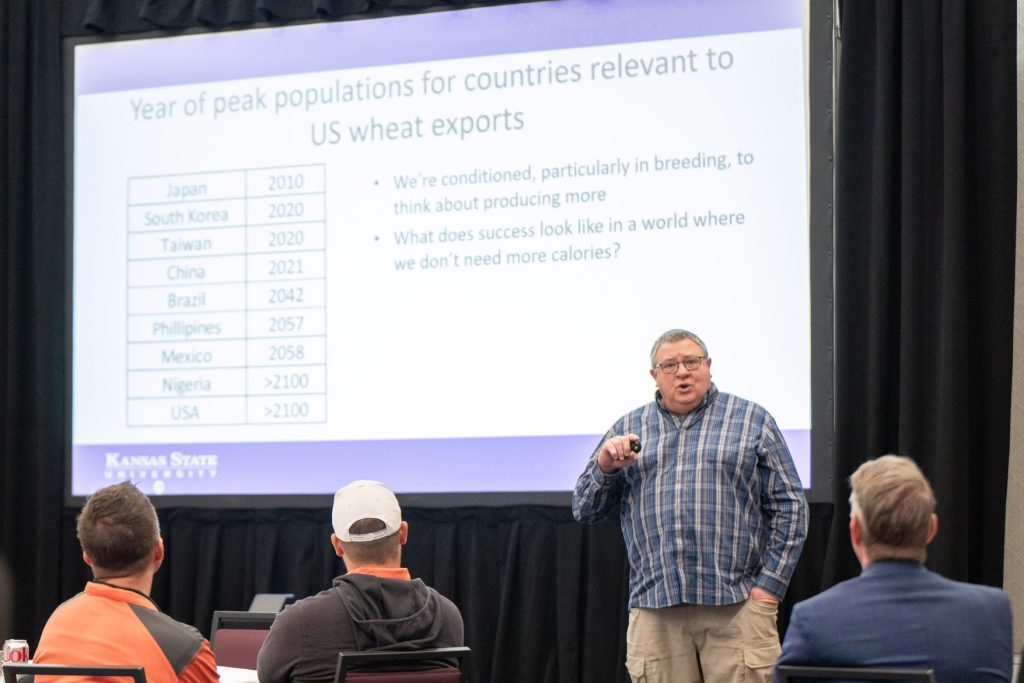
He and Carver maintain a close working relationship, despite some friendly rivalry as they each work to diversify their offerings and introduce compelling seed options.
Fritz observed that for decades agriculture has operated on the assumption that continual growth in output would be needed to feed a global population of 10 billion people by 2050.
“I think we need to refine that a little bit,” he said. “That’s not really the right focus.”
Chasing yield at all costs has led to oversupplies and driven prices below profitable levels, while neglecting the quality aspect, he said.
Now wheat acres are declining nationally at a rate of around 2 percent a year.
“We need to start asking ourselves what success looks like in a world where we don’t need more calories,” Fritz said.
Establishing needs and priorities is difficult, however, in a commoditized market where value and price is loosely correlated, he observed.
Without realistic incentives, promising initiatives can fall flat. He gave the example of white wheat, which once accounted for more than half of K-State’s breeding program. Even though the lighter, sweeter bran is more palatable in whole-grain products and offers higher flour extraction rates, its full value was never realized due to a lack of coordination and support within the supply chain.
The Kansas wheat industry is now running into similar challenges with winter durum, a pasta-making wheat introduced three years ago, he said.
Developing markets for identity-preserved crops might not benefit every producer directly, Fritz said, but in the long run a rising tide lifts all boats.
“Everybody benefits when there’s a change in supply and demand,” he said.
In Oklahoma, efforts are underway to introduce a new line of wheat that offers revolutionary protein strength and end-use functionality.
Andrew Hoelscher, founder and president of Kansas-based consulting firm Farm Strategy, is in the fourth year of building out a new marketing channel for the three OSU “Ox” wheats — Breadbox, Firebox and Paradox. He said one of the big selling points is their potential to reduce or eliminate the need for dough conditioners and other additives in bread formulations.
While several mills have integrated it into their research and development process, lengthy product cycles and delays in feedback have made it challenging to accurately forecast demand, Hoelscher said. As a result, his team had to look at new forms of financing and risk management for growers.
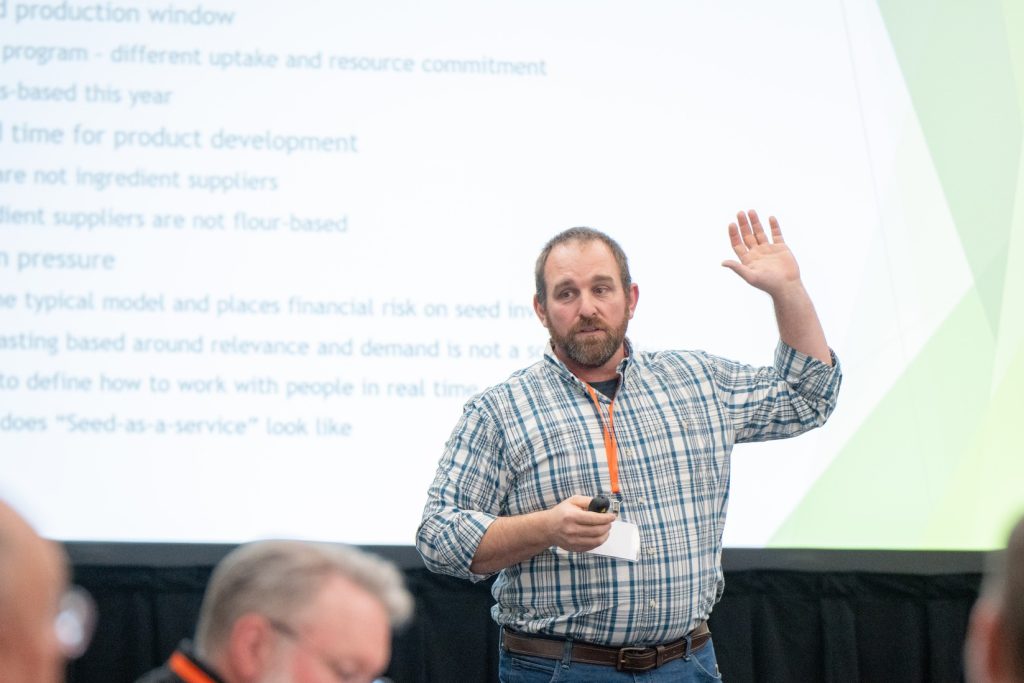
“Value capture with these might not happen for two years,” he said. “It’s the same way with the durum wheat we’re working on. We’ve had to look at how to finance that.”
No commercial growers are currently producing Ox wheat in Oklahoma, although there has been some uptake in Kansas, Hoelscher said. Over the past year, lack of storage space at country elevators was a hindrance.
He remains optimistic, however, saying over time he expects the volume of sales to increase, buoyed by “ingredient-based momentum” in the flour market and the changing conversation around food.
Working on weeds
Aside from price, another big challenge for growers is grassy weeds, which rob valuable inputs away from the crop, reduce yields and lead to harvest contamination.
For the past several years, OSU’s breeding program has been evaluating a handful of candidate varieties with resistance to Aggressor AX herbicide. Developed and licensed in Colorado to fit the CoAXium management system, this technology represents the first of its kind in 25 years, with Clearfield the only similar option on the market.
Having a second chemistry is significant, because rotating between two distinct modes-of-action allows for better weed suppression and less risk of weeds developing resistance.
Stewardship agreements dictate that neither be grown continuously for more than two years in a row to preserve their effectiveness.
CoAXium is now considered the gold standard for brome grass control, according to Chad Shelton, global director of innovation technology for Albaugh LLC, maker of Aggressor AX herbicide. Results on feral rye and jointed goat grass have been more mixed.
Selecting the state’s first regionally adapted variety for the system has been tough, Carver said, because the highest performing candidates have tended to be the most susceptible to herbicide injury and vice versa.
That’s why he’s excited about a possible breakthrough Shelton outlined at the meeting. While growers have several best management steps to deliver optimum results — including good pre-emergent weed control, timing of application and proper tank mixing — the company is now rolling out something new. “Safehouse” proprietary seed treatment is designed to protect the plant against injury, stimulate early seedling growth and expand the timing window for treatment.
If it delivers on its promise, Shelton believes it could make the CoAXium system more popular in Oklahoma, where adoption has been slow.
OSU added the seed treatment to this year’s research trials and will study it under three application rates. Field testing of existing CoAXium varieties and OSU’s candidate varieties is ongoing.
Tom Hill, owner of DT Farms and a certified seed grower from Tonkawa, was at the forefront of launching Clearfield technology two decades ago. Now he’s playing a similar role with CoAXium.
He plans to host an annual field day this spring, where growers can come out and see his on-farm trials and talk with industry representatives.
With a comprehensive weed management program on every acre of his farm, he considers herbicide technology critical to producing clean, high performing wheat.
Facility upgrades coming soon
As the wheat breeding program moves forward on multiple fronts, a plan to modernize the OSU agronomy farm is gaining momentum, in spite of a tough budgetary environment.
During the meeting, Vice President and Dean of Agriculture Jayson Lusk announced $5 million in federal funding was recently earmarked for new greenhouses and lab space on the west side of campus.
A ground-breaking is expected within the year.
OGI has pledged $5 million in support, with Executive Director Mark Hodges noting upgrades are long overdue.
“Our wheat breeder and the entire wheat improvement team is second-to-none, and they deserve facilities on par with the exceptional varieties they continue to release and the immeasurable positive economic impact they’ve had on producers in Oklahoma and across the region,” Hodges said.
Carver, who is now in his 41st year at OSU, has received numerous honors, including Big 12 Faculty Member of the Year in 2024 for excellence in research and innovation.
“Once these facilities are built, it will open up lots of new opportunities,” Hodges said. “Our board is excited about the program’s future.”
Candace Krebs is with Oklahoma Genetics, Inc.