
Thanks to a recent broadcast about imports and exports, I decided to dig into how reliant we are on imports from China into Anytown, USA.

In a year where campaign rhetoric is ramping up, I see a growing number of campaigners promising to eliminate China’s ability to purchase United States farmland. I am just going to repeat what I have said for a long time: I am much more concerned with what is happening to land control from DC than I am from China. With that said, I found interesting data about U.S. agricultural imports and exports.
In 2025, we actually saw a significant decrease (29.7%) in total U.S. imports of Chinese products. Obviously, some farming inputs are included but without question 76% of that total is electronic equipment, mainly cell phones. So are you more concerned about China buying farmland or monitoring every single conversation in the U.S.?
The numbers say that 2025 saw $308.5 billion in total imports from China, a significant decrease from more than $400 billion a year in previous years. That figure has honestly been declining since its 2018 peak of $538.5 billion.
Now let’s talk about agricultural imports, which reached a staggering $50 billion deficit in 2025, after being a net exporter for every year until 2017. The top two countries providing those imports are our neighbors, Mexico and Canada. In 2024, these two countries accounted for $90 billion of the $213 billion in ag products we imported.
While the U.S. agriculture imports increased by 4% in 2025, products from Mexico were down by 8% and Canadian imports dropped 4%. That is a bit of bad news if we have agricultural imports that travel much farther than they used to. Is this the same government that tries to penalize transportation and food miles?
For those that might be wondering, our ag exports to Mexico in the previous year increased slightly, but our Canadian exports decreased by 5%.
Some interesting countries that have increased exports to the U.S. include a growing supply from the European Union. That makes no sense to me and I am not really sure what is happening in the EU that benefits our food production since they have been net
food importers for years. In fact, they are reporting growth in wine, distilled spirits, dairy products, pasta, and processed fruit and vegetables. The other European country contributing to our import growth is the Netherlands.
The Netherlands ships 40% of all their beer exports to U.S. shelves. Data suggests that alcohol consumption in the states has hit a 90-year low yet somehow we are importing record levels. Why?
Then comes the rest of the story. While imports from China have declined sharply, it still tops the Asian countries in sending ag products to the U.S. This decrease was offset by strong growth in imports from countries like Indonesia, Thailand, India, and Vietnam. Vietnam is becoming a major supplier of particularly fish and seafood to the US.
We imported seafood from Vietnam at an all-time high of $11.3 billion in 2025, 12.4% higher than the previous year. Tilapia fillets emerged as the key export with a whopping increase of 499% in one year. They saw major advancements in the aquaculture industry, particularly for shrimp and pangasius (fast-growing catfish) to obtain a strong position in the U.S. market.
In case you have forgotten, mandatory country of origin labeling for fish and seafood went into effect in 2009 and today it is estimated that 80% of all fish and seafood consumed in the U.S. is imported. In fact, as of 2024 our seafood trade deficit has grown to $26.5 billion annually.
For those of us who want a strong U.S. farming community, we must come to realize that we can give the consumer all the transparency and information they want, but shoppers will forever be driven by price. The real issue that drives 100% of the discussion about increased trade deficits comes back to the increased cost of production for the U.S. food system
The rising cost of our labor, our land, our taxes, our insurance, and all of our inputs have put the U.S. agriculture industry behind the 8-ball when to comes to feeding our own people.
The time is now to re-rack and get that cue ball aimed to sweep the table in favor of both American farmers and consumers. Get rid of the sharks circling the table and let American ingenuity put the food industry in our corner pocket for the win.
Editor’s note: The views expressed here are the author’s own and do not represent the view of High Plains Journal. Trent Loos is a sixth generation United States farmer, host of the daily radio show, Loos Tales, and founder of Faces of Agriculture, a non-profit organization putting the human element back into the production of agriculture. Get more information at www.LoosTales.com or email Trent at [email protected].
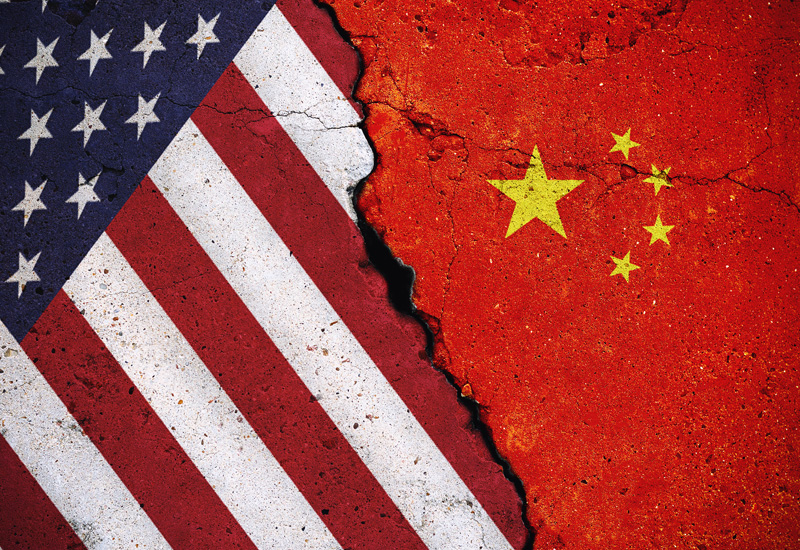
PHOTO: Concrete slab with large cracks, flags of the USA and China. (Photo: Adobe Stock │ #328134219 – Iurii Gagarin)