Soil-available water, or water in the soil that plants can extract, determines nutrient availability, grain fill and ultimately final yield.
Soil water helps to break down nutrients into a plant-available form and carry them into the plant throughout the season. Corn uses between 21 to 28 inches of water during the growing season with 50% of total water use occurring during the reproductive stages. However, soil-available water can vary depending on soil composition, local climatic conditions and management practices.
Soil texture and structure determine how much water soil can hold and how much of it is available to plants. The size and distribution of pores in the soil dictate water retention and drainage. Sandy soils tend to have higher infiltration rates, while soils with higher clay content often contain more water.
“Not all water held in the soil is accessible to plants—some is bound so tightly to soil particle surfaces that plant roots cannot extract it,” said Alex Cleveringa, agronomy research manager. “Once soils dry below a threshold known as the permanent wilting point, plants are unable to recover and begin to wilt.”
Soil-available water can also be lost to a combination of soil evaporation and crop transpiration known as evapotranspiration. Water loss from the soil early in the growing season occurs primarily through evaporation from the soil surface, then shifts to transpiration through the plants after canopy closure. Crop residue on the soil surface can significantly reduce the amount of water lost early in the season by reflecting solar radiation and protecting the soil from wind.
Total evapotranspiration over the course of the growing season depends on local climatic conditions and relative maturity of the hybrid. Evapotranspiration can contribute to water deficits throughout the season depending on the rate and timing.
Water utilization and management strategies in corn
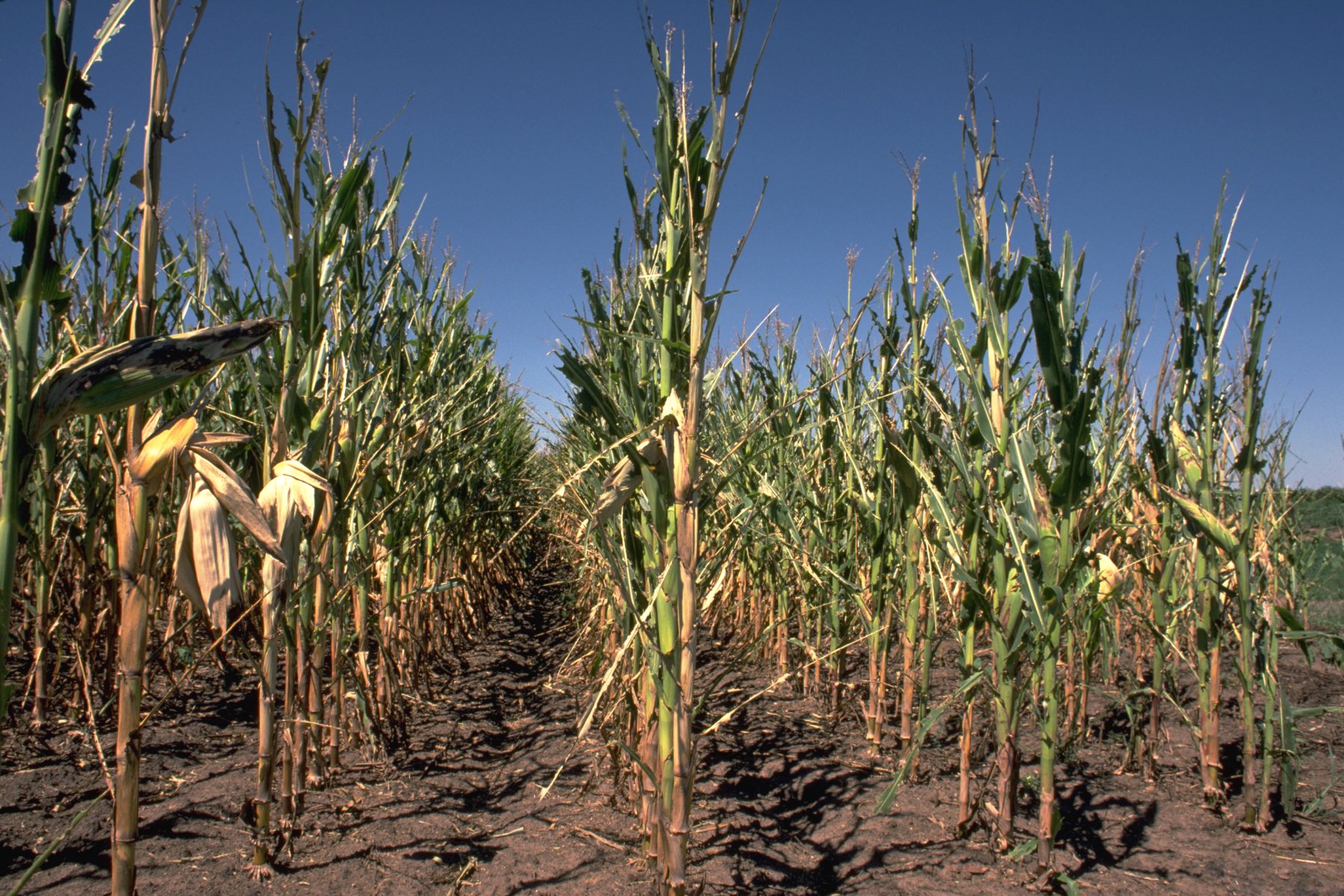
Corn is relatively insensitive to water deficits during early vegetative growth compared to flowering through grain fill. If soil-available water is low during this period, the plant will close its stomata to preserve water, but this also limits the exchange of carbon dioxide, harming plant development and grain fill.
Choosing hybrids with drought tolerance can be an important consideration to optimize plant population in water-limited environments. Increased plant density does not significantly change total evapotranspiration, though yield response to plant population can differ considerably among hybrids.
When using irrigation to manage soil water, it is vital to measure the amount of water in the soil and how available the water is to plants. These measurements help ensure that the grower is maximizing the crop’s water use efficiency, or the bushels of corn produced per inch of irrigation and precipitation water. Other factors to consider are when and where in the field to irrigate.
“The when and how much can really be addressed well with a moisture probe,” said Kevin Keller, Pioneer field agronomist. “Water Reporter adds in not only some of those elements, but also where within the field.”
Water Reporter, a new Decision Science tool from Corteva Agriscience, can help growers monitor soil moisture daily to aid in irrigation decisions. This water management system utilizes pivot telemetry, soil water holding capacity, crop information, satellite imagery and as-applied irrigation data plus weather variables to report evapotranspiration and soil moisture data to give farmers confidence in their irrigation decisions. The tool is currently available in limited locations.