New crop rotation to focus on soil health and staple crops
Twenty-five minutes north of Duluth, at Fairhaven Farm, first-generation farmer and University of Minnesota Duluth alumnus John Beaton is redesigning small-scale agriculture in a changing world.
Fairhaven Farm grows vegetables and flowers, but the farm’s bigger goal is to care for the soil and strengthen the farm for the future. As a sustainable farmer, Beaton believes that building soil health is foundational to the success of his farm. His soil health principles are simply to disturb the soil less, keep it covered, grow many types of plants, and keep living roots in the ground as long as possible.
To continue to build the soil health on his farm, Beaton needs to plant and rotate a diverse mix of crops. But like many farmers, he ran into a common problem: the right tools cost money. “Small farms, even big farms, have extremely small margins,” he says. “It’s hard to make these investments.”
Long-planned project comes to life with funding
The University of Minnesota Extension’s Regional Sustainable Development Partnerships (RSDP) has a long history of investing in sustainable agriculture. In fact, some of the original founders 30 years ago were sustainable farmers who sought out partnerships with the University to advance research and development of soil health practices.
Recently, RSDP’s work supporting farmers partnered with the Margaret A. Cargill Foundation Fund at The Saint Paul & Minnesota Foundation to create the Farmer Climate Action Fund. This fund provided support to small and medium-sized operations with ideas to promote resilience on their farms.
“The Farmer Climate Action Fund provided farmers the opportunity to invest in equipment that makes sense for them and the environment,” says David Abazs, Northeast RSDP executive director. These tools accelerate progress toward climate-smart and soil-focused farming systems.
When Beaton heard about the program, he immediately thought of his farm’s long-term plan to implement a more effective crop rotation in his field, which includes setting aside one plot to be planted with a cover crop for a full season. The new equipment, a flail mower and a power harrow, allows him to prep the soil, manage the cover crop and incorporate the crop residue the following season.
“I have always practiced crop rotation but without the right equipment integrating cover crops is challenging. Planting the cover crop and more gently preparing the soil are the primary soil health benefits the equipment allowed me to achieve,” says Beaton.
New Crop Rotation to Focus on Soil Health and Staple Crops
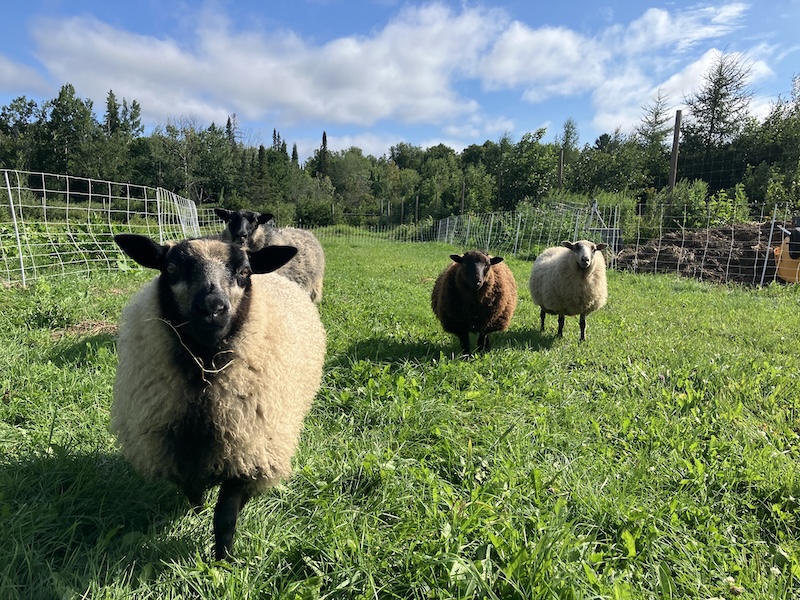
The rotation is simple and effective. The first plot grows corn and dried beans; the second, squash and sunflowers; the third, cover crops. Different from cash crops, Beaton plants a full-season cover crop mix of Japanese millet, oats, field peas, crimson clover and turnips. Cover crops allow the plot to “rest” for a season. The combination of plants raise nutrient levels, lower erosion and boost the overall soil health. During the growing season, sheep graze on the cover crop, and their manure puts important nutrients back into the soil, which fertilizes the plot for next year’s crop.
“What this rotation represents to me is a focus on growing staple crops in a modern way — integrating animals, cover crops and soil health,” says Beaton.
With support from the Farmer Climate Action Fund, Beaton purchased a flail mower and a power harrow. A flail mower chops plants into small pieces that are left behind to fertilize the soil. A power harrow, unlike traditional rototillers that flip the soil, the harrow gently stirs the top layers. This process prepares the seedbed while incorporating cover crop residue, keeping the soil structure intact with minimal disturbance. With these investments, Beaton will better manage crop residue to protect the soil and more easily prepare crop beds for future planting.
This year marks the first full season of Fairhaven Farm’s new three-year rotation of corn, squash and cover crops. By the end of the third season, every plot will have benefited from a full year of cover cropping, with the soil health benefits compounding as the cycle continues.
With the right equipment finally in hand, Beaton is implementing the sustainable soil principles he has studied for years. Fairhaven Farm continues to prove that high-yield farming doesn’t have to compromise soil integrity, providing a successful model that Beaton believes will encourage others in the region to follow suit.
PHOTO: Sheep at Fairhaven Farm (John Beaton – RSDP)