I recently returned from a Wyoming wind rally at the state capital in Cheyenne.
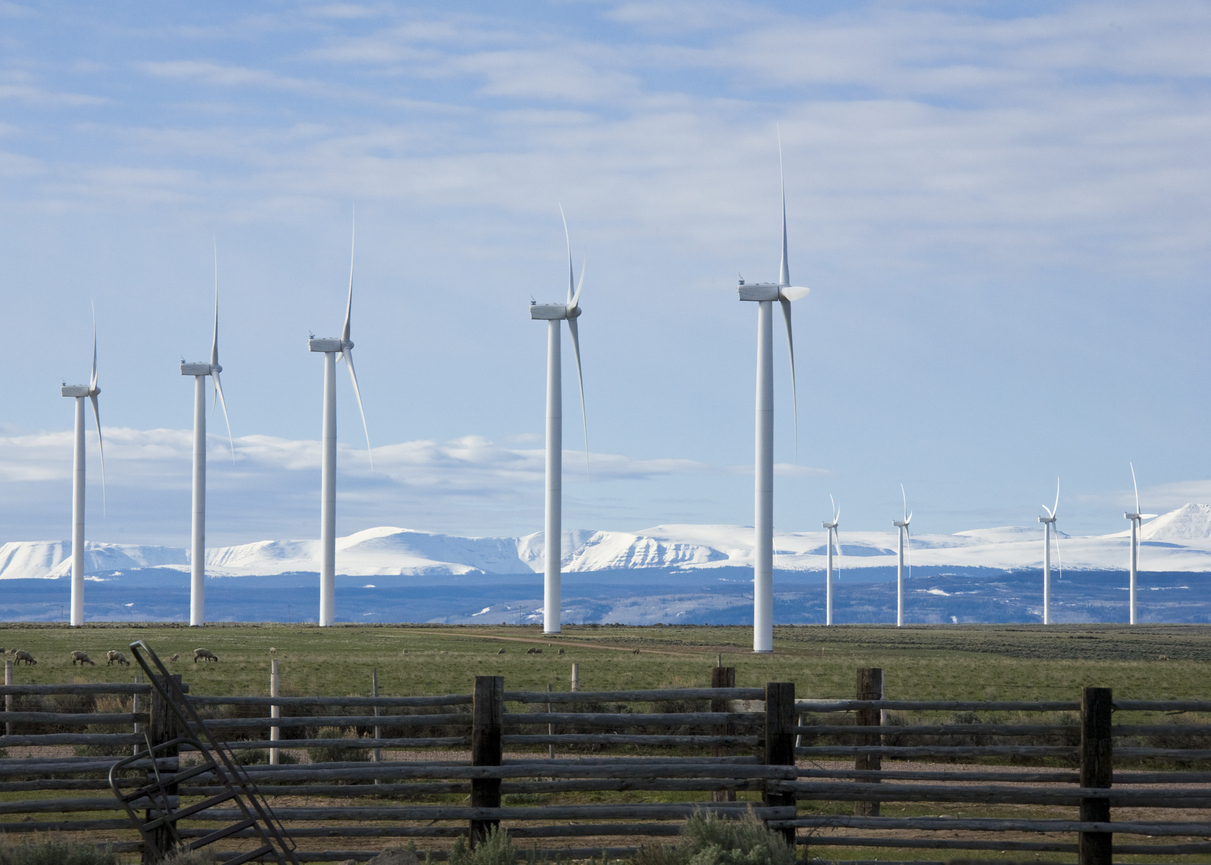
The rally was to prevent the wall of wind turbines that are planned or permitted for the Cowboy State. It appears to me that developers have plans to cover Wyoming, from Cheyenne to Montana, with intermittent, completely dependent on subsidies to exist, wind energy, in my opinion.
I made one telling observation while on this trip in Wyoming. Teton County, due to “conservation and planning restrictions,” does not plan to allow any wind development in its county. Yep, Teton County, the home of Jackson Hole with billionaires flying in on their jets, would not stand for wind turbines, but the ranchers throughout the rest of state are fair game to lose their land.
To me the plan here is optics. Wyoming, the great coal state, has transferred over to thinking wind is the real solution. For anyone who lives close to Highway 2 through Nebraska, you have a good idea about the impact of coal coming out of Wyoming. We need to mine a few facts about what a treasure of resources Wyoming really has. It is estimated that there are nearly 600 years’ worth of coal left in the ground if use continues at rates comparable to the past.
According to the state government website of Wyoming:
Wyoming, the nation’s leading coal producer since 1986, provides about 40% of America’s coal through the top 10 producing mines, located in the Powder River Basin (PRB). Most Wyoming coal is sub-bituminous, which makes it an attractive choice for power plants because it has less sulfur and burns at around 8,400 to 8,800 BTUs per pound. Wyoming coal is considered clean burning, which means it is better for the environment. Wyoming coal has steadily gained a growing share of the nation’s total electricity over the past few decades for a variety of reasons.
Coal supplies more than half of the electricity in the nation. Consider the following statistics: Each person in the U.S. uses 20 pounds of coal every day and 8 out of 10 tons of coal are used to produce electricity. A pound of coal supplies enough electricity to light ten, 100-watt light bulbs for one hour. Coal is also widely used in U.S. industries and manufacturing plants to make chemicals, paper, ceramics, and a variety of metal products. It is an important source of coke for the steel industry, and coal by-products are used to make linoleum, medication, detergents, perfumes, food flavorings, fungicides, insecticides, solvents, and wood preservatives.
Coal is mined in the PRB at a rate of 12 tons per second, filling between 50 to 70 coal trains per day. Seven of the nation’s 10 largest coal mines operate in the Wyoming part of the PRB. The largest coal mine is Peabody Energy’s North Antelope Rochelle Complex, which produced more than 62 million tons in 2021.
What does your electricity cost per kilowatt hour today? What is the trend? Today, less than 700 million kw hours or 15% of the total electricity for the nation is generated from coal. Compare that to 2007 when 2.018 billion kw hours of electricity (51% of the total) was generated by coal.
Oh, wait the argument was coal is dirty.
As a basic cycle of life reminder, every single emission that is released into the atmosphere as coal burns to generate electricity is plant food. Nitrous oxide, sulfur oxide, methane and carbon dioxide are essential for plant growth and human life.
The United States is blessed with an abundance of natural resources. Fortunately, we have the desire to tap into our oil deposits and be the world’s leading oil exporter, but when it comes to timber, coal and even farmland, it has become glaringly obvious that we prefer to take the path of highest resistance instead of embracing the resources God has granted us.
At the end of day, these strategies bode the question: Who stands to gain from this plan to leave a mass of resources untouched while Americans struggle to get by with increasing costs? Is it clear yet that “we the people” have got to fight for what is right before we are extinct.
Editor’s note: The views expressed here are the author’s own and do not represent the view of High Plains Journal. Trent Loos is a sixth generation United States farmer, host of the daily radio show, Loos Tales, and founder of Faces of Agriculture, a non-profit organization putting the human element back into the production of agriculture. Get more information at www.LoosTales.com or email Trent at [email protected].
PHOTO: Wind turbines in south-western Wyoming. (iStock-#133459139 │ GregC)