
Breaking down the breed: Brahma
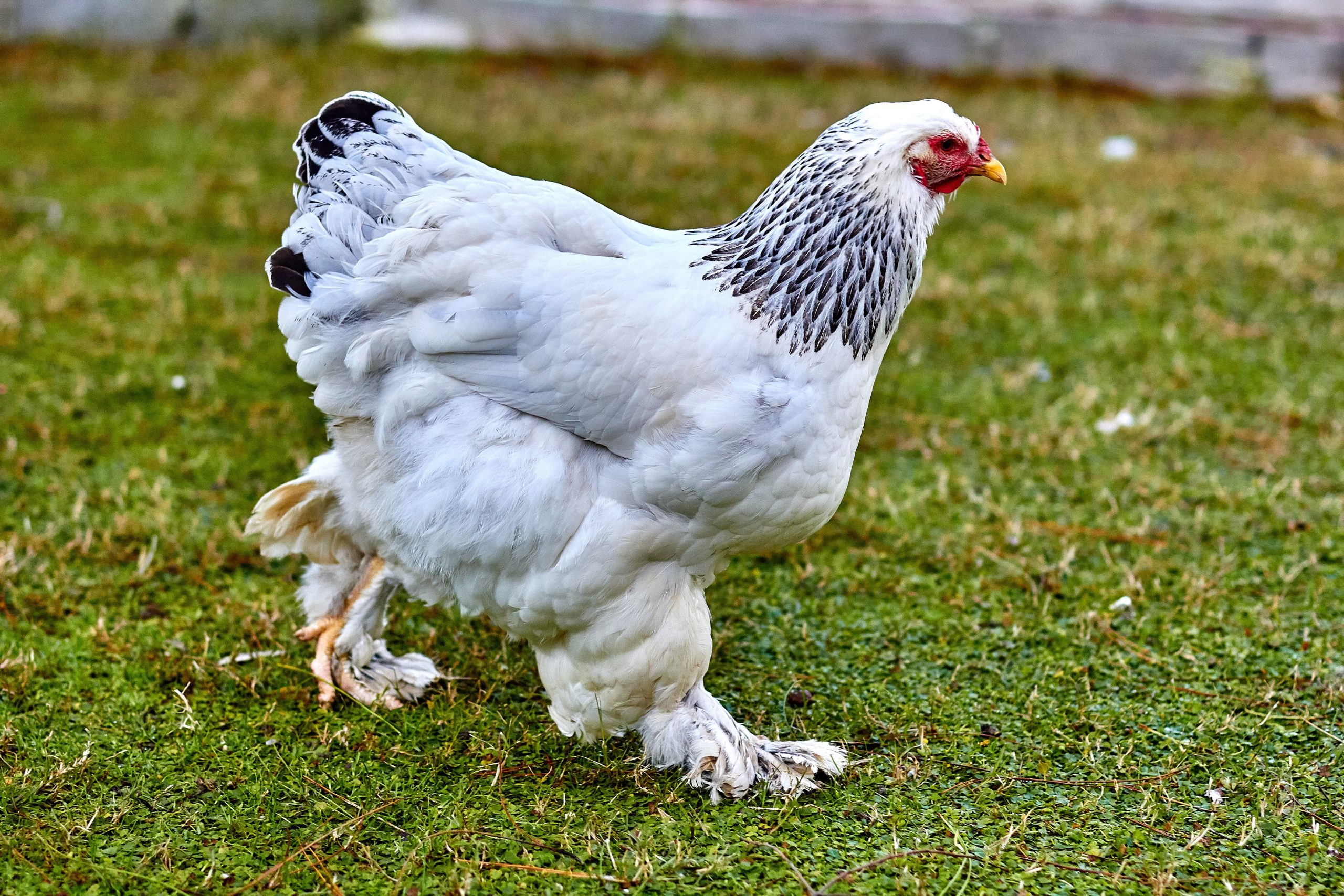
The Brahma chicken is one of the largest and most recognizable poultry breeds in the world, prized for its impressive size, calm temperament and distinctive feathering.
The breed’s ancestry traces back to China, although much of its development occurred in the United States between 1850 and 1890. The Brahma takes its name from the Brahmaputra River in India.
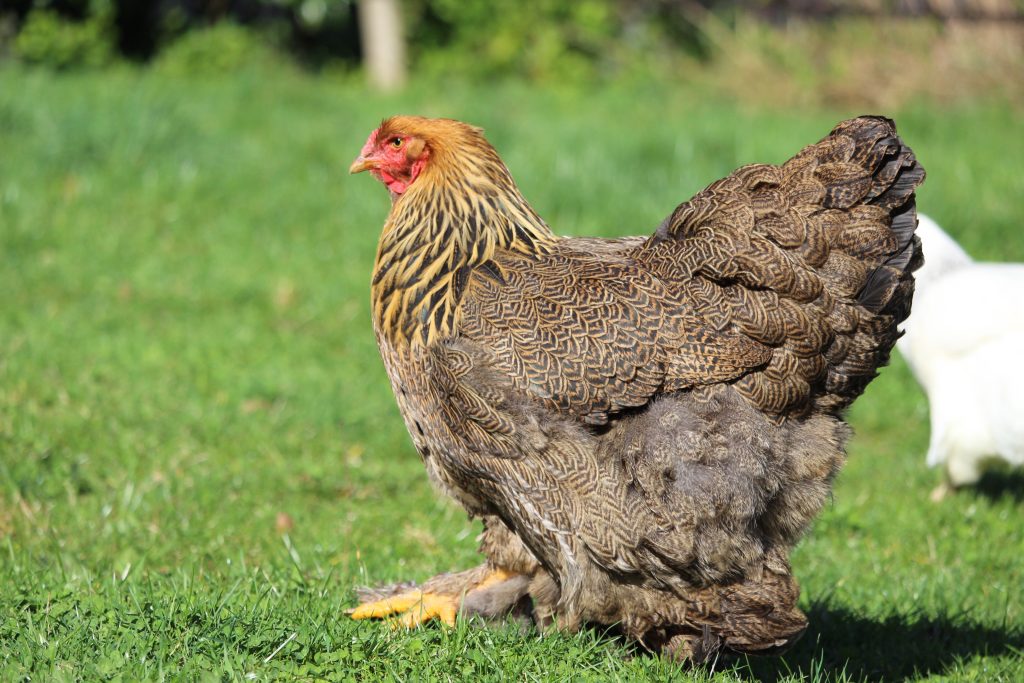
Often referred to as the “King of All Poultry,” Brahmas are massive birds known for their broad bodies, dense plumage and heavily feathered legs and feet. They can stand nearly 30 inches tall and are classified as a heavy fowl.
Historically, Brahmas were developed as meat birds and remain well-suited for producing large roasters and capons. Their large frame and substantial body weight made them a valuable source of poultry meat during the 19th century.
Their appearance is marked by a broad, deep body, heavily feathered shanks and toes, a strong yellow beak and reddish-brown eyes.
Brahmas also feature a distinctive “beetle brow,” a skull structure that slightly overhangs the eyes, along with a small pea comb consisting of three parallel rows of low ridges. The breed has red wattles and red earlobes.
Color varieties
The American Poultry Association recognizes three color varieties: Light, Dark and Buff.
The Light Brahma has a white base color with black hackle feathers edged in white and a black tail. In cocks, the saddle feathers are striped with black.
The Dark Brahma displays significant differences between males and females. Hens have dark gray and black penciled plumage with hackle markings similar to the Light variety. Cocks have black-and-white hackles and saddle feathers, a black body and tail, and white-shouldered wings with primary feathers edged in white.
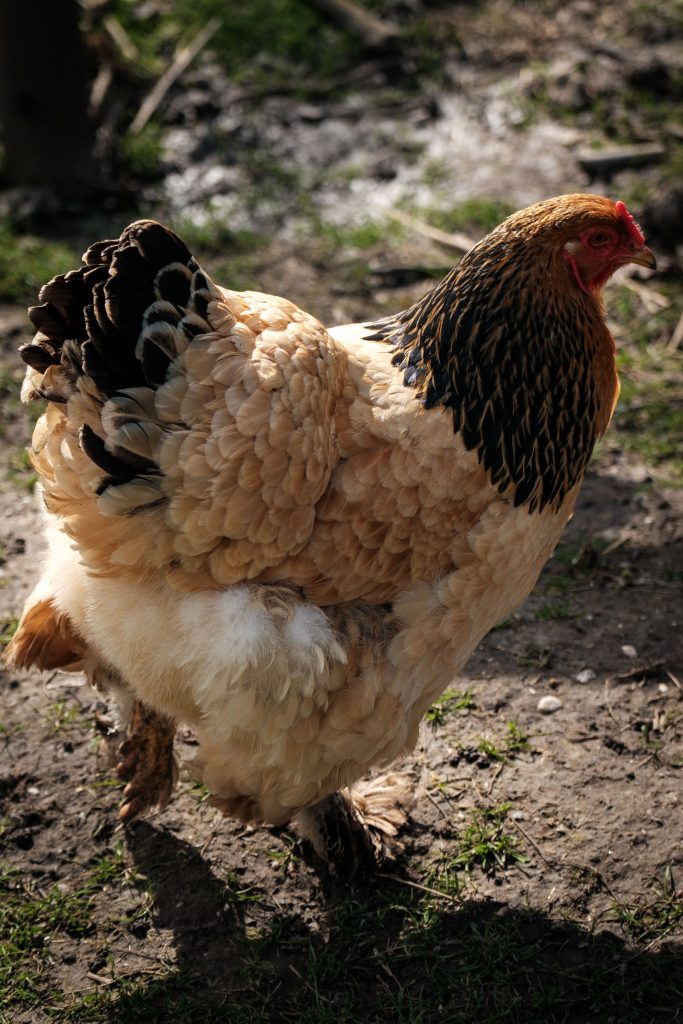
The Buff Brahma shares the same black patterning as the Light variety, but replaces the white base color with a golden buff plumage.
Standard weights for Light Brahmas are 12 pounds for cocks, 9.5 pounds for hens, 10 pounds for cockerels and 8 pounds for pullets. In the Dark and Buff varieties, cocks weigh 11 pounds, hens 8.5 pounds, cockerels 9 pounds and pullets 7 pounds.
An ideal backyard bird
Brahmas are widely admired by poultry exhibitors and backyard flock owners because of their striking appearance and gentle nature. Their calm temperament makes them suitable for small farms, homesteads and family flocks.
The breed is also known for its ability to withstand cold weather. Dense feathering, heavily feathered feet and a small pea comb help protect birds from harsh winter conditions and reduce the risk of frostbite. Owners are advised to provide dry conditions; however, as mud can accumulate on the heavily feathered feet.
Today, Brahmas are considered a dual-purpose breed, producing both meat and eggs. Hens typically lay about 150 to 200 large brown eggs annually, averaging three to four eggs per week.
While not considered high-production layers, they are known for continuing to lay through the winter months when many other breeds reduce production.
Brahma hens frequently go broody and are regarded as reliable setters and mothers, making them useful for farmers and backyard flock owners interested in hatching chicks naturally.
One characteristic that has limited the breed’s use in commercial poultry production is its slow rate of growth. Brahmas mature more slowly than many modern breeds and generally begin laying between 6 and 9 months of age, compared with 4 to 5 months for some commercial egg-laying strains.
Despite their slower maturity, Brahmas continue to attract poultry enthusiasts because of their combination of size, cold hardiness, winter egg production, and docile disposition. Their unique appearance and historic role as a heavy dual-purpose breed have helped maintain their popularity among breeders and backyard poultry keepers.
Lacey Vilhauer can be reached at 620-227-1871 or [email protected].



