
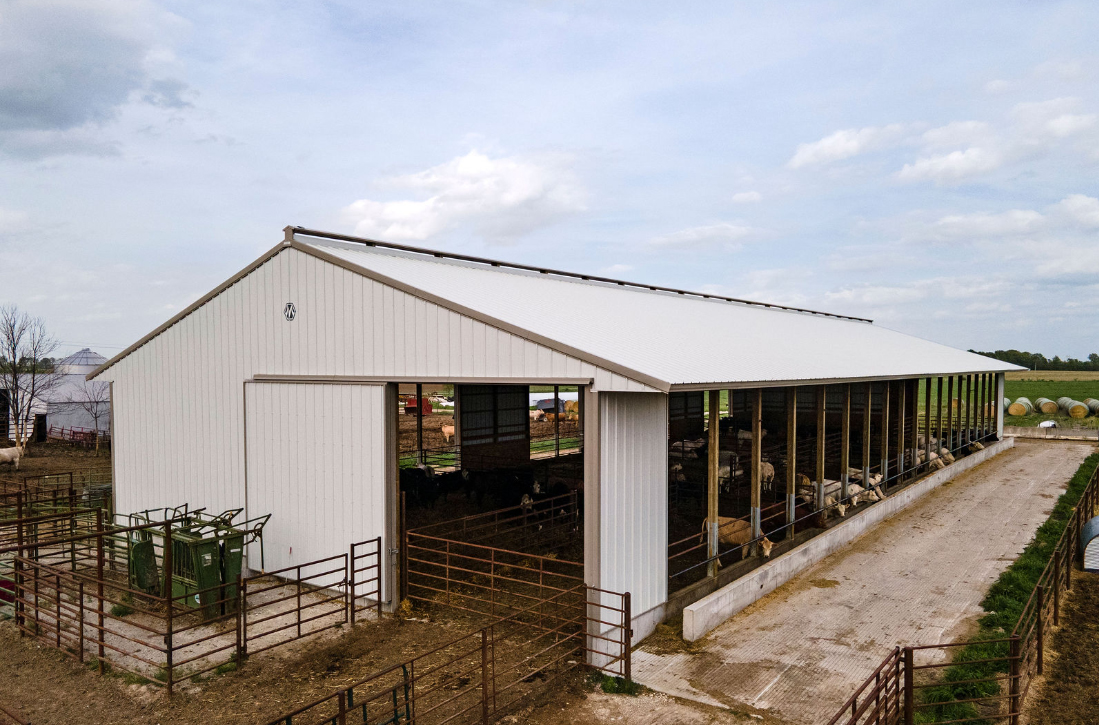
Interest in calving barns has grown steadily in recent years as cattle producers look for ways to improve herd management, operational efficiency and animal well-being.
“A well-designed calving barn offers protection from harsh weather conditions while allowing cows and calves to move around freely in a more controlled environment,” said Dennis Lee, farm product line manager for Morton Buildings, based in Morton, Illinois.
Lee offers the following five considerations for producers planning a new calving barn:
Choose the right barn site
Location is one of the most important factors in calving barn design. Select a central site with convenient access to adjoining pastures.
“The site should also support efficient cattle movement and allow easy access for trucks, trailers and equipment,” Lee said.
Proper drainage also is essential to remove water flowing off the barn and from surrounding areas.
Prioritize proper ventilation
Maintaining fresh air inside the barn is critical for animal health and worker comfort. Cattle generate significant moisture and ammonia, making effective ventilation a key priority for a healthier environment.
Lee said ventilation solutions may include:
- Ventilated ridge systems
- Curtain sidewalls that can be adjusted seasonally
- Chimney ridge ventilation
- Power ventilation using fans and louvers
Maximize natural lighting
Lighting plays an important role in animal health and overall safety. While artificial lighting is necessary for nighttime care and monitoring, maximizing natural daylight can improve working conditions and reduce energy costs.
Options for increasing natural light include:
- Curtain sidewalls
- Translucent sidewall panels
- Roof skylights
A brighter barn environment also can improve visibility during calving and animal observation.
Include practical amenities
Beyond basic features such as calving pens and treatment areas, many producers are adding amenities to improve efficiency during busy calving seasons.
Popular additions include:
- Large viewing windows for easier observation and office space
- Feed and equipment storage
- Small sleeping quarters for overnight monitoring to help producers respond more quickly to calving needs
Invest in durability
Livestock facilities experience constant wear from animals, equipment and daily use, making durable construction materials essential.
“You want a building that will stand the test of time,” Lee said. “Animals and equipment can be notoriously hard on buildings through everyday wear and tear.”
He said Morton Buildings uses 26-gauge steel rather than the lighter 29-gauge steel commonly found in lower-cost structures. Additional durable materials, such as stainless steel fasteners and pressure-treated tongue-and-groove lumber, also can extend the life of the facility and reduce long-term maintenance needs.
“A thoughtfully planned calving barn can improve herd health, increase efficiency and provide a safer, more comfortable environment for livestock and producers for years to come,” he said.
For more information, see a representative or see mortonbuildings.com.



