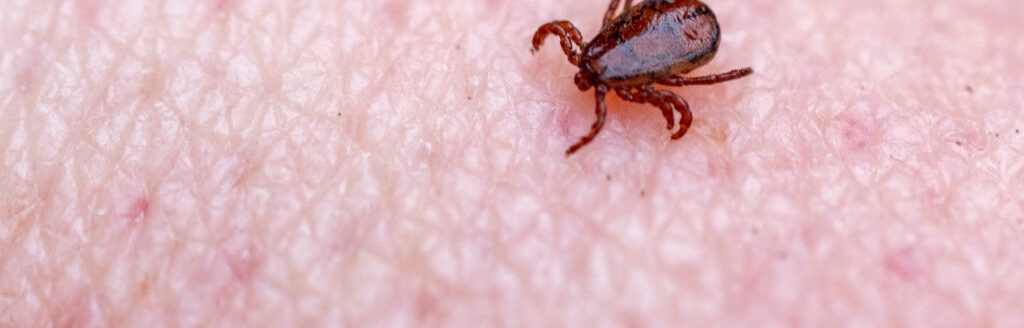
Tick populations continue to change across the climates of the Western states. Short of keeping your dog inside all the time, there is no tick-free lifestyle for dogs. You can, however, mitigate the risk of tick bites and tick-borne diseases.
Chloe Stenkamp-Strahm, Utah State University Extension veterinarian, said the simple answer is to be aware of your surroundings and use tick preventatives for your dog. She said there are topical products, monthly oral chew options, and injectable medications that can last for several months to mitigate the risk of tick bites and tick-borne disease. These options can be discussed with your veterinarian.
“Though tick populations vary seasonally, most experts recommend year-round treatment for peace of mind,” she said. “If you are already giving your dog heartworm preventatives, some also offer combination coverage for ticks and other ectoparasites, as well.”
She said there are two ticks in Utah that are of the highest concern for dogs: the Rocky Mountain wood tick and the brown dog tick. Both can carry diseases such as Rocky Mountain spotted fever and tularemia, which can be transmitted to dogs through tick bites.
“There is also a risk of dogs developing tick paralysis from these ticks,” Stenkamp-Strahm said. “However, just because a tick can cause tick paralysis does not mean every dog bitten by one will develop the condition. More than 70 tick species have been associated with tick paralysis, making it another health concern dog owners should be aware of.”
She said ticks are most active in spring and early summer when moisture levels are higher. As it gets hotter and drier, ticks may be less active, but they can become active again later in the year.
“In general, be vigilant and aware of ticks in your surroundings,” she said. “Ideally, don’t take your dog into areas where ticks are active if you are not using tick products or preventatives. If you do, inspect your dog thoroughly afterward. Some ticks feed on dogs in their nymph or non-adult stages, when they are only the size of a poppy seed or pinhead, so they are difficult to see, especially on dogs with long fur.”
Stenkamp-Strahm said pet owners should inspect their dog’s entire body after spending time outdoors. Pay particular attention to the areas around the ears, eyes, mouth, nose, and between the toes.
Since dogs often sit on the ground, the area under their tail near the anus may be exposed to ticks and should be inspected as well. A bath may help after tick exposure, but only shampoos formulated to kill ectoparasites will effectively eliminate ticks.
“If you do find a tick on your dog, the most effective way to remove it is with fine-tipped tweezers,” she said. “Grab the tick as close to its head as possible and pull it out using steady, gentle pressure without twisting. Folk remedies such as nail polish or lit matches are not recommended.”
PHOTO: Champ at Tony Grove. (Dennis Hinkamp – USU Extension)