Short-stature corn has piqued the interest of Midwest farmers who have dealt with derecho winds.
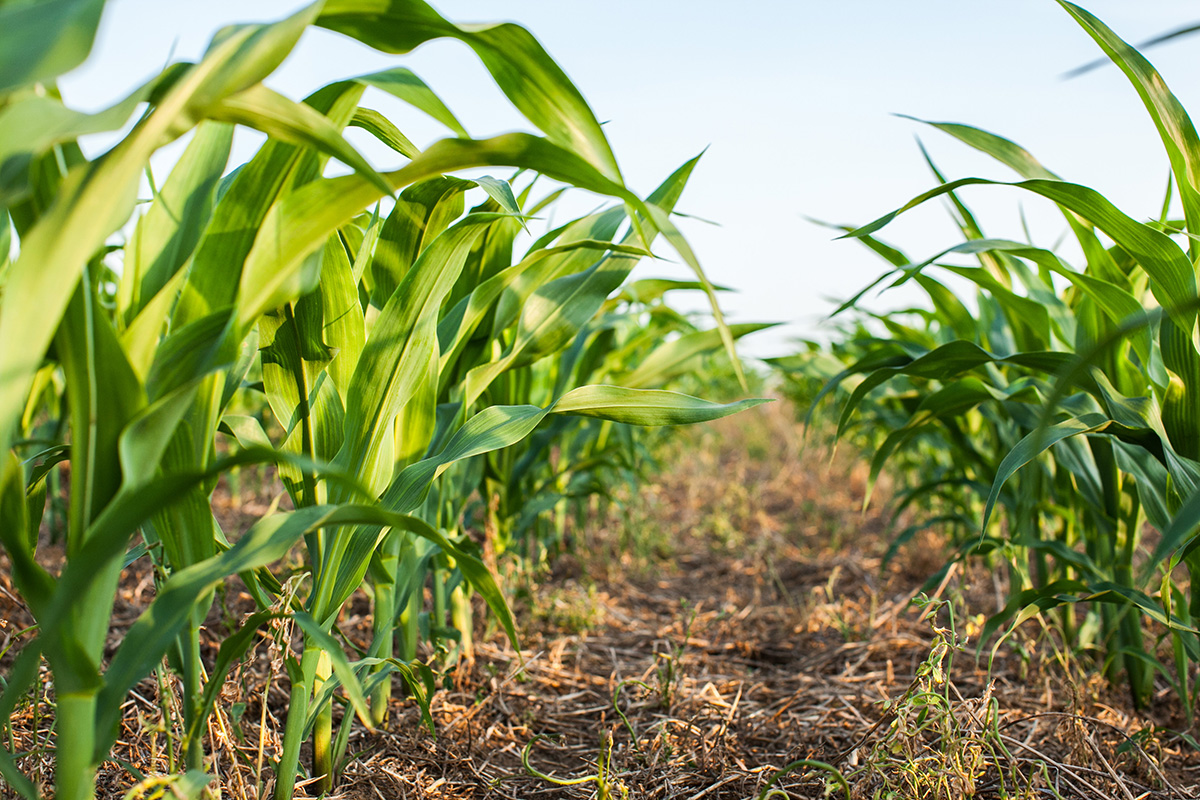
Andrew Penney, the team lead in a Bayer initiative called the Preceon Smart Corn System, said short-stature corn has caught the eye of growers who want an option to withstand strong winds. Short-stature corn has shorter internodes below the ear leaf and reaches a target height of about 7 feet. Plants typically range from 6 1/2 to 8 feet. Traditional corn often reaches 10 to 11 feet and can grow as tall as 14 feet.

An Iowa native, Penney remembers the derecho—or a strong straight-line wind–that struck the Hawkeye State in 2020 and the widespread damage it caused to cornfields. Reports of derechos are now heard several times a year, including in Iowa, Illinois and Indiana. Rainstorms and windstorms can be nerve-wracking for producers, particularly in July and early August, when growers know they could lose a significant portion of their corn crop.
Those risks have led Bayer to invest in Preceon.
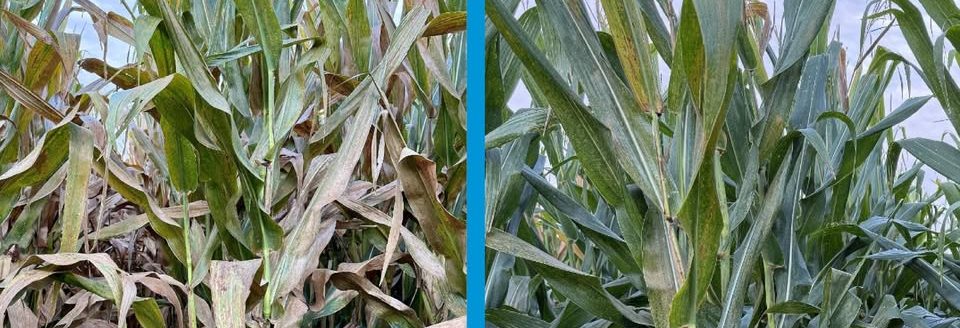
“We’ve created not only a shorter plant, but we’ve also created a plant that is much more resilient to wind damage,” Penney said. “As we look at some of these storms that much of the Corn Belt has seen this year—lots of wind—that have come with rain and Preceon has come out really well.”
High winds can cause greensnap and lodging in tall corn, threatening production.
According to Iowa State University Extension and Outreach, greensnap, also known as brittle snap, occurs when rapidly growing stalks are broken by strong, sudden winds associated with thunderstorm downbursts.
Warm, dry conditions during corn’s vegetative period result in deep root penetration, while cool, wet conditions result in shallow root systems. The latter can leave corn more prone to root lodging from strong winds and saturated soils.
“Even with high yield potential, if you have greensnap, there’s a big risk to lose the entire crop,” Penney said. “To a lesser extent, if you have lodging, then it really slows you down come harvest time. Slowing down the harvest has a big impact not only on time but also profitability.”
Research conducted in partnership with land-grant universities has shown that even with shorter internodes, the plant retains the same number of leaves as taller corn, Penney said. Through photosynthesis, the plant directs more energy into its root system, leaves, and ear, rather than its internodes.
“Trials show that we have about a 39% increase in our root biomass and we’re seeing a difference in root growth in our Preceon hybrids compared to traditional tall corn. We also see growth at different points in time and the benefits in areas drier areas across the U.S where water is limited and water holding capacity in the soil is less, especially in some of the drier areas,” Penney said.
With a strong base, the additional root growth can lead to more soil exploration by roots for water and nutrients. That may help meet growers’ demand for a productive corn crop under drought conditions that can limit the potential of tall corn.
Growers can use a traditional ground sprayer later in the season to apply nitrogen or fungicide, improving access to fields without a high-clearance sprayer, he said. Nutrient requirements per bushel remain the same as for tall corn, and yields are expected to be maintained relative to tall corn.
About 180,000 to 190,000 acres of Preceon short stature corn were planted in 2026; primarily in Iowa, Illinois, Indiana and nearby states, with some units sent to East Coast states for dairy nutrition testing. Preceon’s short-stature corn is also being evaluated in Texas and Georgia, and Penney said he expects research to continue in the western High Plains states.
Penney said corn producers should expect strong yields and that Preceon’s short-stature corn performs comparably to taller corn. Regardless of corn type, growers will need to plan for the same amount of nutrients, with the only difference being the ability to access the field longer with a traditional ground sprayer he said.
“With short stature we’re able to access the field throughout entire growing season, and when you look at traditional ground sprayers that many growers use and dealers use and we’re able to go in and apply side dress nitrogen later into the growing season compared to tall corn,” Penney said. “We’re also able to apply fungicide when you want, versus having to wait for a drone or airplane to make that application later.”
Most growers do not own a high-clearance ground sprayer, and short-stature corn might allow them to use a typical farmer-owned sprayer, he said.
He advises growers who want to try Preceon’s short-stature corn to work closely with their representative and agronomist. He said they may want to start with a small tract to see how it performs. With short-stature corn, planting rates remain the same as for tall corn, and the equipment used to plant and harvest it stays the same.
Farmers can graze the stalks or harvest short-stature corn for silage, and research so far has indicated promising results for meeting the nutritional needs of beef and dairy cattle, Penney said.
Growers interested in trying short-stature corn can contact a local dealer or representative. More information is available at https://www.cropscience.bayer.us/.
Dave Bergmeier can be reached at 620-227-1822 or [email protected].