Canola gets a jump start
Demand for renewable diesel has heightened interest in canola.
Scoular has noted that renewable diesel production is forecast to reach record levels this year, with increases in 2027 and beyond, according to the U.S. Energy Information Administration. Canola production has also increased. Scoular said U.S. farmers planted nearly 3 million acres of canola in 2026, up 27% from the previous year.
In Kansas and Oklahoma, canola acreage has increased to more than 50,000 acres, up from about 15,000 acres three years ago.
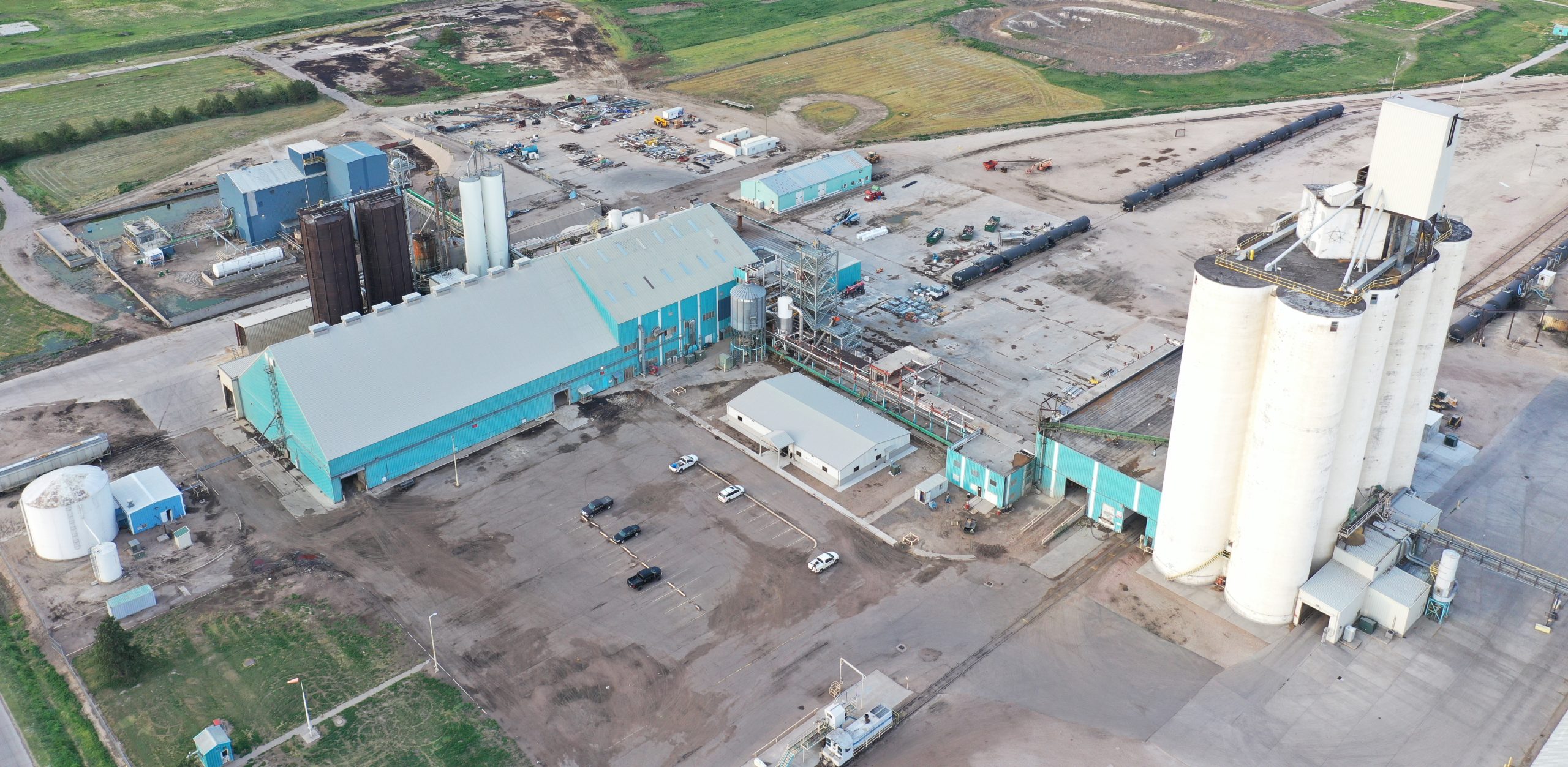
Scoular has a canola and soybean processing facility (pictured above int he courtesy photo) in Goodland, Kansas, and canola farmers have been able to capitalize on prices that range from $12 to $14 per bushel in Kansas and Oklahoma. The Goodland site paid $14 per bushel for delivered canola Sept. 1 in Goodland, according to Jeff Frazier, market development manager.
Washington this year is setting policies to encourage more renewable and biofuel demand, which is encouraging news for farmers and companies and can help them plan for 2027, he said, particularly for growers.
Federal policy is in place to support a rising biofuels industry, and canola stands to be a major player, said Michael Stamm, a canola breeder in the department of agronomy at Kansas State University. “Now is the time to plant winter canola, as demand for canola oil is forecast to continue to grow.”
Scoular’s Goodland plant has the capacity to handle 400,000 acres of canola, Frazier said. The plant opened in 2024 and continues to see more acres committed to canola. With its dual-purpose soybean processing capacity, the Goodland plant has a crushing capacity of 1,000 metric tons per day.
The demand and favorable prices do provide an incentive for growers who plan to plant or are considering planting winter canola in the High Plains.
Stamm said Scoular’s long-term commitment as a regional crusher is important to building the market. The Goodland plant is a viable market outlet for Kansas and Oklahoma growers.
Scoular had grower meetings recently in Kingman, Kansas, and Enid, Oklahoma, Frazier said.
Grower tips
The planting window for winter canola starts Sept. 1 in Kansas. Northern and southwest Kansas growers should try to plant by Sept. 20, central Kansas growers by Sept. 30 and south-central Kansas growers (Barber, Harper and Sumner counties) by Oct. 5, Stamm said. For Oklahoma, producers typically want to have canola planted by Oct. 10.
Like any crop, Stamm said there are good protocols to follow.
“Know the field history where you are planning to grow canola,” Stamm said. “What is the pH, residual soil fertility, and what herbicides were applied to the previous crop?’
Growers should avoid fields that are prone to standing water and make sure they are well-drained, he said.
“Know what herbicide system you plan to use on your canola crop, whether that is a Roundup Ready, Clearfield, or conventional,” Stamm said. “Consider whether to grow an open-pollinated variety or a hybrid variety.”
Herbicide resistance options are one of the first traits that growers consider when making a variety choice, Stamm said. “In addition, we are starting to see more hybrids available with pod shatter tolerance.”
Winter survival is an important consideration, so always make certain that the varieties grown have been tested in Great Plains environmental conditions, the canola breeder said.
The good news is that seed is readily available for canola planting as suppliers are anticipating high demand and acreage growth in the region, Stamm said.
Drought has been the biggest challenge to overcome right now, with 66% of Kansas rated at poor to very poor for topsoil moisture, Stamm said. Canola needs soil moisture to emerge and establish before the winter months. There are hints of a pattern change by mid-September.
“With temperatures as warm as they are, I am encouraging growers to plant later in the planting window and hopefully receive some rainfall,” Stamm said Sept. 2.
Besides the agronomics, there is a soil health bonus, Frazier said. A wheat-canola rotation can increase profitability by up to 20% compared with a continuous wheat rotation.
The genetics have significantly improved varieties over the past 10 years. “There’s much better winter survival and yield potential,” he said. “Pod shattering tolerance is a big one. The pod shattering tolerance and other traits have made canola a lot more attractive for growers and a lot easier to manage as well.”
In western Kansas, there has been significant drought, but then rain fell near or at harvest time and the traits in the canola varieties preserved quality. With a challenging growing season, yields did vary, but Frazier said there were reports of more than 60 bushels per acre.
What was impressive was that growers reported that even when they planted in fall 2025 there was some subsoil moisture, but then the rains quit, and that’s where canola made its mark with a taproot that pushes farther down, Frazier said.
Stamm said it is widely known in the industry that canola makes a beneficial contribution to a wheat-based crop rotation.
“There are a number of factors involved, including canola being a broadleaf break crop that improves weed control, disease management, and grain quality and yield of wheat,” Stamm said. “Canola is a tap rooted crop which provides a mellowing effect on soil structure and may positively impact water infiltration.”
Grower confidence
Canola is a hardy crop and fits well in Oklahoma and Kansas, Frazier said. The company has delivery points across the two states.
“If you can grow hard red winter wheat, you can grow canola,” Frazier said. Frazier encouraged growers to visit the Canola MVP website at scoular.com/canolamvp.
“We’re not expecting wheat farmers to become canola experts overnight, but the program gives producers access to agronomic resources,” he said. “We’ve always had really good relationships with K-State and Oklahoma State.”
Producers can find information on varieties, producer meetings and crop insurance, he said.
The website also can provide insight from experienced growers that was not available 10 years ago, and it is an opportunity for them to share that knowledge.
Dave Bergmeier can be reached at 620-227-1822 or [email protected].