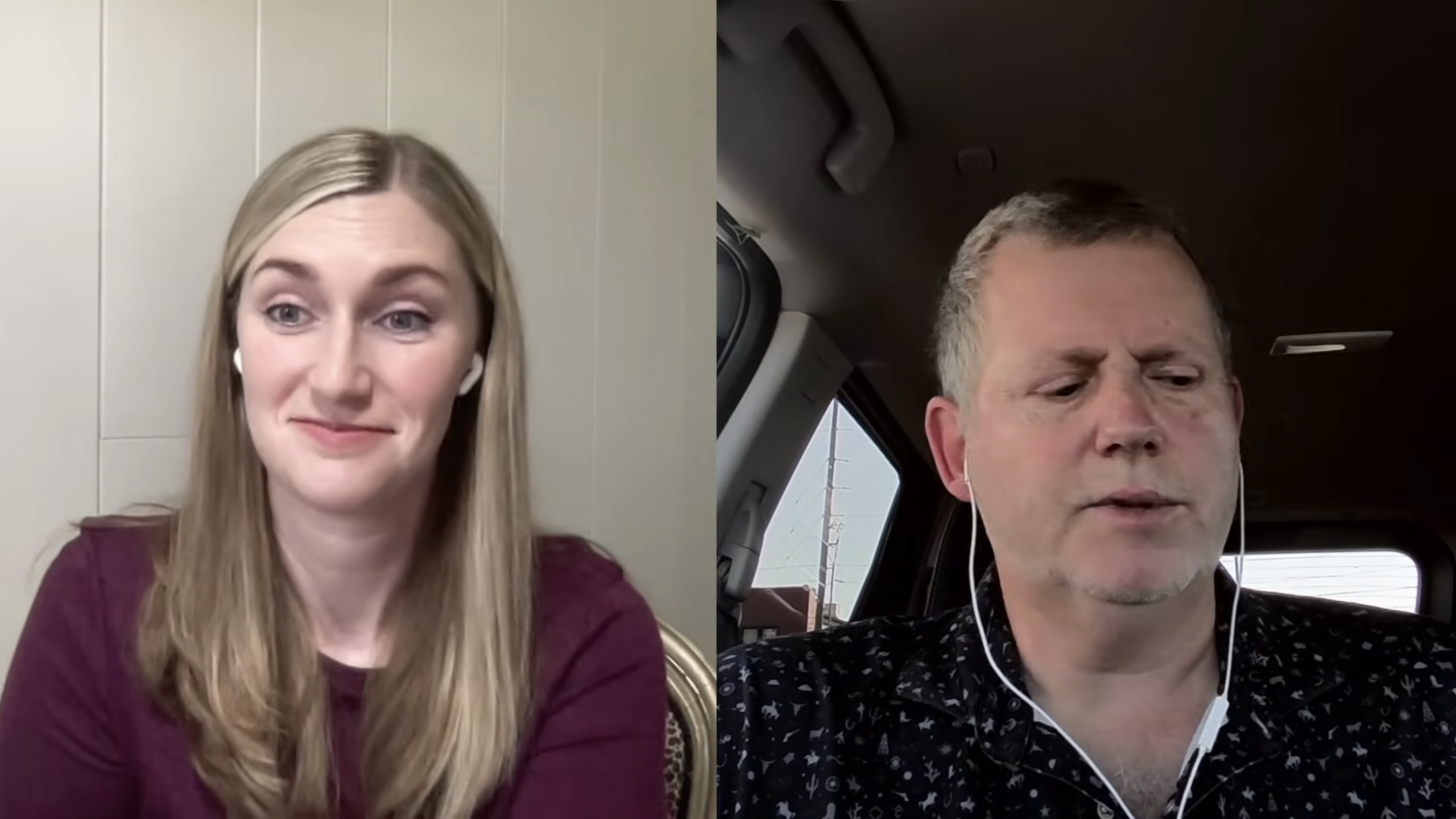
Twenty-five years after the Sept. 11, 2001, attacks, Kansas native and former Green Beret commander Mark Nutsch joined HPJ Talk host Lacey Vilhauer to look back at the mission that sent Operational Detachment Alpha 595 into Afghanistan, the horses that became central to that mission and the rural values that helped prepare him for the unknown.
LACEY VILHAUER: Can you paint us a picture of your life and where you were when you first learned about the attacks on Sept. 11, 2001? What do you remember most vividly about that day?
MARK NUTSCH: I was a Special Forces captain assigned to the 5th Special Forces Group at Fort Campbell, Kentucky, and had been in command of a 12-man Army Special Forces team, Detachment 595, for about two years. We had deployed several times into the Middle East and former Soviet republics, which was our regional focus. My two years as a detachment commander had just ended, so Sept. 10 was actually an emotional day for me because I cleaned out my wall locker and moved my gear to a new staff officer position.
I watched 9/11 from home with my wife and two young sons. Like most Americans, I first learned about the attacks through the news as the events unfolded. After the second aircraft hit and we learned there might be other hijacked aircraft, I got ready and went into work. Fort Campbell, like many military installations, went into lockdown as security increased. I eventually got through the traffic at the gates and into the unit, where we were checking in with commanders and trying to understand what was happening.
LACEY VILHAUER: We’re recording this interview on Sept. 14, 2026, 25 years from the day you received notice of deployment. What was your mindset when you received that news?
MARK NUTSCH: Those first days were more than 72 excruciating hours of realizing it looked like we were going to war. We knew our unit would probably be involved in some form, particularly because Afghanistan appeared to be the likely location for operations.
By Sept. 14, I was in a Babies R Us in Nashville when my team sergeant called and told me to return to the unit immediately and bring all my gear. We finished our shopping, and on the drive back to Fort Campbell, my wife and I picked out our daughter’s name.
That afternoon, our leadership informed us that we would be the first 12-man team to deploy from the unit. There were about 45 teams at the time. We did not fully know what the mission would be, but our team was selected because of our regional experience, advanced skills and training in unconventional warfare.
LACEY VILHAUER: Tell us more about that training. What did it prepare you for, and what did it not prepare you for when you got to Afghanistan?
MARK NUTSCH: We were not prepared to fight there in the sense that we did not have a ready-made playbook for what we were about to encounter. We packed our gear, waited for aircraft and had several false starts. For families, that becomes an emotional roller coaster because you say your goodbyes, go to the airfield and then the flight does not happen.
When the aircraft was rescheduled, we went back into training mode. We reviewed our operating procedures, prepared for mountain and cold-weather conditions and received additional equipment and new radio systems. At the same time, we were doing our own self-study. Initially, they could not even get us maps at the scale we needed. I joke that we were literally reading National Geographic magazines and looking at tourist road maps to study the people, terrain, geology, geography and recent history.
We kept sending questions to higher headquarters, but there were not many answers coming back. Eventually we realized nobody knew all the answers. Somebody had to be sent in. Somebody had to be first. We made reasonable assumptions that we would conduct unconventional warfare by working with regional or ethnic partners already involved in armed resistance, and we studied everything we could about those groups.
LACEY VILHAUER: You come from a rural background. Did growing up in the High Plains influence your decision to serve or your approach to the mission?
MARK NUTSCH: I grew up in rural north central Kansas in a farming and ranching family in Washington County, right along the Kansas-Nebraska border. I grew up rodeoing, ranching and showing horses. I competed in high school rodeo and was fortunate enough to rodeo at Kansas State University for a couple of years, primarily in team roping and calf roping.
Both of my grandfathers served during World War II, and several of my uncles served during Vietnam or the Cold War. From my grandparents and that large family, I learned perseverance, resilience, grit and determination. That is where some of my passion to serve came from.
I also had to overcome academic and financial obstacles to stay in college and finish at Kansas State. Those experiences shaped what later made me successful in the military. It is that determination to take another step, get out of bed at 4 in the morning and do the hard jobs. I went from active duty to the infantry, Ranger Regiment and eventually Special Forces. I loved the challenge and would do it again.
LACEY VILHAUER: Tell us about your first day on the mission. What was it like when you arrived in Afghanistan?
MARK NUTSCH: Our team was inserted on the night of Oct. 19, 2001. It was a special operations helicopter insertion that lasted more than five hours and included aerial refueling at night and crossing the borders of several countries. We crossed into Afghanistan flying low and blacked out, and our formation encountered a surprise sandstorm that forced the escort aircraft to turn back. It was a high-risk, high-pressure mission.
Army and Air Force Special Operations aviators got us into northern Afghanistan, where we linked up with a CIA team that had inserted a couple of nights ahead of us. They introduced us to Gen. Abdul Rashid Dostum, our initial Northern Alliance leader. The first period of daylight, he came riding up on horseback with about 50 cavalrymen as his security element.
We met with him, and he agreed to take us to his mountain headquarters. It immediately became a fire hose of information. All the questions that could not be answered before we arrived started getting answered about the Taliban, al-Qaeda and what America was facing. My CIA teammates and I took that information and summarized it in reports that were sent out during the mission.
LACEY VILHAUER: It sounds like your life was put in the hands of a lot of different people very quickly. How did you build trust?
MARK NUTSCH: You are trying to figure out who you can trust. We worked closely with our CIA teammates, Team Alpha, and were co-located and interdependent throughout the mission. We had all come together as Americans, and rank or background did not matter. We were there with an opportunity to strike back by working with our partners.
We were also very concerned about the possibility of a second strike against the American homeland, so gathering information about any additional planned attack was a priority. At the same time, our Afghan partners were absolutely critical. We built trust by sharing the hardships of combat. Our team lost 20 to 25 pounds. We spent days riding horses through the mountains and helping unite different groups.
We watched local people rally around their leaders, sometimes fathers, sons and even grandfathers riding into the mountains together. Every day, new groups joined. Part of my team coordinated logistics, bringing in lethal and nonlethal aid, humanitarian assistance, medical supplies and cold-weather equipment. Other team members were forward, identifying Taliban and al-Qaeda positions and coordinating air support for the horsemen attacking across the valley.
LACEY VILHAUER: Were there any close calls or major injuries within your unit during the mission?
MARK NUTSCH: We had a number of close calls. Hundreds of our Afghan allies were injured during the mission, and hundreds more were killed. It is a miracle my teammates and I were not killed by rocket fire, mortar fire, machine gun fire, mines or unexploded ordnance left from years of war. You had to stay focused and alert.
Initially, we worried about insider threats, but as we worked with our partners day after day, trust developed. They had their own honor system, and they were safeguarding us. We watched them take incredible risks to protect American lives.
Toward the end of the mission, after we reached Mazar-i-Sharif, we lost one of our CIA teammates, Mike Spann, who became the first American killed in combat in Afghanistan.
We also did something very risky by splitting our 12-man team into three-man cells, with each group working alongside an Afghan commander who might have 300 to 750 fighters. One of those cells, led by my team sergeant, was nearly overrun by a Taliban and al-Qaeda counterattack after its partner force ran short on ammunition and had to withdraw. The three Americans stayed on a hilltop until nearly the last moment and called in danger-close air support, including strafing runs. I thought for sure we were going to lose them that day.
LACEY VILHAUER: One of my favorite parts of your Crops & Cattle keynote was the story of the horses. How did your team end up riding horseback?
MARK NUTSCH: We learned only about 48 hours before inserting that we needed to be prepared to ride horseback. I had ridden horses in several countries as a way to build rapport with counterparts, but we had missed that we would actually be using horses operationally in Afghanistan.
The Uzbek forces we were working with rode horses culturally, and many rode stallions. That created a real safety issue because 10 of the 12 members of my team had never ridden a horse to any significant degree. There was no training or doctrine to rely on. By pure fate, a cowboy from Kansas who grew up around horses and rodeo was there. I ended up giving riding lessons at a trot or gallop in combat.
I also relied on what I knew about American cavalry history from growing up in Kansas and from military training. Overall, the story is about adaptability and figuring it out.
LACEY VILHAUER: What equipment and feed challenges did you encounter with the horses?
MARK NUTSCH: We were breaking the local saddles. They had thick stirrups and wooden components wrapped in leather, with carpet laid over the top. When tack broke, we used nylon straps, webbing and parachute cord from the supply bundles being dropped to us at night. We made adjustable stirrups and repaired cinches, headstalls, reins or whatever else was needed.
We also had to request horse feed. Whenever we came across a mountain stream or small meadow, we had to stop and let the horses graze, which slowed our movement. I requested feed, and it was purchased in the region, palletized, flown in by special operations aircraft and dropped to us.
LACEY VILHAUER: Who are some of the people who had a lasting influence on you after the mission?
MARK NUTSCH: Our task force commander, Col. John Mulholland at the time, gave us tremendous authority, responsibility and support. He empowered small teams and made sure we had the resources we needed. He became a lifelong mentor and friend and later retired as a lieutenant general.
Gen. Dostum also influenced me. I watched how he led, brought different groups together and collaborated toward a common cause. I also have to give a tip of the hat to our Afghan allies. I recently met with several of them again in New York City, including Afghan cavalry leaders who later served in police, security and intelligence roles.
LACEY VILHAUER: Can you tell us about Horse Soldier Bourbon and how that business opportunity arose?
MARK NUTSCH: Twenty-five years ago, we did not expect there would be a Hollywood movie or books about this mission. We were focused on surviving the day and being successful. We did not set out to create a bourbon brand until about 10 years ago, when a group of veterans and one of the guys’ wives decided they wanted to go into business together.
Our CEO, John Koko, became a business mentor for me as we moved into another chapter after military service. John, Scott Neil and John’s wife, Elizabeth Pritchard-Koko, had been on a horseback ride in the mountains and later toured a distillery. That helped spark the idea of craft distilling bourbon. Eventually we asked, why are we not calling it Horse Soldier Bourbon?
We are very proud of the brand. I sometimes call it unconventional warfare in the liquor industry because we are working by, with or through distributors, retailers and hospitality partners. The public has embraced the brand, and we recently opened Horse Soldier Farms in Somerset, Kentucky, with our own distillery and a place where we can welcome consumers and fans.
LACEY VILHAUER: Thinking back to 9/11, what should Americans today, particularly younger people who were not alive in 2001, understand about those attacks?
MARK NUTSCH: Remember Sept. 11, but do not only remember how America was attacked. Remember how America responded and how united our country was. It did not matter what political party you were from. We saw strangers helping strangers and neighbors helping neighbors.
The people on those aircraft and in those towers were going to work that day. They expected to come home, and they were suddenly faced with life-and-death choices. Then a generation of young men and women was called to serve, whether in the military, police departments, fire departments or their own communities.
That is what I like to remember: the response. That is the America worth remembering. It was an incredible honor to be in New York for the 25th anniversary and reconnect with former teammates, veterans and Afghan allies. Our nonprofit, Badger Six, also held a ceremony at the America’s Response Monument and recognized Afghan partners who protected American lives and stood up for their own country.
My hometown in Washington County, Kansas, also held a 9/11 memorial service. I appreciate that people there continue to remember the sacrifice. I want people to remember that America is worth defending, and to remember our American values and Constitution.