High schoolers train to ease a rural veterinarian shortage
Veterinary Science Certificate Program gives high school students clinical experience, provides community service
Pecos sits in what veterinary professionals call a “veterinarian desert,” or a region with too few veterinarians to meet demand for pets, livestock and show animals alike. At the Pecos-Barstow-Toyah Independent School District, a high school is partnering with the Texas A&M AgriLife Extension Service to train teenagers to help close that gap.
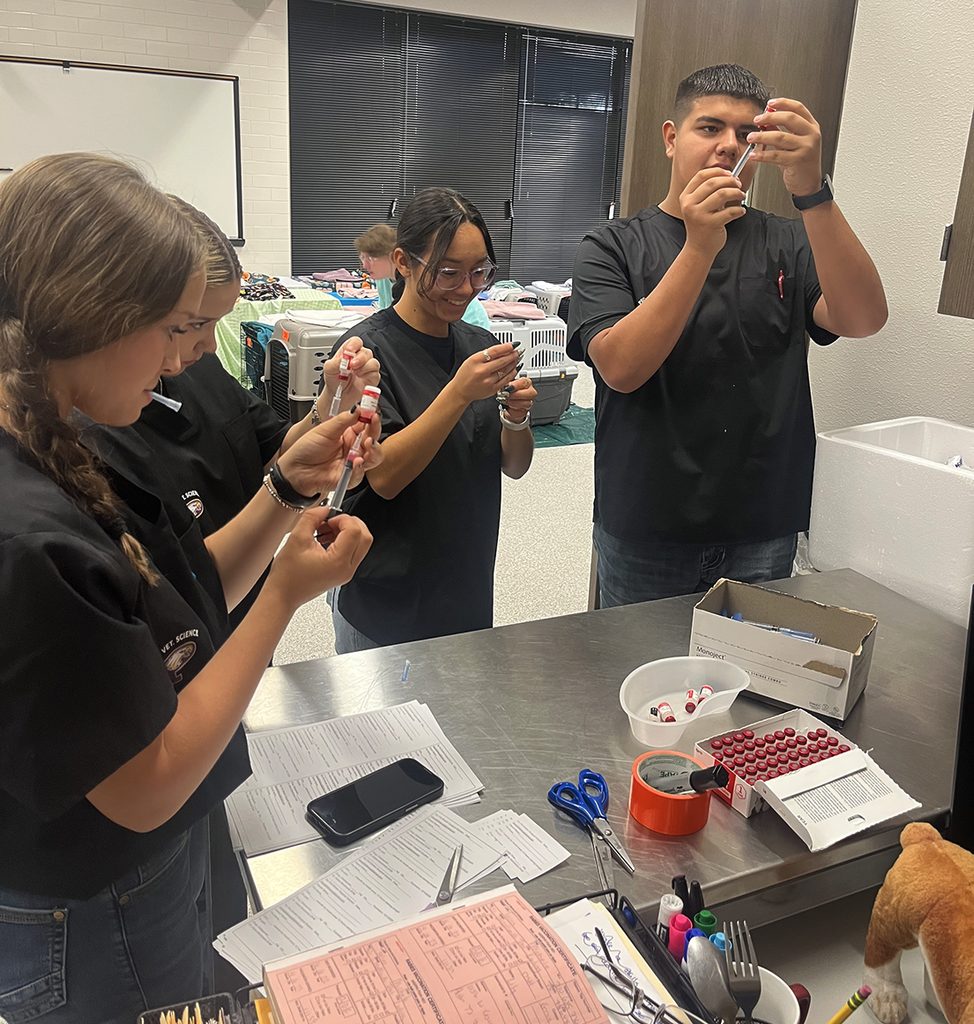
The Veterinary Science Certificate Program, managed through AgriLife Extension, is not, in the words of Joe Tyus ’91, high school technical education coordinator, an “I like puppies club.” It is a program where students get their scalpels out, learn how to suture and work with hypodermics.
Nikki Boutwell, AgriLife Extension program specialist in the Department of Animal Science and program coordinator for the certificate program, has helped Tyus implement the nationally recognized program at Pecos High School.
Boutwell said she began working with the district’s Career and Technical Education, CTE, veterinary science program when Tyus was the teacher. He later became the district CTE coordinator.
“Joe implemented our program and is doing some amazing things,” she said. “We knew getting students their clinical skill hours in a veterinary desert would be a challenge. Resources were scarce. But Joe took proven AgriLife Extension models and ran with them.”
In just a short time, Boutwell said Tyus built a thriving, community-backed program that meets students’ needs while filling a vital local gap.
A program worthy of the building
Pecos High School built a new career technical education facility with space specifically designed for vet science, including a kennel room, washroom with blowers, step-in tubs, a surgical room and a dog run right off the classroom. Tyus joined as the vet science teacher but needed a curriculum to go with the new space.
As a Texas A&M University graduate, Tyus checked with his alma mater to see what it had to offer, found the certificate program, met with Boutwell and began adopting the curriculum. The coursework is very rigorous but has been well received.
“I’d never taught veterinary science specifically before, but the program has enough supports built in; it has been very doable,” Tyus said.
Highly targeted, specialized program leads to a career path
Veterinary science is one of 15 career pathways offered at the high school, giving students a clear route into a post-secondary education or the job market, Tyus said. The number of students is limited because admission is selective, requiring an application and a parent essay.
The program is designed for high school students interested in becoming a veterinary assistant or pursuing an associate, undergraduate, or graduate degree in veterinary science.
Students must log more than 200 classroom hours and 300 clinical hours to be eligible to sit for their certification examination. Tyus said this experience is more than some second-year college veterinary school students have had.
“None of my students could even drive, but they had already logged 50-plus internship hours and clinical hours with a veterinarian or a vet tech,” Tyus said.
Only about 40%-50% of applicants are accepted, he said, adding that because the schedule includes Fridays and Saturdays under a four-day school week, some students are counseled out due to other commitments.
Tyus said the exposure to veterinary clinical activities weeds out students who are not prepared for the realities of veterinary medicine. The sights and smells can be more than expected.
The program is currently in its second cohort, with juniors and sophomores. Tyus said most students hope to apply to veterinary school; others aim to become licensed veterinary technicians. Either way, the hands-on hours give them a real edge in a competitive field.
“A student who has already logged 225 clinical hours and demonstrated 100 skills stands out immediately on a vet school application,” Tyus said.
Benefiting the community
Because the region is considered a “veterinary desert,” establishing the Veterinary Science Certificate Program in the Pecos school system benefits more than just the students.
As Tyus brings in veterinarians for the student experience, they also provide a significant community service.
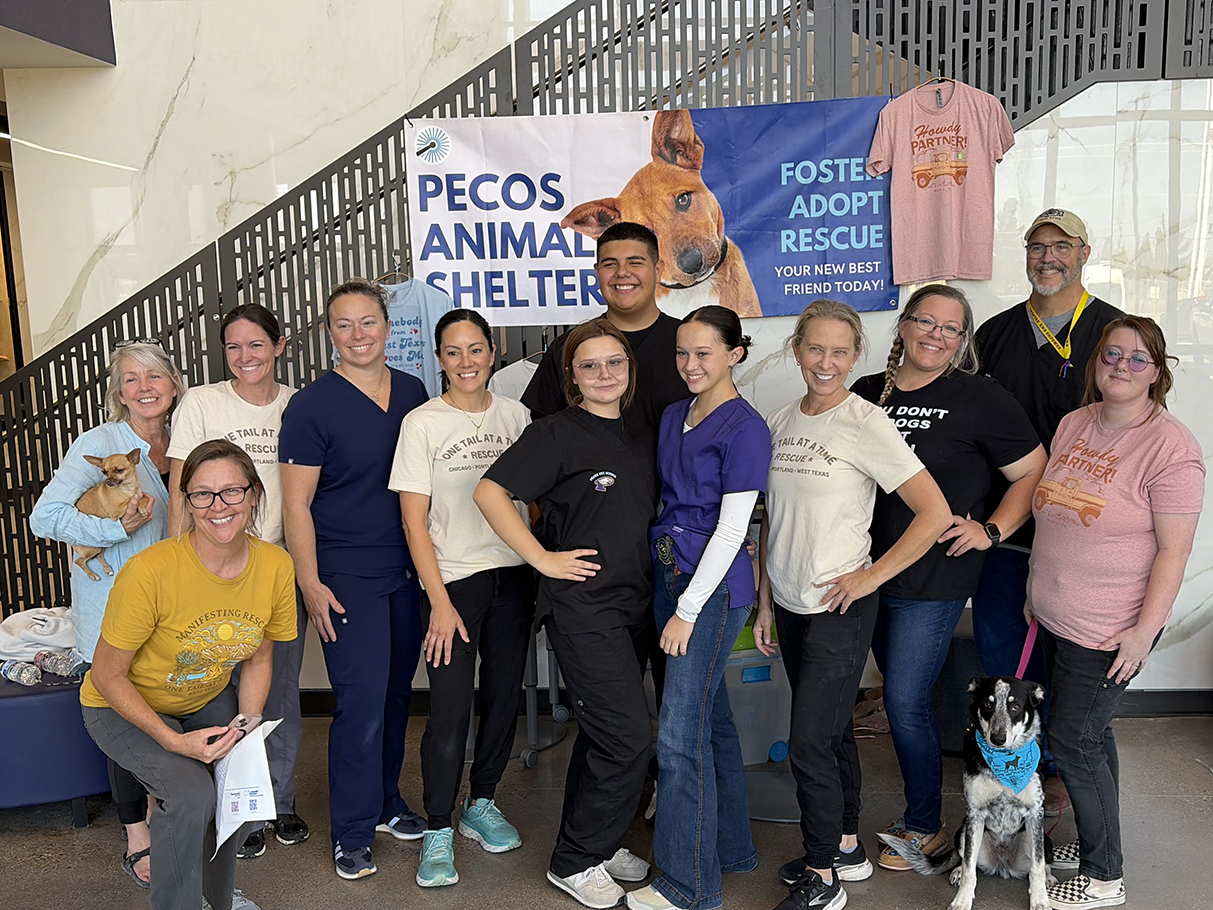
The program partners with the Pecos Animal Shelter and One Tail at a Time Rescue to host an annual spay-and-neuter clinic, now in its third year.
Four veterinarians came from Lubbock to take part this year, and roughly half of the 110 appointment slots were filled within the first 12 hours, demonstrating a great community need, Tyus said.
Students also treat show animals such as lambs, goats, pigs and cattle at the school’s ag barn under the supervision and observe local veterinarians during larger procedures to log more hours, Tyus said.
“This collaboration is a perfect example of how the VSCP and a committed educator have come together to help youth learn and give back to their community at the same time,” Boutwell said.
PHOTO: Students in the Veterinary Science Certificate Program at the Pecos-Barstow-Toyah Independent School District join regional veterinarians to help the community at the third annual pet clinic. (Joe Tyus/Pecos-Barstow-Toyah Independent School District)