Farm bill remains in holding pattern until after Nov. 3
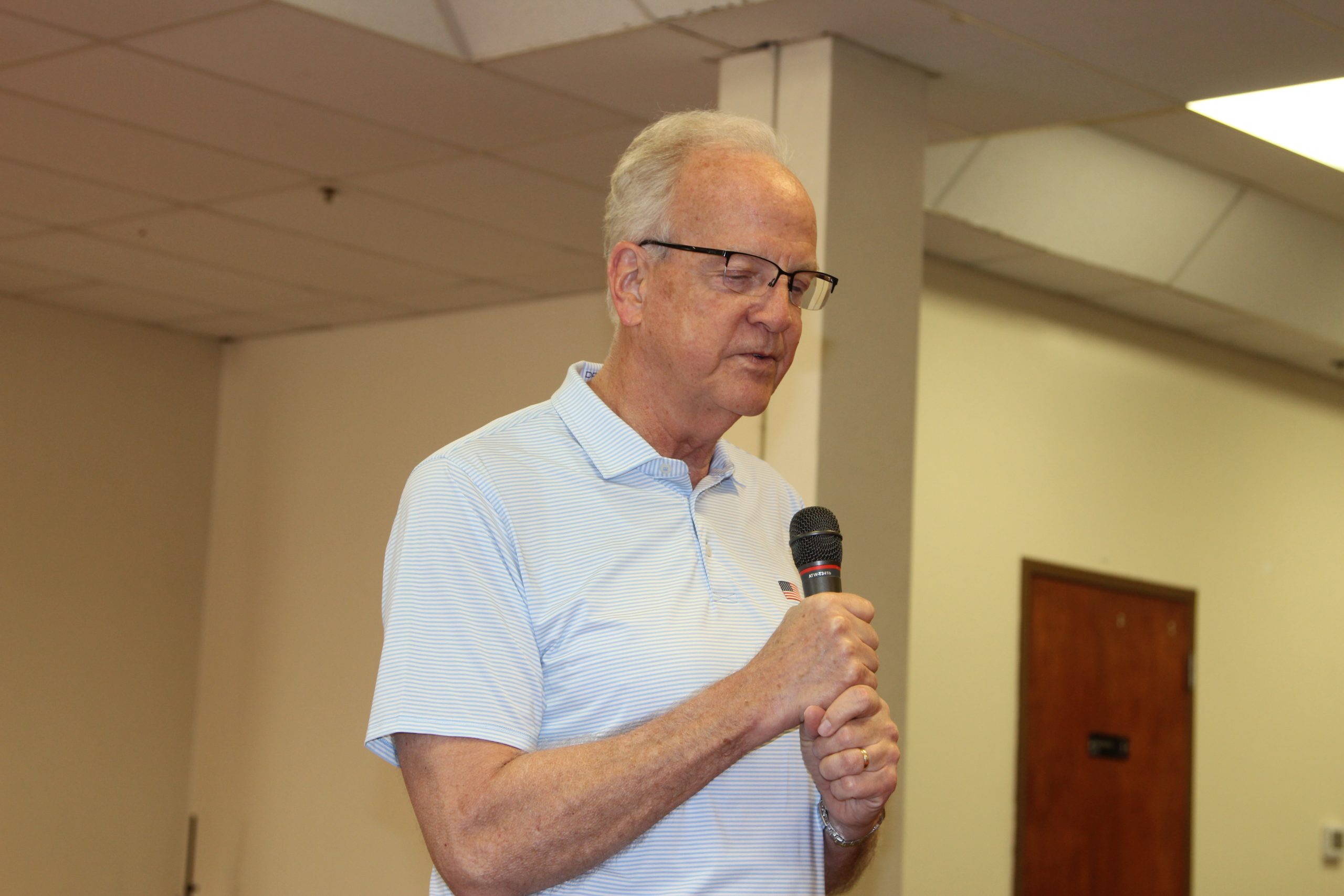
No action is expected on a farm bill until after the election, according to U.S. Sen. Jerry Moran.
Moran, a Kansas Republican and a member of the Senate Agriculture Committee, said the farm bill’s expiration Sept. 30 means agricultural legislation reverts to the 2018 farm bill.
Safety-net provisions were already included in a reconciliation bill, and recent payments went to Kansas farmers and other U.S. farmers, Moran said.
The House passed a farm bill 224 to 200 in April. The Senate Agriculture Committee passed a bill this fall. Senate passage requires bipartisan support, including at least 10 Democrats, assuming all Republicans support the measure, Moran said.
The outcome of the Nov. 3 election could create several possible scenarios, he said. Republicans, who control both chambers of Congress, and Democrats on the agriculture committees have indicated they want a farm bill.
One positive is that the House and Senate agriculture committees have both passed versions of a farm bill. Although Congress is not in session, committee staff, chairs and ranking members continue discussions, which could signal action during the lame-duck session.
If Republicans lose both chambers, Moran said Democrats could push to wait until the new Congress is seated in January, although he prefers getting the overdue legislation over the finish line by the end of the year.
Moran said the Senate and House bills have similar frameworks, which he finds encouraging. If each chamber passes a farm bill, negotiations to reconcile the bills would follow, with the House likely taking the lead, Moran said.
“One of the differences this time in not getting a farm bill done is the bulk of the farm bill was completed last year,” Moran said about the Working Families Tax Cuts Act, also known as the One Big Beautiful Bill Act, which was signed by President Donald Trump in July 2025.
That put the safety net in place for farmers and ranchers for 2026, he said.
“It’s the one that matters the most at this moment when commodity prices are so low, and input prices are so high,” Moran said.
Producer payments
U.S. Secretary of Agriculture Brooke Rollins announced Oct. 7 that the Farm Service Agency’s Agriculture Risk Coverage and Price Loss Coverage programs will generate approximately $13.8 billion in gross payments to eligible agricultural producers for the 2025 crop year, the largest annual payout by far since these key safety-net programs were established in the 2014 farm bill.
“While these payments display the tangible benefits of provisions in last year’s reconciliation bill that modernized farm safety net programs, the significant increase in payments compared to last year reflects the tremendous challenges U.S. producers are facing due to high input costs and limited market,” Moran said. “I am committed to continue working both to expand markets for Kansas producers and make certain they have the support they need to withstand difficult times.”
Still, he understands the frustration farmers and ranchers have in watching the process in its entirety.
“There’s a lot of members of Congress who come from agricultural districts, and they want to get this accomplished,” he said. “It was disappointing to me that no Democrat voted for the bill in the committee and we need to rectify that. The ag committee has been one of the most bipartisan committees in Congress and even that is changing in nature. I would tell farmers that they need to utilize the programs that are in place and we’ll continue to work hard to see that it gets done.”
He said Sen. Roger Marshall, a Kansas Republican and also a member of the Senate Agriculture Committee, is committed to making sure farmers and ranchers have the financial tools to be successful. Kansas also has two members on the House Agriculture Committee—Rep. Tracey Mann, a Republican from the 1st District, and Rep. Sharice Davids, a Democrat from the 3rd District. Both supported the bipartisan House agriculture measure, Moran noted.
He expects Mann to play a critical role in the future leadership of the House Agriculture Committee. Mann was an intern for Moran when the senator served in the House. Moran expects Mann to be a contender for a leadership post when the new Congress is sworn in.
“It’s certainly something that would be a significant development for ag policy and the well-being of Kansas farmers and ranchers,” Moran said. “That would be a great path for Tracey and a wonderful development for Kansas.”
Rising inputs
Farmers and ranchers are facing higher interest rates, fuel costs and fertilizer expenses, Moran said, and those are concerns he constantly hears from producers. Crop input costs have already been high, but fuel costs have risen dramatically since February.
“The administration’s actions in Iran is a factor in why diesel fuel, natural gas, gasoline, and refined oil products are expensive and it’s problem for fertilizer,” Moran said. “One of the most important things that can happen on input costs is to figure out the path by which we conclude what’s taking place in the Middle East. That’s up to the president and his administration.”
Congress also needs to encourage the administration to reach more trade deals, he said.
Tariffs, Moran said, can be used as leverage to get countries to eliminate artificial barriers that prevent U.S. farm products from being exported. He added that tariffs should not be a constant threat.
“We need to figure out our relationship with China,” he said. “In regard to trade, there’s no more important country particularly when it comes to grain sorghum in western Kansas and soybeans across the rest of our state.”
When China is absent from the marketplace, it makes it tough on American agriculture, he said.
“We produce more than in the U.S. than we consume here. In agriculture, the way we earn a living is by selling it to somebody outside our country,” Moran said.
He also said the U.S. needs good relationships with Canada and Mexico because those relationships are important for national security and economic well-being, particularly for agriculture. That starts with the United States-Mexico-Canada Agreement.
“While there are improvements that can still be made to the USMCA, the outcome needs to be a solid agreement, not a trade war or a battle with our neighbors,” Moran said.
Dave Bergmeier can be reached at 620-227-1822 or [email protected].