Spray drones provide new business opportunities for Iowa farmer
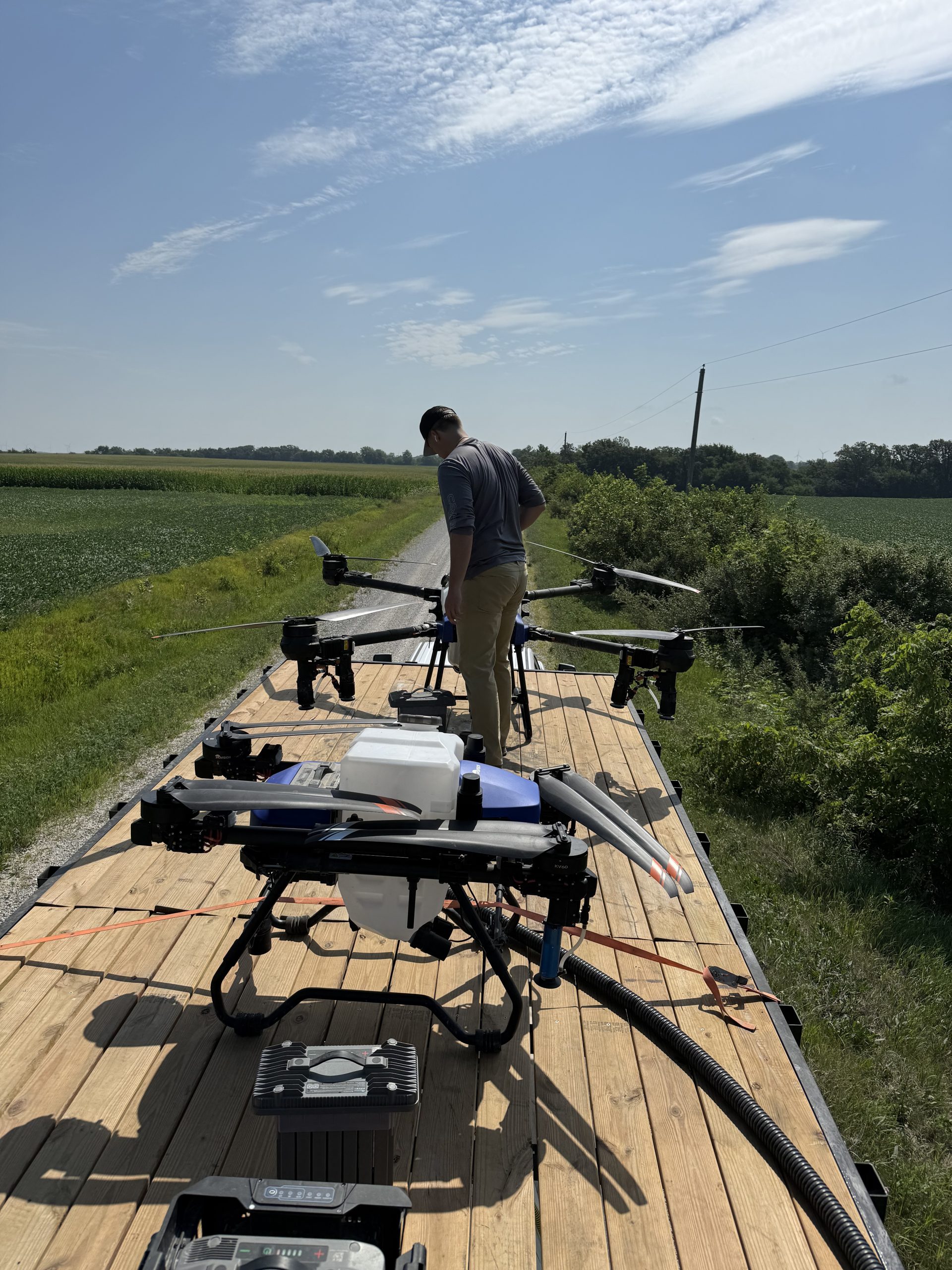
Photo: Braxton Brand refilling the drone before it continues a chemical application. (Courtesy photo.)
At age 18, Braxton Brand was looking at ways to get into aerial application. A third-generation farmer, Brand’s family grows mostly corn and soybeans, along with alfalfa.
The Grinnell, Iowa, farmer initially considered buying a helicopter, but the cost pushed him toward another option: Spray drones. The idea came after Brand watched a local applicator who worked with a cooperative spray some of his family’s fields.
“I watched that and thought it was kind of cool, and then, I kind of dug into it,” Brand said.
The beginnings of a business
In 2024, Brand bought his first spray drone with plans to use it for chemical application on his family farm. A wet year quickly changed those plans, and he ended up spraying quite a few custom acres.
The drone ended up covering more of the family’s acres than the ground rig that year. As Brand gained experience with the equipment, he also saw an opportunity to build a custom application business.
“The phone kept ringing, and I had free time, and I just went out and started doing it,” Brand said. “And then, at the end of the year, we looked around and thought, ‘Man, we can build a business out of this.’ It has really taken off since then.”
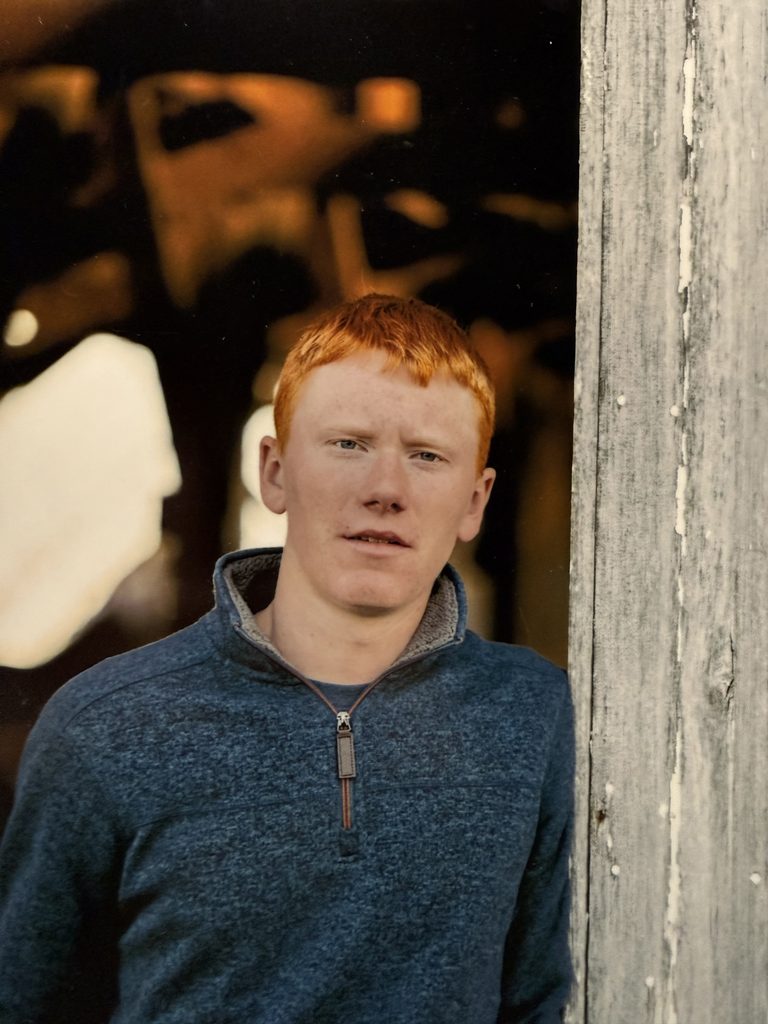
Brand Aerial
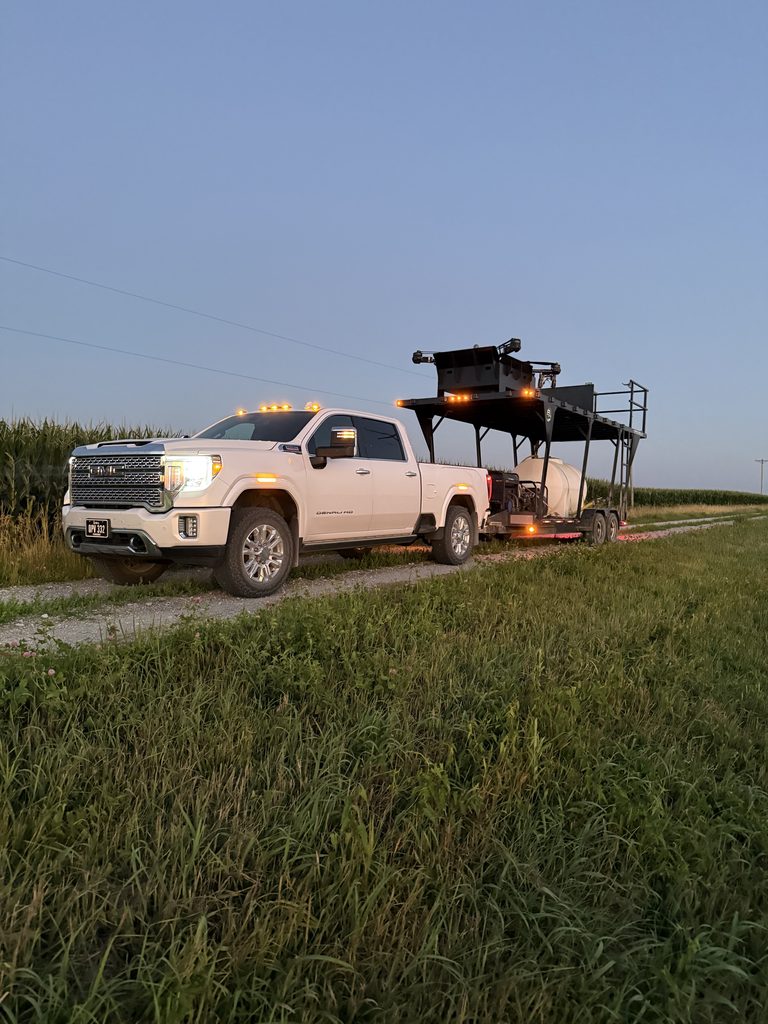
Today, Brand operates Brand Aerial and aims to annually cover 10,000 to 15,000 acres. He also sells EA Vision drones. Brand Aerial includes three spray drones: an EAVision J100, an EA Vision J150 and a DJI T100.
The business primarily applies fungicides to corn and soybeans, but Brand also uses the drones on alfalfa, Conservation Reserve Program acres, timber, ditches, ponds, and pastures. He plans to expand into cover crop applications and is exploring specialty crops, including vineyards.
The size of the fields he treats widely varies. Brand said he has sprayed fields ranging from a half-acre to 600 acres, with an average field size in his area of about 80 acres.
With one drone, Brand considers about 400 acres per day an average workload, although application capacity depends on field conditions and other factors.
A day in the life of a drone operator
The work also requires a different schedule than many traditional farm operations. Brand typically begins applications around 4 or 5 a.m., checking fields beforehand for potential conflicts like organic crops, bees and other considerations.
He generally stops around 11 a.m. because the low application volumes used by drones can evaporate more quickly as temperatures rise. He may resume around 4 p.m. and, depending on the workload, sometimes works through the night.
At the end of an application cycle, Brand rinses the drone and refills the tanks with water, so the equipment is ready for the next day.
Drones versus traditional methods
Brand said drones are not intended to replace every other application method. His family farm continues to use a ground rig for herbicide applications, with drones becoming more useful after crops emerge.
“I would say I think all application methods have their place,” Brand said. “I’m not going to say one is better than the other, but it’s very situational.”
For Brand, one of the primary advantages of a spray drone is its ability to operate in areas where other aerial application methods can be more difficult. Hilly fields, power lines, trees, and other obstacles can affect the choice of equipment. Brand said helicopters and airplanes must stay 80 to 100 feet from obstacles, while drones can operate closer to them.
“We fly at 13 feet above the crop across the field,” Brand said. “I do not know what the helicopter is flying at, but I know it’s not as consistent or low as the drone.”
Comparing cost and timing
Application costs vary by location, but Brand said prices in his area have increased this year as fuel costs have risen. He estimated helicopter application at about $14 per acre, airplane application at $13 and ground application at $10 to $12. His drone application service is about $14 per acre, but he expects it to decrease to $13 next year.
Brand is also seeing more farmers in his area purchase drones for their own operations.
“A, it’s cost saving. You’re saving your money by doing your own application, and then B, you get to control exactly when you’re getting sprayed,” Brand said.
That flexibility, however, comes with additional labor commitment. Drone owners must account for the man hours it takes to accomplish the work.
“What a lot of people don’t understand is that depending on your acreage, you’re adding an extra two weeks of work,” Brand said. “It’s not easy work, so it definitely takes more manpower and time. But in the long run, I do feel it is worth it.”
Start small before investing
For farmers considering starting a drone application business, Brand recommends taking time to understand the business before making a large investment.
“Before you go buy the drone, before you start licensing, talk to other drone owners first,” Brand said. “Don’t go out and get the latest and greatest and have all this money invested.”
Brand said the first year can help an operator determine what equipment is really needed. Spending too much before establishing enough business can create financial pressure.
“If you can’t keep it busy, you’re losing money,” he said.
Diversifying and expansion
Brand said he is working to expand his spraying business and expects to add another trailer in the future. He wants to increase the amount of pasture work he does, helping diversify the business beyond fungicide applications.
That diversification is important because demand for fungicide work can vary with disease pressure and grain markets, he said.
“A lot of people will build a business just off of fungicide, and if we don’t have a disease pressure year, or grain markets are bad, some people just don’t want to spend the money on fungicide, and then you’re kind of out of luck,” Brand said.
An investment in long-term growth
The drone business also fits into Brand’s larger plans for his family’s farm. His goal is to eventually triple the size of the family farm. He views the aerial application business as a way to support himself while allowing more of the farm’s income to remain invested in the operation.
“It is my goal to triple the size of the family farm,” Brand said. “But to do that, you really can’t pay yourself. So, this is more of a way to pay myself, and then as it grows, we can keep the farm money going back into the farm.”
For Brand, agricultural technology and precision agriculture are part of his strategy for improving profitability.”
“That is what I’m looking to bring back to the farm,” he said. “Technology, precision ag and maximizing our return on investment per acre are what’s going to scale this thing. We’ve got to figure out what’s going to give us the best return on our acres, and then you just start adding more.”
Lacey Vilhauer can be reached at 620-227-1871 or [email protected].