
Quality beef in the meat case starts with the cow-calf herd
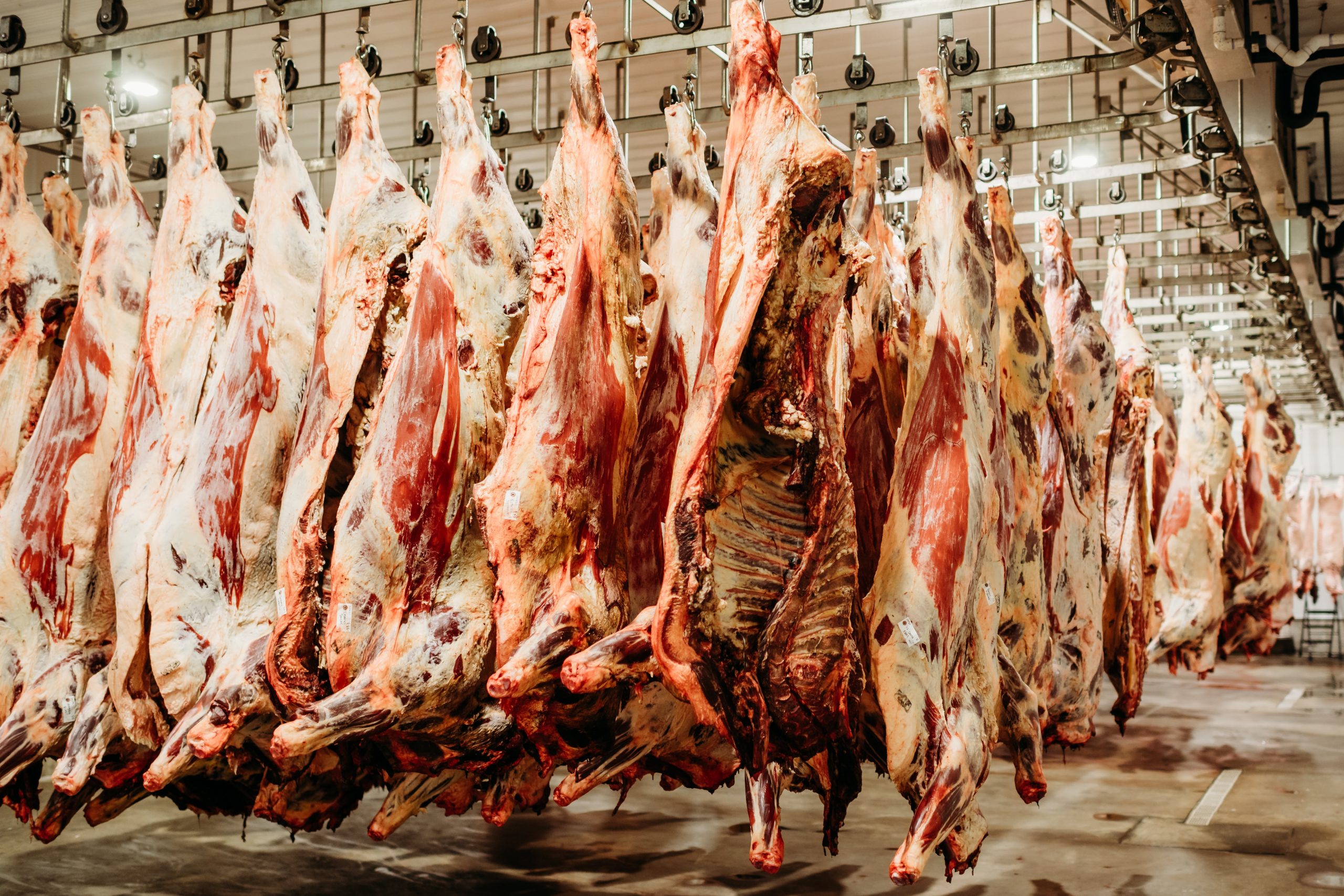
Consumers have endless choices in the meat case. From ground beef, roasts, ribs and steak, they can choose cheaper cuts and higher end grades like Prime or Choice—whatever their pocketbook or culinary skills will allow.
But how does the right beef get to the meat case? Beef producers make breeding choices they hope will garner them the highest dollar at weaning, or if they decide to keep them and feed calves out, they want ideal carcass traits.
Value and taste of beef has become increasingly important to consumers, and how those management decisions are made plays a vital role according to Erin Beyer, Kansas State University assistant professor and Extension specialist, who focuses on fresh meat quality and cooked meat color.
“As a meat scientist, I can mostly discuss the types of carcasses I see at the packing plant, but it is easy to connect some changes in carcasses with decisions made with the live animals,” she said. “The grid has had a huge impact on what types of carcasses I see at the plant, which is supported visually as well as with pricing and grade data over time.”
Beyer has seen an obvious shift when it comes to carcass weights. They are larger today than they have been in any other period, which is largely due to the benefits of grid pricing.
“While larger carcasses get a discount, larger carcasses still get a larger payout,” she said. “However, it is more complicated than only the gross pay.”
Larger carcasses will yield lower but will be of higher quality. Higher quality grades will result in a much larger price per hundredweight compared to any discount taken for the yield grade, Beyer noted.
“Certified Angus Beef and other breed or premium programs are another place where decisions with the live animal play obvious dividends on the grid with additional premiums,” she said. “The grid provides benefits for high quality carcasses, so no matter if that is achieved by a longer time on feed, genetic improvement, breed type, or other management shifts, producers have shifted to produce the highest quality beef of all time.”
Beyer said consumers most often want beef steaks to be high quality. This often translates into more flavorful beef that’s juicy, tender and overall palatable.
Her studies show consumers are consistent in their views. “Flavor leads as the most important palatability trait followed by tenderness even though all three pillars of palatability are important.”
When it comes to a single cut from middle meats, two of the most impactful factors on overall palatability are quality grade and degree of doneness, but there are so many factors that impact palatability—including aging period, age of the animal and breed.
“Additionally, the cut of meat is also hugely impactful with muscles from the chuck and round usually being tougher and less palatable than muscles from the loin and rib,” she said. “However, ground beef is different. Consumers want ground beef to be affordable and bright cherry red in color.”
Beyer and others have conducted research to show that color has no impact on palatability or food safety, she notes.
“Consumers buy with their eyes, and it is our job to give consumers what they want,” she said.
Producers raise cattle for what consumers want, as the highest quality beef that’s ever been available is in the meat case today.
“Producers are doing a great job of providing consumers with the type of beef they want to purchase,” she said. “I have watched as beef has shifted from a huge number of USDA Select, to then USDA Choice carcasses. Similarly, while USDA Prime used to be hard to find in packing plants or grocery stores, now they are easy to find everywhere.”
National Cattlemen’s Beef Association’s National Beef Quality Audits have supported those observations, Beyer said. Those occur every five years as a snapshot of the beef industry.
“In my opinion, to support beef demand, producers should continue to do what they are doing today,” she said.
Beyer’s background
Originally from Texas, Beyer earned her bachelor’s and master’s degrees from Texas Tech University, and while in Lubbock, she was heavily involved in meat judging, and meat science quiz bowl as a student and as a coach. According to K-State, she participated in vast research and outreach projects at Texas Tech, in New Zealand, Australia, and Malawi. Her thesis research focused on evaluating the effect of different protein sources on functional brain connectivity.
After receiving her master’s, Beyer helped develop new private label products for H-E-B Food Retailers within its own brand line. She left H-E-B to pursue a doctorate in animal science from K-State. In Manhattan, she evaluated the impacts of cooking and freezing on the palatability of beef steaks while being heavily involved with undergraduate programs like meat judging, meat science quiz bowl, and meat animal evaluation.
After graduating, she became an assistant professor of meat science at North Dakota State University where Beyer oversaw the meat judging program, taught a multitude of classes, and represented meat science in extension programs. Throughout her career at NDSU, Beyer continued her research of understanding the impact of freezing and cooking on palatability and the intrinsic properties of beef steaks.
Beyer moved to K-State in 2024, as an assistant professor in sustainable fresh meat industry with a 60% Extension and 40% research role.
“Overall, my research bucket is meat quality, focusing mostly on eating experience for consumers,” she said. “However, it was not until I began my Ph.D. at Kansas State University where I started to create my niche in meat science research of cooked beef color.”
Currently, she’s studying factors that impact internal cooked color and the impact these factors have on palatability.
“I care about the consumer’s eating experience and want to support the research that promotes meat quality and beef demand,” Beyer said.
Kylene Scott can be reached at 620-227-1804 or [email protected].
Related coverage and resources
- Related on HPJ: Influential 10 percent cattle
- Related on HPJ: Fat means flavor when it comes to beef
- Outside resource: USDA ERS — Cattle and Beef



