
Wheat breeder targets boost in grain fiber
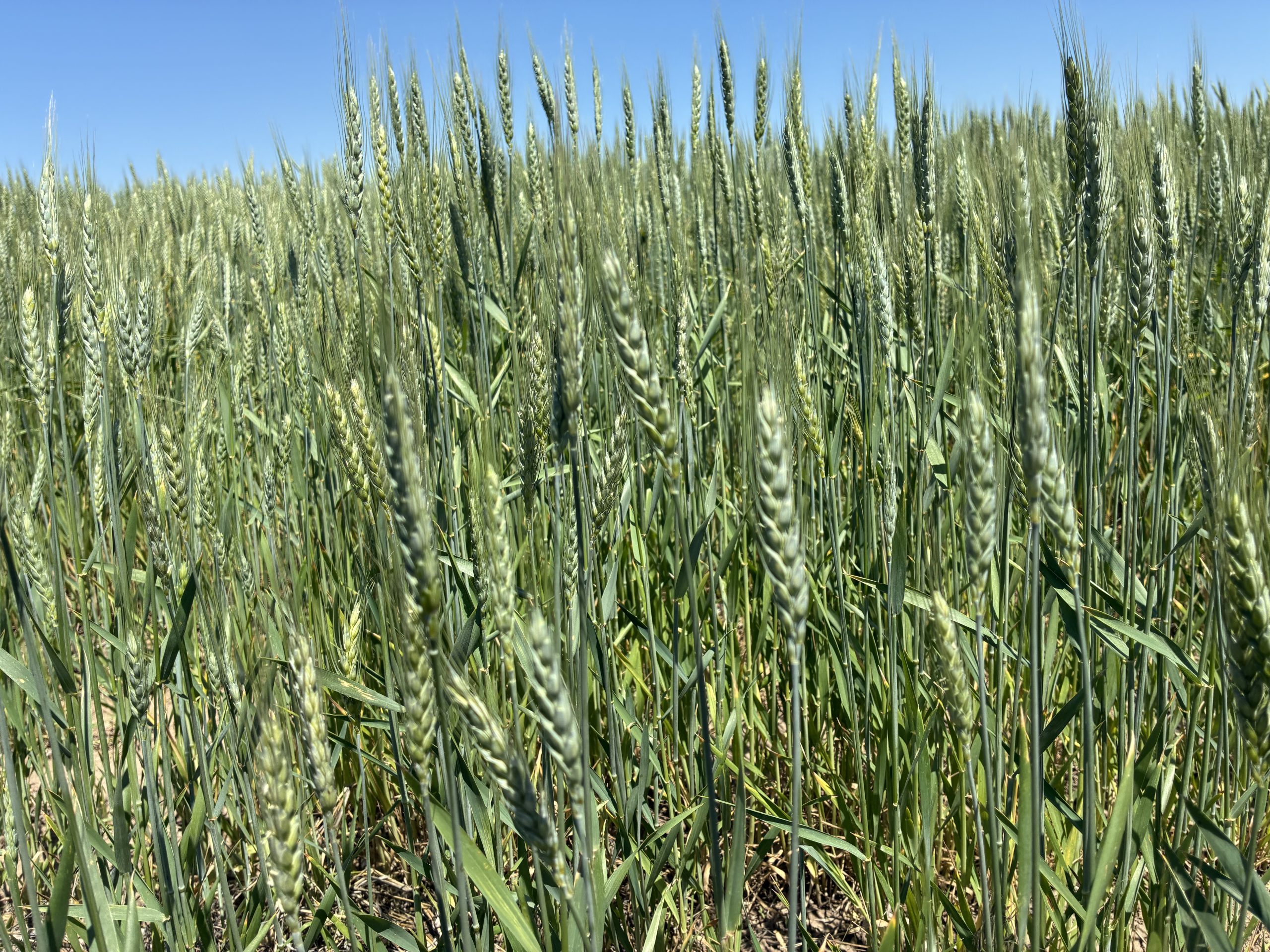
According to nutritional experts, Americans aren’t consuming enough fiber. The solution could lie with a crop that’s already abundant, resilient and ecological to grow.
Wheat already provides one-third of the fiber in the average American diet. But through selective breeding, it’s possible to improve the bio-availability of that fiber, according to Brett Carver, Oklahoma State University’s chief wheat breeder, who started work on a high-fiber wheat line 13 years ago.
The target isn’t limited to increasing the quantity of fiber in each bushel harvested. It’s also about concentrating more of the fiber in the endosperm, the starchy portion of the wheat berry used to make flour, he explained in an interview.
OSU’s Northern Oklahoma Research Center near Lahoma contains many other innovative consumer-oriented traits. There’s purple wheat with enhanced antioxidant levels, wheat with dramatically improved gluten strength—which could reduce or even eliminate the need for dough enhancers in bread formulations—and wheat that combines the baking functionality of hard and soft classes in the same variety.
It’s an impressive line-up. But, for Carver, changing the carbohydrate composition of the grain is as aspirational as anything else on his list.
“We need to do this, for our industry, and for the sake of wheat and wheat production,” he said. “I’ve always said we don’t need to change the gluten or take the gluten out. The gluten’s fine. It’s the carbs we need to fix.”
First steps
When Bay State Milling became the first United States company to market high-fiber flour in 2017, that caught Carver’s attention. Even though Bay State’s HealthSense brand is made from the same starchy endosperm as typical refined flour, it contains ten times more fiber. The addition of the non-digestible carbohydrate slows digestion, prevents blood sugar spikes, improves metabolism and benefits the gut microbiome.
The high-fiber wheat used to make it, originally developed in Australia, has one major drawback: yields are below average.
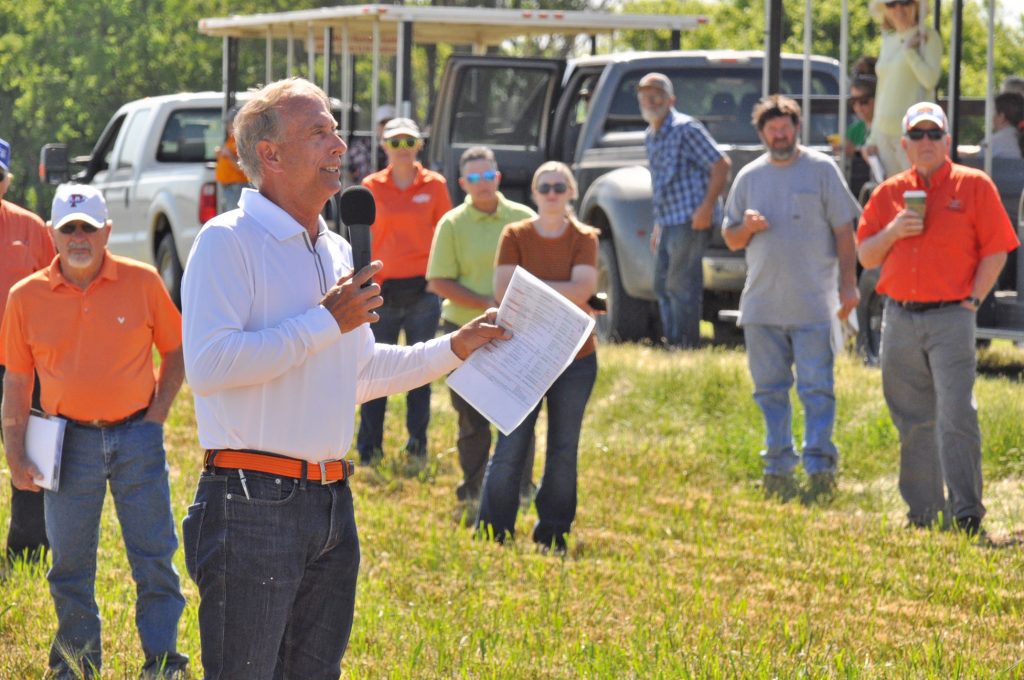
In setting out to create an Oklahoma-adapted line that would fit Bay State’s program, Carver started by minimizing the yield drag, while gradually increasing the concentration of high-amylose genes in each new cross using marker-assisted DNA screening.
That effort is ongoing. But a new approach has also emerged with fewer proprietary and regulatory hurdles. Even better, there’s no yield drag to overcome.
Arabinoxylan, sometimes referred to by the initials AX, is a dietary fiber found naturally in cereal grains. Classified as a functional food ingredient for its role in feeding healthy gut bacteria, it also has gelatinous and water-binding properties that are advantageous for making bread.
In recent years, studies done in Europe revealed certain varieties naturally contain more AX than others. The public health implication of identifying those varieties and producing them in higher volume inspired a former corporate executive, Rob Wallace, to organize the Coalition for Grain Fiber in 2022.
“This is something that already exists,” he said during a workshop held in conjunction with the annual meeting of the Wheat Quality Council last February. “This is exactly the direction we need to go, and I think a lot of people recognize it.”
As a milling executive with Cargill and Ardent Mills, Wallace lived and worked on four continents. After his mother suffered a massive stroke, he wanted to explore dietary interventions for solving chronic disease, which formed the basis for establishing the nonprofit Foundation for Innovation in Healthy Food. The grain fiber coalition is the foundation’s first major public health initiative.
More than 50 public and private sector scientists in three countries and 23 states have signed on to the mission of improving nutrition of grain-based foods without changing their taste, texture or price. Carver is among 38 wheat breeders worldwide that make up the coalition’s scientific working group. Wallace is also assembling an industry-wide advisory council comprising a broad spectrum from farmers to doctors.
The first step in moving forward is to identify varieties with high AX fiber, commonly done using lab spectrometry. The next step is less clear: how best to get this high-fiber wheat into the market so it can benefit the consuming public.
Cost versus return
Adding value to wheat has never been more important, as acreage declines and farmers grow increasingly frustrated by the crop’s lack of profitability.
High AX varieties might have important preventative health attributes, but how can producers reap financial rewards by growing them?
The most obvious strategy—identity-preserved marketing—has proven difficult to achieve so far.
To find out what could be learned from past introductions of consumer-oriented traits, Wallace convened a series of panels at a workshop held in conjunction with the Wheat Quality Council’s 2025 annual meeting. It was live-streamed and recorded in addition to being held in person in Kansas City.
One of the brightest wheat IP success stories to date is Ardent Mills’ UltraGrain flour program in Colorado and western Nebraska. According to Colorado Wheat Executive Director Brad Erker, 15 to 20 elevators currently participate, with farmers receiving a 20-cent base premium that can go as high as 70 cents, depending on certain quality parameters such as protein content.
“Currently that’s a pretty good value back to the farmer,” Erker said.
So far, the program has attracted roughly 100,000 to 150,000 acres a year, accounting for 5 to 7% of production.
“Farmers will grow whatever makes them the most money. It’s as simple as that,” Erker said.
Ron Suppes, a long-time wheat industry leader from Scott City, Kansas, said, in his observation, the reason many attempts to add value to wheat have failed was because there wasn’t enough additional profit built into the end-price to cover the added cost at each stage in the supply chain.
He gave the example of hard white wheat, which is considered a premium product since the lighter, sweeter bran allows for higher flour extraction. In his area, it’s currently discounted 20 cents a bushel at the elevator, compared to traditional red, due to the higher costs associated with handling, segregation and record-keeping.
Improving the nutrition of grain-based foods without changing their taste or texture is achievable, but divvying up costs and maintaining profit margins is the hard part, according to James Bowling, who handles supply chain management for Bay State Milling.
“We can get higher fiber wheat into food without changing the pizza,” he said. “But the question is, how do we pay for that? Consumers won’t pay extra for pizza just because there’s a different flour in the crust.”
According to several food industry panelists, without consumer education, it’s difficult to create enough pull-through demand to incentivize production.
Pathway to premiums
The paradigm of IP marketing isn’t the only path to higher profits for farmers. Another possibility is convincing the U.S. Department of Agriculture to pay farmers to grow high-AX wheat, similar to how conservation programs work, Wallace said.
With the current administration and Congress focused on government cost-cutting, that seems unlikely in the short term. But Wallace pointed out attitudes in Washington are shifting, citing the rise of the “Make America Healthy Again” movement and views like those expressed by Sen. Lisa Murkowski, R-Alaska, who stated during the confirmation hearing for Secretary of Health and Human Services Robert Kennedy Jr., “Instead of focusing on who covers our exorbitant healthcare costs, we need to reduce these costs by directing our attention to prevention and keeping people healthy.”
Legislators in Texas passed a bill requiring products with 44 different food additives to carry a warning label, including a few commonly used in bread. Oklahoma got close to passing a similar measure, and other states could follow.
In addition, federal nutrition programs like Medicare and Medicaid have started covering prescriptions for healthy food, a trend referred to as “food-is-medicine.”
Oklahoma has an active 150-member Food is Medicine Coalition, and this spring the state legislature passed the Food is Medicine Act, which incentivizes Medicaid-contracted entities to offer medically tailored meals to individuals managing chronic health conditions.
Investing in healthcare prevention rather than treatment generates a return of $120 for every dollar, Wallace said, a powerful number that’s hard to ignore.
Exploring alternatives
Important questions remain. Is any amount of AX fiber better than none, or does a certain threshold need to be reached? How well does AX fiber tolerate modern food processing applications? How high can it get before changes are needed to existing processing formulations or infrastructure? How can AX content be measured in the most meaningful way? To be most effective, does it need to be packaged with other health-enhancing traits?
Wallace believes the coalition has assembled the right scientific experts to find the answers.
As it happens, a possible pathway forward is already starting to crystalize. In what Kansas State University’s chief wheat breeder Allan Fritz describes as “pure serendipity,” a variety has been identified that fits the coalition’s aims.
“As the fiber coalition came together, we discovered one of our lines had a 50% increase in arabynozylan,” Fritz shared on the Kansas Wheat podcast. “We currently have it under seed increase for 2025.”
As such lines enter the market, a scenario could exist in which farmers are encouraged to plant higher fiber varieties through a guiding document similar to the milling industry’s preferred variety lists. These lists aren’t mandates, but they do signal to growers which varieties best meet the needs of end-users.
Carver said asking farmers to intentionally select high-AX varieties is somewhat unrealistic at this point, considering all the other important agronomic traits they need to consider.
But he enthusiastically supports the bigger picture of where the trend might lead. If wheat could offer higher levels of fiber, it would enhance the reputation of grain products and benefit the entire supply chain.
Carver believes a successful shift to higher fiber wheat would require some type of “onboarding process,” or, at the very least, a transitional period. He’s also adamant farmers be compensated for any increased value they bring to the market, but he’s convinced it’s worth pursuing.
“If we do this,” he said, “wheat becomes a much more marketable product.”
Related coverage and resources
- Related on HPJ: OSU wheat variety update includes advice for next year’s crop
- Related on HPJ: OX wheat offers opportunity to add value
- Outside resource: USDA ERS — Wheat



