Wildfire a reminder of need to have plans in place
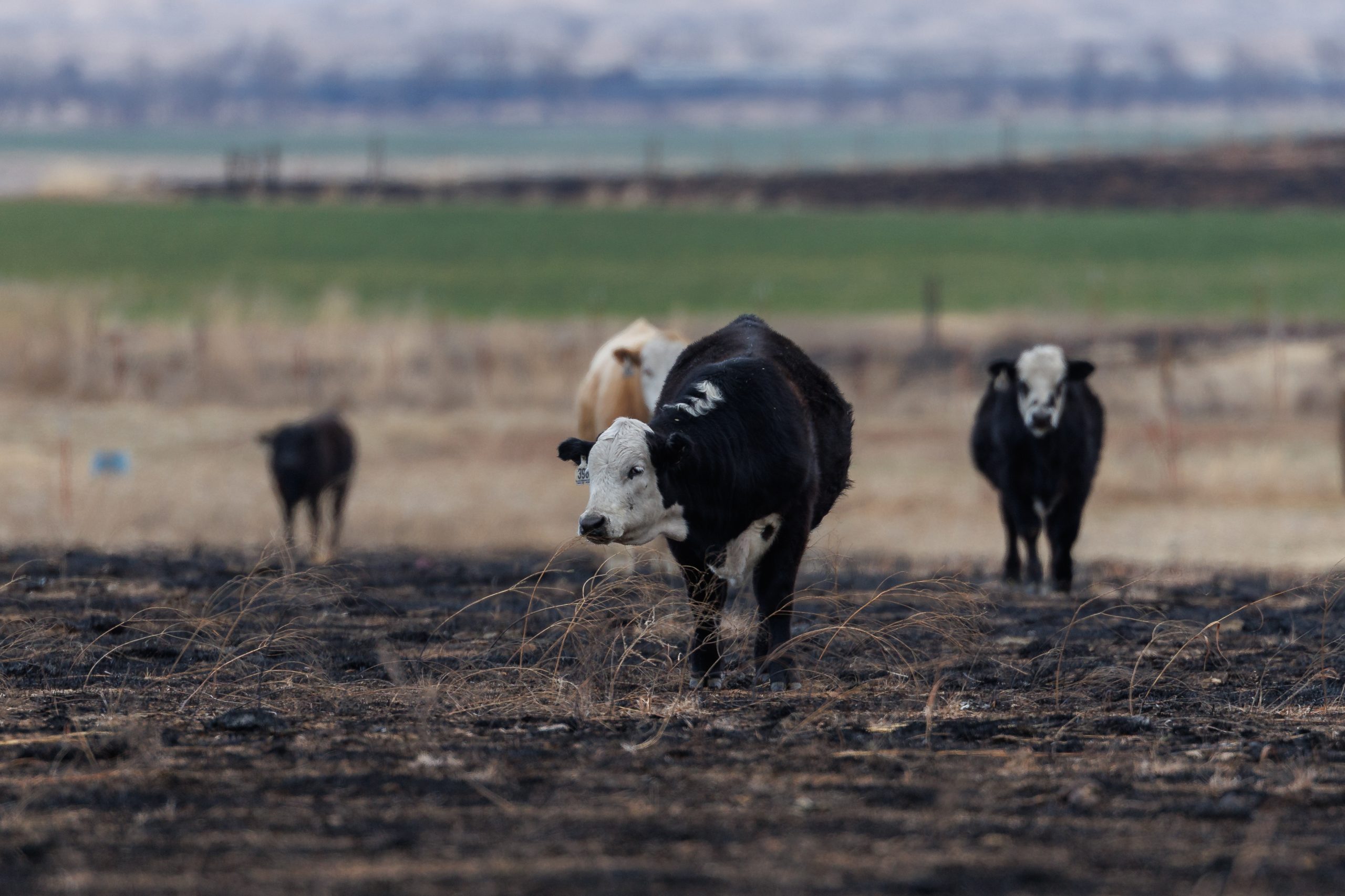
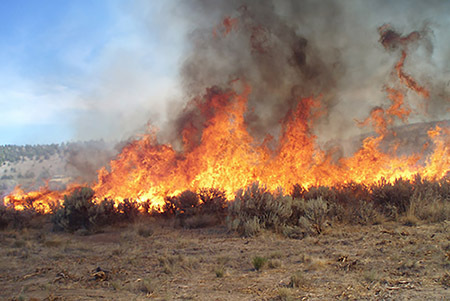
A mid-February wildfire that burned more than 280,000 acres in Oklahoma and Kansas adds stress to ranchers and rural communities and that was not lost on Dr. A.J. Tarpoff, DVM, who has many friends in the region.
Tarpoff is an associate professor and beef Extension veterinarian at Kansas State University.
“Any time I hear about a fire event, my thoughts are always focused on the safety of the people in those impacted areas,” Tarpoff said. “Ranchers, residents, first responders can all be caught in a very dangerous scenario at a moment’s notice.”
It is a good reminder that working together as a community is important, he said.
Calving season
February and March are a time when many ranchers are involved with calving season and that adds stress. Tarpoff said that means complexity in an already difficult and challenge scenario.
Lingering stress, changes in feed, lack of protection, ash dust and typical cold nights can add misery to a wildlife’s aftermath, he said. The good news is many ranchers are providing the basic necessities for momma cows and young calves.
Animal health
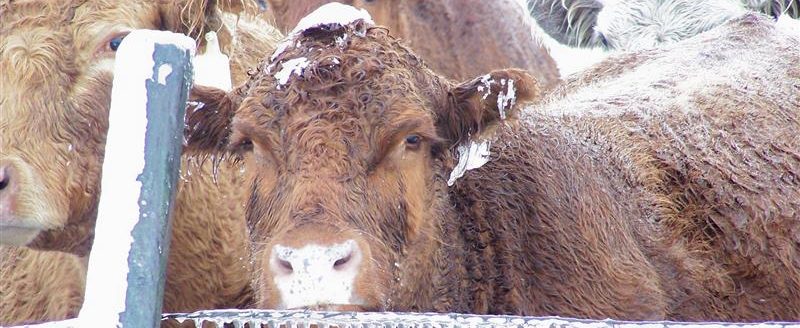
Monitoring surviving animals is crucial in the days after a wildfire, Rosslyn Biggs, DVM, OSU Extension beef cattle specialist, said in a university news release. (Enhanced monitoring of surviving livestock after a wildfire is crucial as shown in the photo at top that was taken by Mitchell Alcala, OSU Agriculture.)
“We need to be thinking about long-term repercussions,” she said. “Thermal injuries, burns can be a big issue on these animals. We also need to be thinking about smoke inhalation and the systems that those affect.”
Enhanced monitoring of the surviving animals is crucial after a wildfire, Biggs explains. In addition to nutrition, hydration is key. Cows that are in the later stages of pregnancy need to be thought about, too. Consider their capacity to care for either calves on the ground or those they will soon birth.
Unfortunately, the aftermath of a wildfire means dealing with injuries and dead animals, Tarpoff said.
In cases of injuries, a rancher should contact a local veterinarian immediately because the doctor can provide an assessment and offer treatment or triage.
“The sooner those decisions can be made, the better the outcome for the animal’s well-being,” he said.
Some of the more extensive injuries may lead to euthanasia, he said, adding that is a humane way to handle unfortunate cases.
“Some of the more extensive injuries that animals cannot recover from may be associated with hoof separation (at the coronary band), severe eye damage, or extensive skin damage,” Tarpoff said. “Any animal in severe distress should be euthanized immediately.”
Post-wildfire evaluation can lead to difficult decisions, too, Bigg said.
“It’s very important in these disaster-type situations that animal welfare needs to be our first consideration,” Biggs said. “How are those animals that have survived going to be able to recover from those injuries? In many cases, unfortunately, euthanasia may be the most humane decision that we have to make.”
Carcass disposal
Burial will be the best option for disposing of livestock carcasses, said Doug Hamilton, OSU Extension water management specialist.
“You need to be in a high spot,” Hamilton said. “You need to be well above a flood plain. You’re going to have to dig a hole 4- to 6-feet deep and be at least two feet above where the water table may rise.”
It is also important to keep burial sites at least 300 feet away from water sources.
The state of Oklahoma has five methods for disposing of livestock: landfilling, rendering, incineration, composting and burial. Finding a landfill to take a dead animal will be difficult, even in an emergency. Rendering will be hard if the animal has been dead for several days and incineration requires expensive and specific equipment.
Composting is viable, but it will require wood shavings or sawdust and management. An advantage of composting is that once you’ve completed it, the land site will be viable for use again.
In the Sunflower State, the Kansas Department of Health and Environment can help with location for burial or provide logistic help for composting in areas that do not have risk of ground water contamination, Tarpoff said.
When wildfires are imminent
Having a plan to move cattle in advance of a wildfire did help ranchers who had time to do so, Tarpoff said. Smooth, quick and efficient cattle movement does not happen by accident.
“Those types of movements are testament to the caretakers having good cattle handling techniques and familiarity with their herds,” the Extension veterinarian said. “The best advice I have for folks that need to move cattle out quickly is to have a good regularly interaction with your cowherd. It’s very difficult to gather a semi-feral group of animals at a moment’s notice. Moving your animals routinely in a calm, cool and collected manner can make all the difference when you need to move animals in a scenario like this.”
Dave Bergmeier can be reached at 620-227-1822 or [email protected].