K-State beef cattle experts discuss malpresentation of calves and the potential role of sire genetics
Much like in human childbirth, not every delivery in cattle goes exactly as planned. While many calves are born without issue, some require extra help due to factors beyond a producer’s control.
On a recent episode of the K-State Beef Cattle Institute’s Cattle Chat podcast, K-State veterinarians and beef cattle experts say a portion of calvings will naturally require assistance.
“Studies have shown that about 10–20% of calvings may require some assistance, and that is usually due to a mismatch between the pelvis of the cow and the size of the calf,” veterinarian Todd Gunderson said.
Another contributor to calving difficulty is malpresentation, which occurs when a calf is not positioned correctly for delivery. In a normal birth, the calf enters the birth canal front feet first with its head resting between its legs. Malpresentation can include calves that are backwards, sideways or have their head or limbs positioned incorrectly, often requiring intervention.
Gunderson noted that certain situations can increase the likelihood of these complications.
“When there are multiples, I would see more malpresentation cases in practice,” he said. “There is also some research suggesting the sire of the calf may influence the probability of malpresentation, but that has only been observational research—we don’t know for sure.”
That observation may help explain why producers sometimes see calving issues grouped together within a herd.
“That is why we may see some of these cases in clusters,” veterinarian Bob Larson said. “If they share the same sire, the physical structure of that animal could play a role as well.”
Veterinarians say understanding these risk factors—calf size, pelvic structure, multiples and potential genetic influence—can help producers monitor more closely and intervene when necessary, especially during calving season.
For more on this topic or to learn more about vaccinations, listen to the full episode of Cattle Chat, produced by K-State’s Beef Cattle Institute. Questions on this and other topics also may be sent to [email protected].
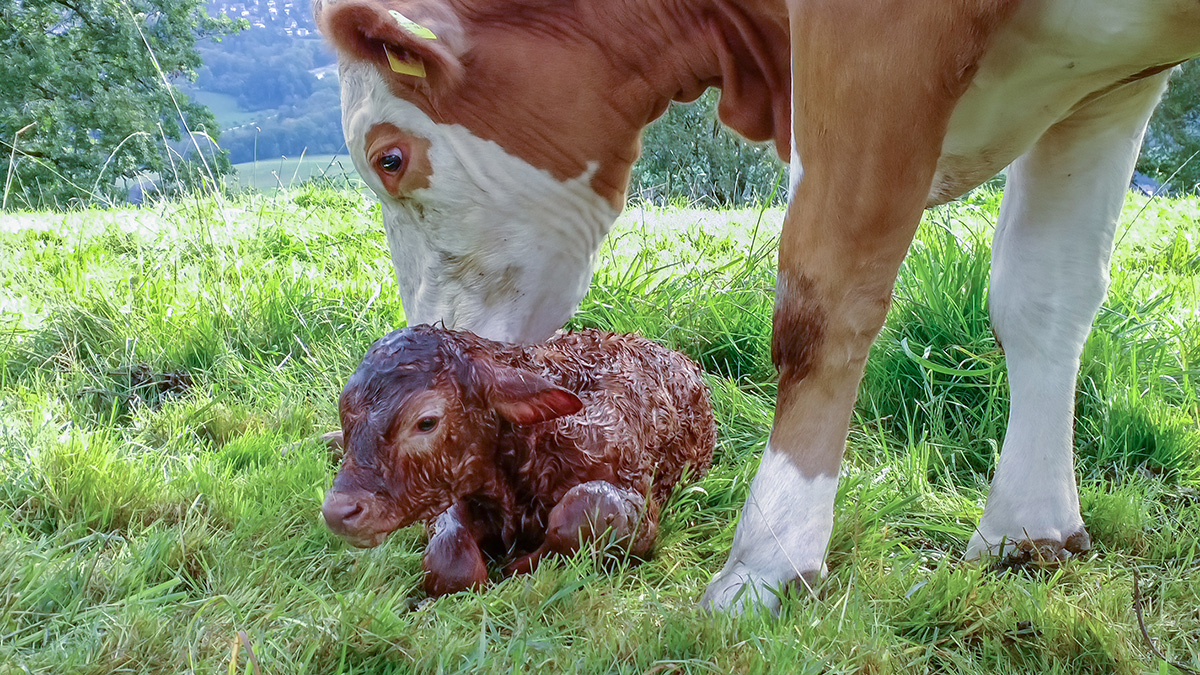
PHOTO: Cow and calf. (Adobe Stock │ #312571256 – emotionpicture)