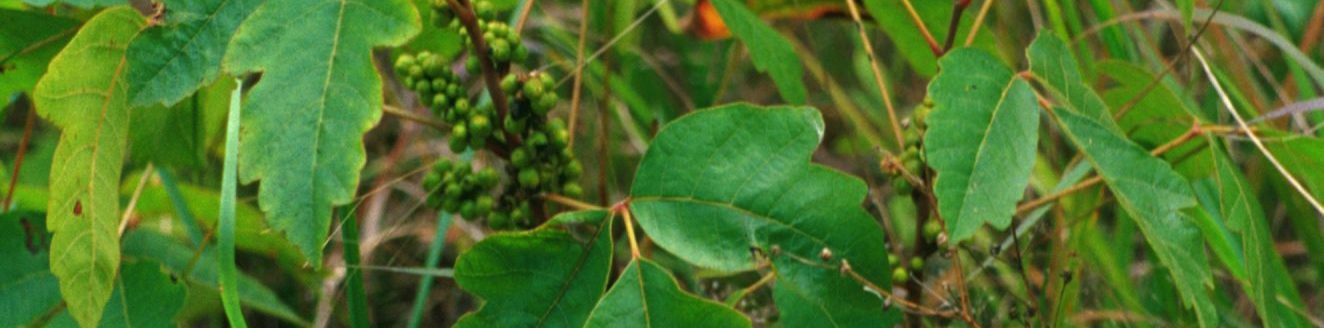
In this video, former K-State Extension Wildcat District horticulture agent Jacob Weber explains the difference between poison ivy and a non-poisonous plant called the Virginia creeper.
“When approaching a brushy area,” he says, “it’s important to know that poison ivy can be there. One of the first things to look for is leaves of three. When you see leaves of three, leave them be.”
Poison ivy, which is found in every Kansas county, has a compound leaf consisting of three leaflets. The unique feature of the three leaflets is that the center leaflet has a stalk, and the side leaflets do not. The side leaflets are attached directly to the stem.
Poison ivy can run on the ground — similar to a ground cover; it can climb on a tree as a vine; or it can grow as shrub.
“When it comes to poison ivy, be aware of your surroundings,” Weber says. “When you approach trees and shrubs, especially in parks, be careful. Take a look and make sure you don’t see leaves of three.”
The full video is available to view online at https://youtu.be/OKrbg7Tc8kE?si=nwxFW-XLnLTep5Va.
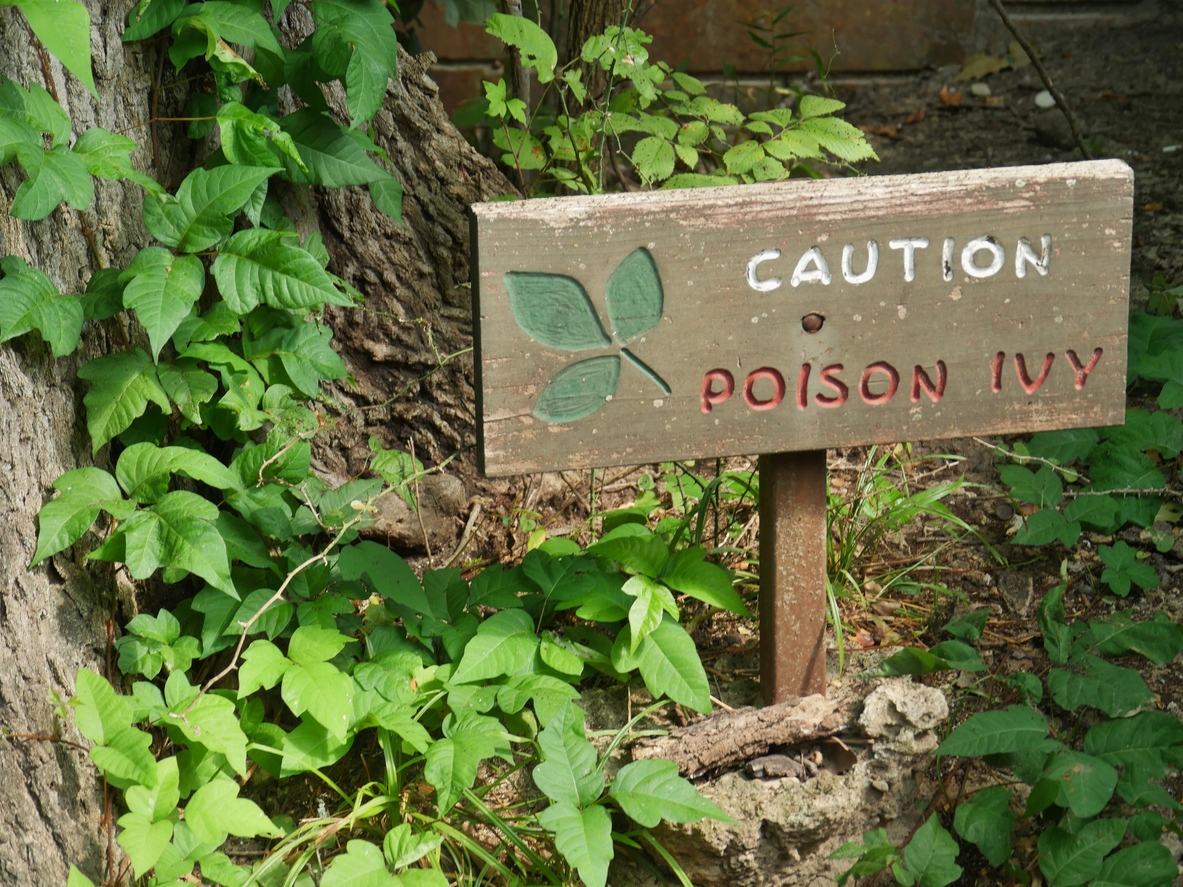
PHOTO: Sign with poison ivy plants around. (iStock-#951410190 │ GemStocks)