Sorghum futures get a boost from CME
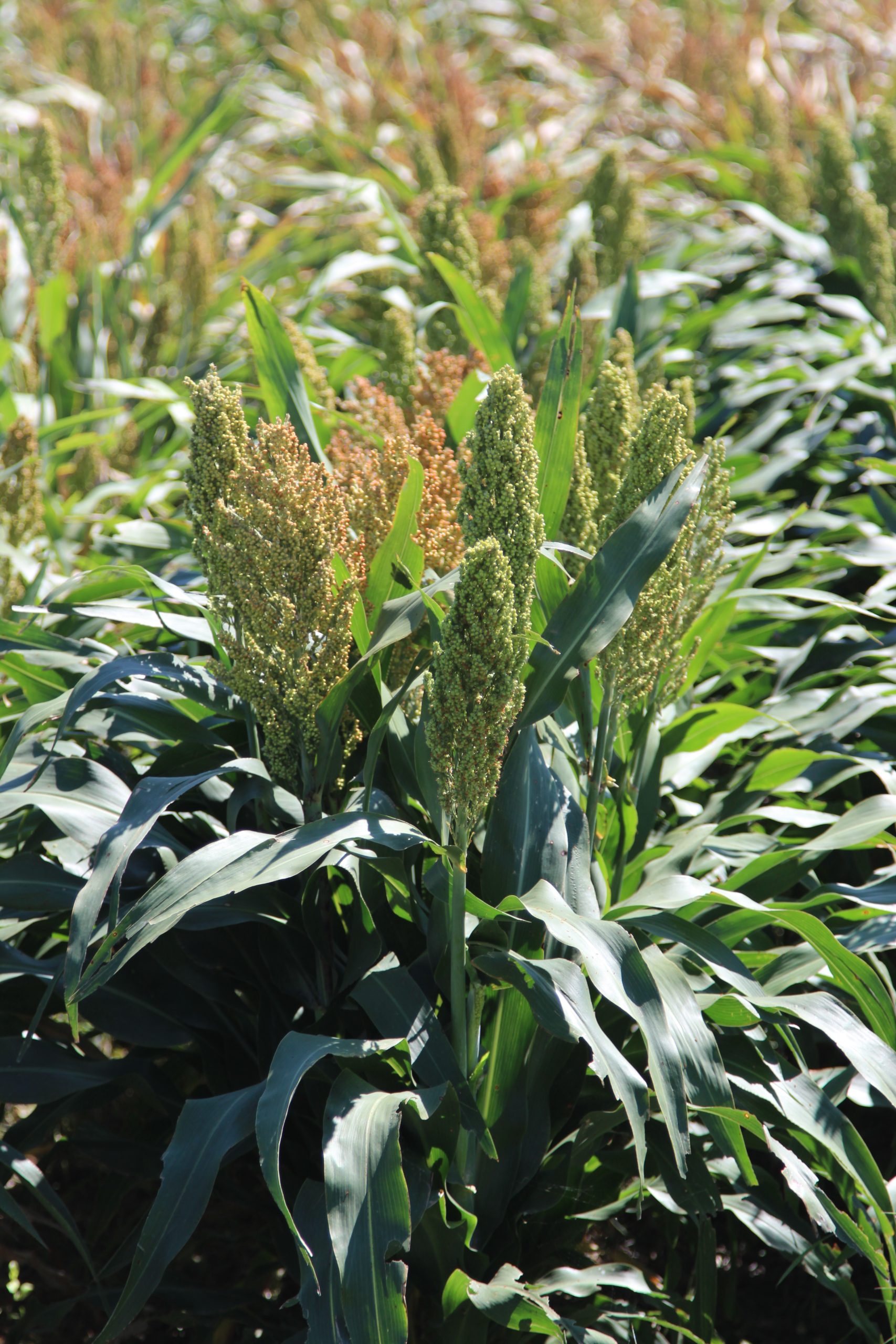
Sorghum producers got a dose of good news on July 21 when the CME Group announced plans to launch sorghum basis futures. Trading is expected to start on Aug. 24, pending regulatory review, the Chicago-based group said in a news release.
Guy Allen, with the department of grain science, and Daniel M. O’Brien, department of agricultural economics, Kansas State University, had written a white paper in support of the move.
The CME’s decision is good news for Kansas grain sorghum growers, Allen said. In recent years farmers had found that an increase in the occurrence of country elevators that had “no bid” for growers, that was evidenced in 2025 as farmers were approaching harvest. Allen said, too often they heard, “I’m happy to store it for you, but I don’t have a price.”
Sorghum, Allen said, is a versatile crop that is used domestically and internationally for food, animal feed and ethanol.
Unfortunately, there has been a lack of balance and proportionality in the sorghum market that he said is tied to a lack of price transparency and information flow. Having an organized exchange like the CME provide a price discovery process helps to change that.
For many years though, the sorghum basis was quoted off the benchmark CME Corn Futures Price.
“When you’re trading sorghum against Chicago corn it works to a point, but you still have $2.50 to $3 basis volatility in sorghum relative to corn,” Allen said. “If you’re a country elevator or exporter, that’s just too much risk exposure and that is hard to manage. With a sorghum contract now, you’ll get more accurate price discovery and reflection of value.”
Having sorghum listed for western Kansas delivery, and tributary to Oklahoma, Texas, Nebraska will provide more accurate price discovery and transparency. While some in the industry may think sorghum can be based on corn fundamentals, they are different crops, he said. “There can be significant fundamental differences between western sorghum and corn belt. CME Corn Futures basically reflect eastern corn belt fundamentals and river delivery economics tributary to CIF NOLA (New Orleans, Louisiana).
Sorghum had been listed on the Kansas City Board of Trade in the past, but it had a problem with an underlying delivery function, which hindered adoption by the industry.
A boost from wheat
The concept for sorghum futures also got a boost when recent changes to Kansas wheat futures, based on a single car rate, now lets a merchant can load a shuttle train and have direct access for deliverable execution to ports in the Texas Gulf, New Orleans, Pacific Northwest, and Mexico. When CME saw that wheat contracts could work under the new delivery system, Allen and O’Brien thought that could work for sorghum.
The wheat model has provided more competitive prices on the CME. Allen noted since its introduction early this year—in his own analysis—the change has added a minimum of 12½ to as much as 25 cents per bushel in price for Kansas hard red winter wheat.
“We were able to get changes made to the HRW wheat contract and I said, ‘Well, you know that ought to now work for grain sorghum too. Why don’t you look at relisting the grain sorghum contract?’ So that’s sort of how that evolved,” Allen said.
An underlying Kansas-based delivery system in the western Corn Belt was fundamental to the proposal, the white paper noted. “By mirroring the revised CME Kansas Hard Red Winter Wheat delivery framework that is rooted in a Western Corn Belt rail-based grain transportation system, a reintroduced grain sorghum futures contract delivery system would more closely match the flow of U.S. grain sorghum to primary export markets at the Texas Gulf, Center Gulf, and Mexico, with the possibility of extending into the Pacific Northwest when economics justify this movement. Current plans proposed by the CME Group for grain sorghum futures are to start trading on the 24th of August, and be based on U.S. No. 2 Grain Sorghum, use the standard 5,000-bushel contract size, contract months aligned with corn futures, and physical delivery through shipping certificates cleared via CME Clearing.”
Allen said only U.S. quality 1 and 2 grain sorghum will qualify for contracts.
Western needs taken into account
While traditional Corn Belt crops are based on barges on the Illinois and Mississippi River system, Allen said crops in the western Corn Belt are based on a rail-centric system—as has been noted by the CME’s Kansas HRW Wheat Futures contract.
The system also recognizes the challenges western Corn Belt farmers and grain elevators have with rail transportation and the sorghum plan allows flexibility as they use futures to limit price risk exposure because it has a truck loadout option.
“If you’re trading Chicago corn, beans, wheat, it has to be load out to barges” Allen said. “On the loadout for Kansas wheat, it has to be load out to rail. Once CME introduced this sorghum contract, you can load out to rail, you can load out the shuttle train, but you can also load out the truck. If your destination is a Kansas feedlot or ethanol plant,you can stop smaller quantities.”
Hedgers can put a stop on sorghum futures and execute a road load out to truck it, Allen said.
“For the sorghum market with the demand competition between export, your local ethanol plant or feedlot, that’s pretty significant change in the delivery process,” Allen said. “If you’re an ethanol producer in Kansas or a feedlot operation, you can participate in a sorghum contract and actually participate in the delivery process and take advantage of it with that truck execution.”
The CME’s plan provides an opportunity to help end users, too, Allen said.
Sorghum producers can work closely with grain elevators to help build a more attractive price, he said, and they will not have to depend on corn basis to dictate price.
In effect, the CME has taken the corn-sorghum spread volatility out of the basis equation and “the country elevator and the end user can hitch that up.”
Dave Bergmeier can be reached at 620-227-1822 or [email protected].