Laura: Where does it all go?
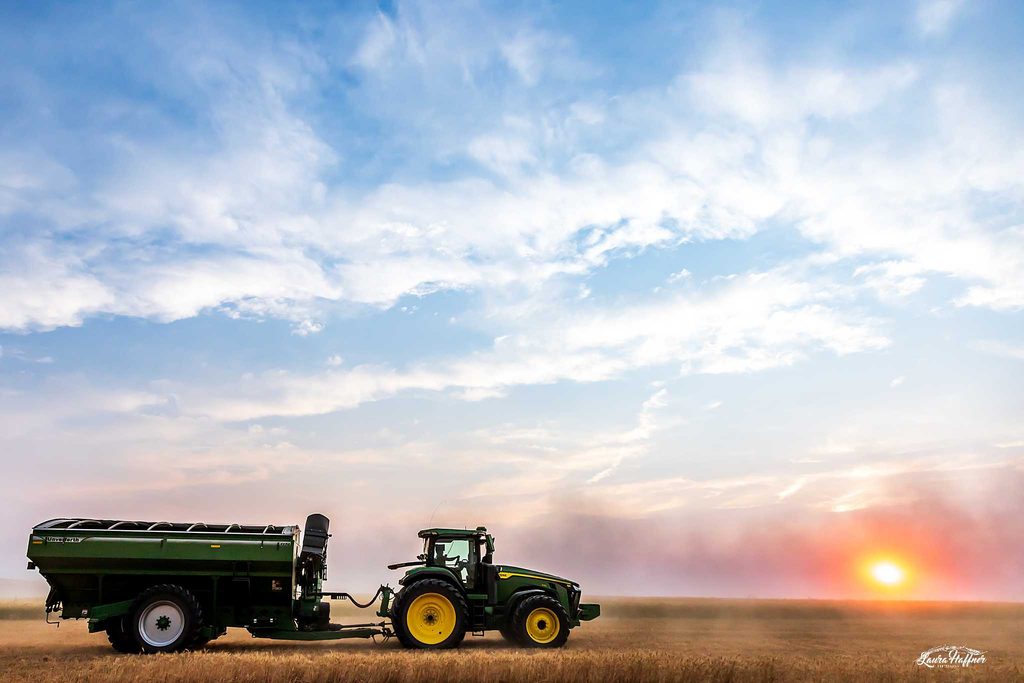
Great Falls, Montana: There has been no shortage of heat this summer. Crops that were grass green when we arrived to “Big Sky” country quickly took on a more yellow hue.
People are often surprised, and maybe even a little disappointed, when I tell them that Montana can get quite hot in the summer. The heat is different though and often has just a hint of fall in the air, even on a 95-degree day. This summer there wasn’t that coolness. Heat bore down with intensity.
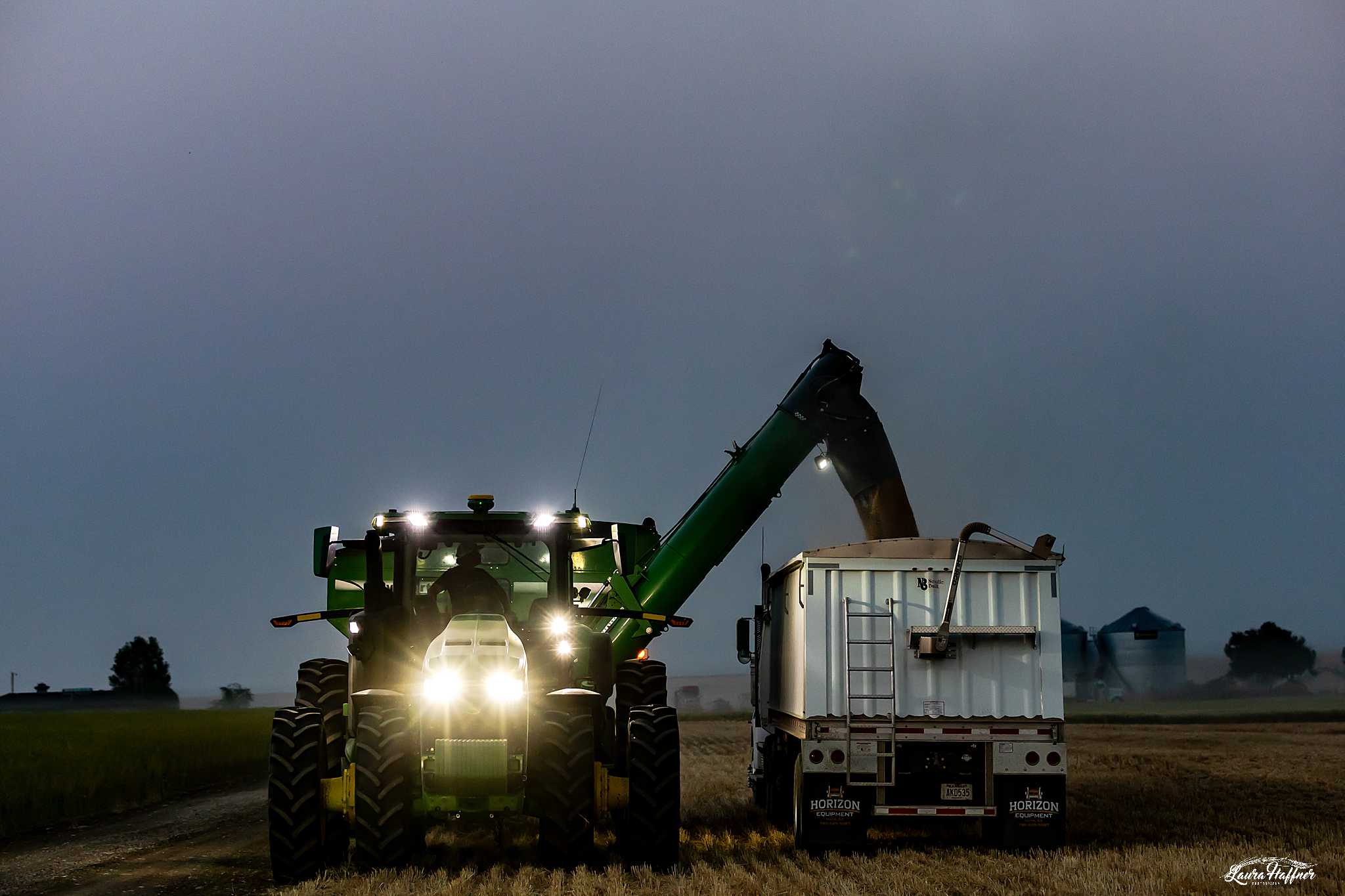
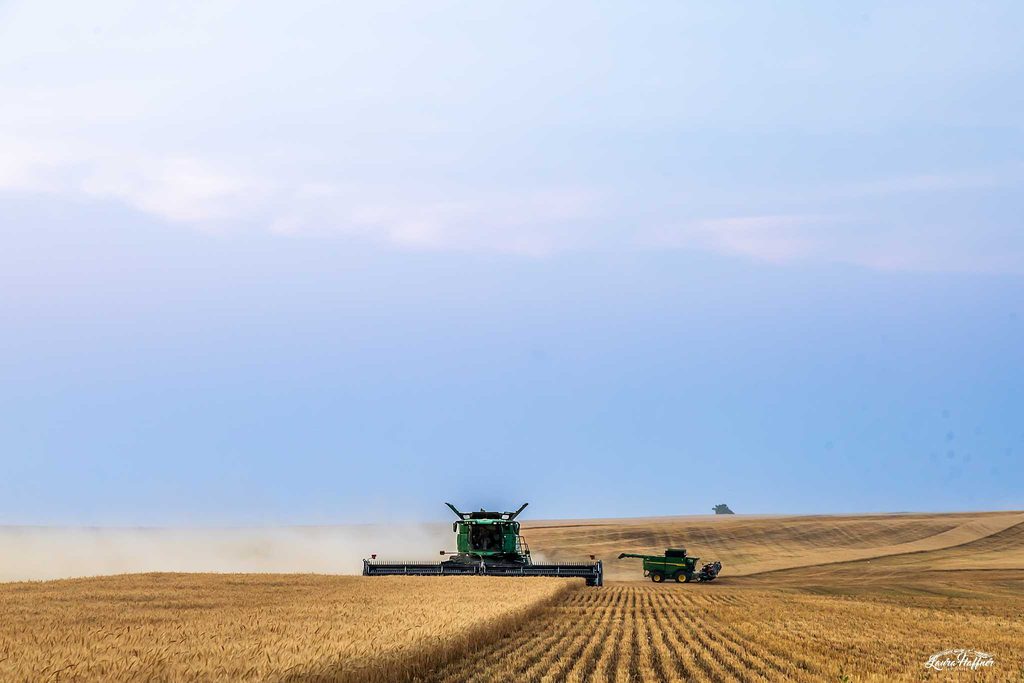
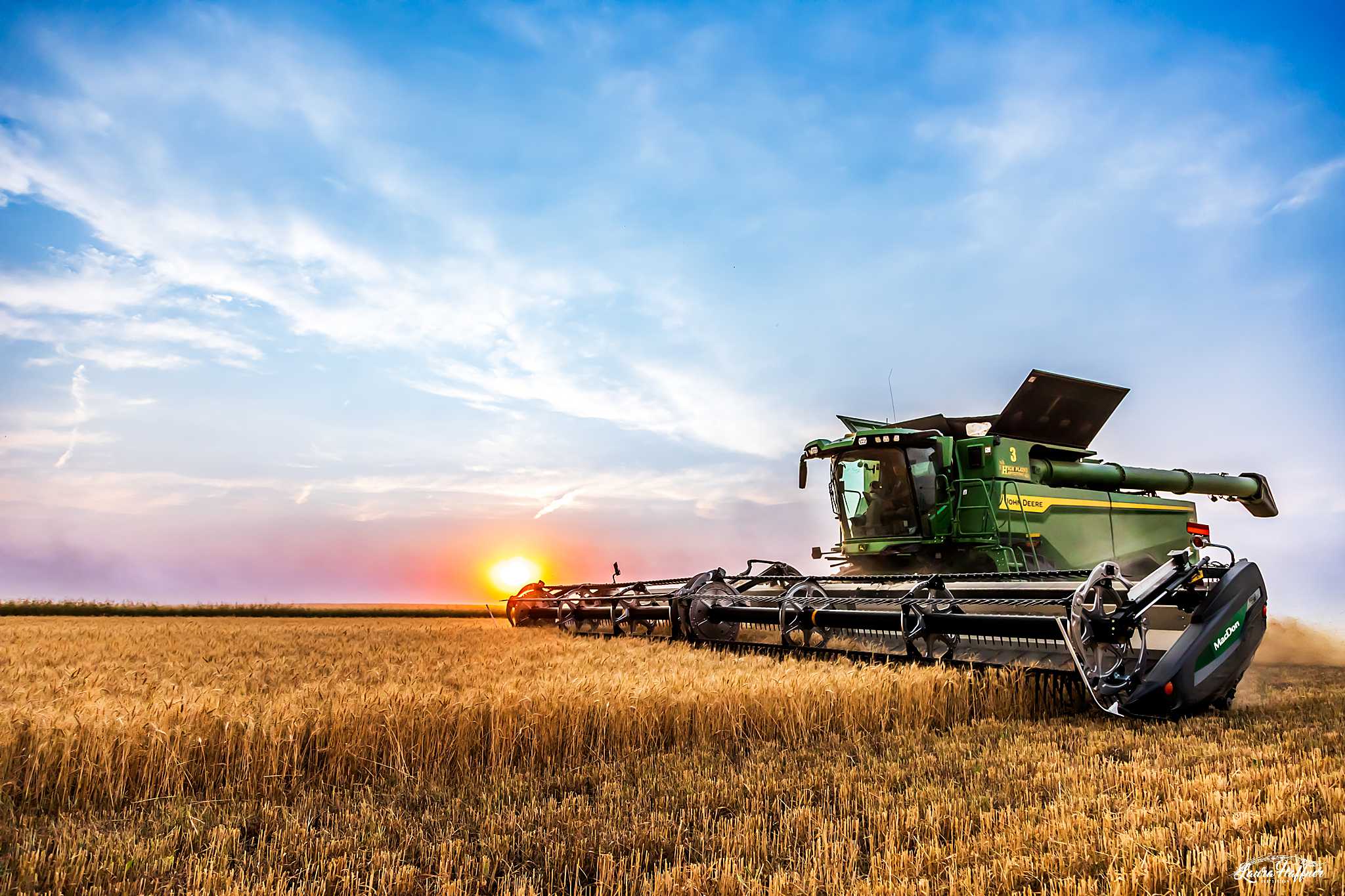
Winter wheat harvest gained a soft start as we fought green for the first two days with only a few machines. The aforementioned heat quickly took care of that, and the nine John Deere combines, that made the trek north, soon dotted the countryside. We are super thankful to be running again after a season of many weather-related holes in our run. In addition to winter wheat, our crew has been tackling barley, canola, chickpeas (garbanzo beans), and winter peas.
Because of the processors available in the area, it is a lot easier to know what products the crops are headed to once they leave the field. I thought the All Aboard readership may find it interesting, so I visited with one of our farmers, Dave, to get this season’s details.
Winter wheat delivers to General Mills to the baking industry. Flour may end up in your own home via sack flour, bakeries or moves to other large suppliers.
Barley used to be a major crop in this part of the world, but the market is extremely depressed. The downward trend has shown up at the farm-gate. We only harvested around 500 acres, a sharp decrease from previous years. A supply surplus can partially be blamed as well as the decreased consumption of alcohol. However, a glimmer of hope comes from the area’s cattle feeders. They have been sprouting barley and feeding it to the herds. Time will tell if it will be enough to ensure barley stays a major player in cropping rotations.
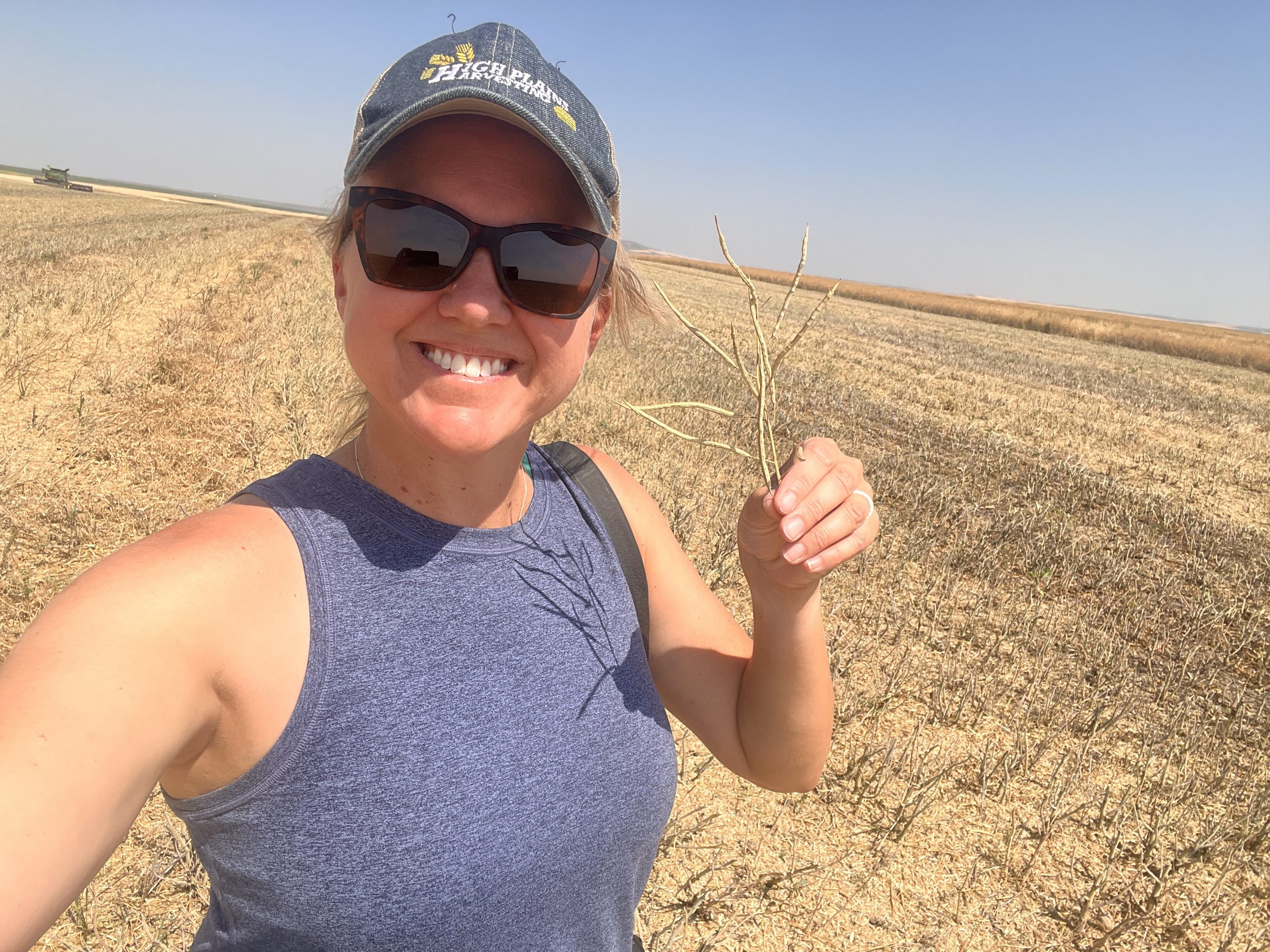
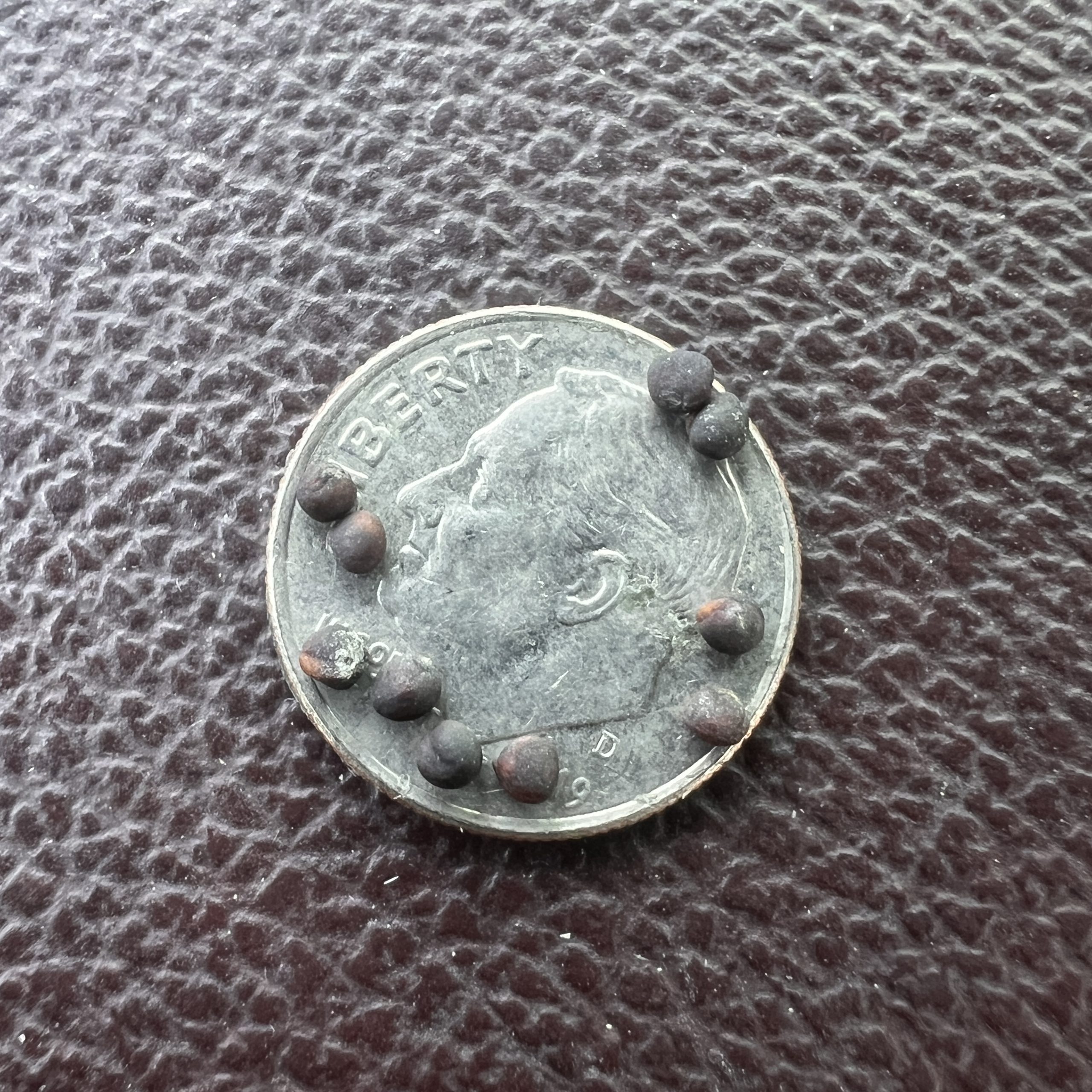
Canola, both GMO and non-GMO, is a small seed crop found in narrow pods. Another name for the crop is rapeseed. The non-GMO goes to local crusher which is one of few places like it. That crop goes into specialty, food grade oil. Some of non-GMO canola, goes to food oil as well. Another portion will go into aviation fuel as part of a renewable fuel effort through Montana Renewables.
Canola and other crops have also struggled due politics, tariffs, and cheaper alternatives from other countries. Chickpeas exports are tough at the moment and difficult to market for human consumption. The price is down at least a third this season. Most will go to pet food.
Winter peas, which are seeded in the fall will now go to the flour market or animal feed. In the past, the peas went to feed the hungry in foreign countries through USAID. With the freeze of that program, so did the need for winter peas.
Like many parts of the US, north central Montana could use some nourishing rains in preparation for drilling the winter wheat. Large cracks cover the ground like shattered glass on a windshield. A similar scene was waiting for us back in Kansas.
Corn harvest is just around the corner. I wish I had better news for you, but the trend from the summer run continues into fall harvest. There will be holes in the run as some fields won’t need a combine this season due to the drought. Others will be poor at best. However, there may be some pleasant surprises if fields hit the moisture at just the right time.
This year’s All Aboard Wheat Harvest reporting has been far from a heart-warming series this season. I don’t want to sound like I’m complaining, but I don’t want to sugar coat it either and here’s the reason.
I spend a lot of miles on the road for harvest, agriculture advocacy, and more. A reoccurring theme I hear is that people’s souls are tired. It’s been a long haul between market prices, input costs, political policies, adverse weather and more. All that’s on top of the normal life stresses.
What I’ve observed in this is not misery loves company scenario. It is far from it. People sometimes hesitate to share to not put their burdens on others. I often hear it as a situation where people have forgotten that so much is out of their control, they feel that they’re doing something wrong, and it can sometimes like theirs is an isolated situation. I’m here to say that’s not the case. So many people are facing high levels of stress and things can actually get worse when we hide it.
I pray, for all of us, that the conditions in farm country will start to improve. I know the wait feels long. So, in the meantime, let’s turn our focus from things we can’t control to things we can, both on and off the farm. Check on your friends and family, don’t leave important conversations left unsaid, and do what you can to strengthen our rural communities. And remember, you are not alone.
As always, thanks for following along for another season. We have been blessed with good family and friends, health, and a safe harvest to date. Even in a season of uncertainty, those are things you can’t put a price tag on and we wish the same for you.
Until next time, follow us on Instagram and Facebook at High Plains Harvesting and Under The Flyover Sky. There is still more harvest to come.