A water dowser, a branch and the search for groundwater
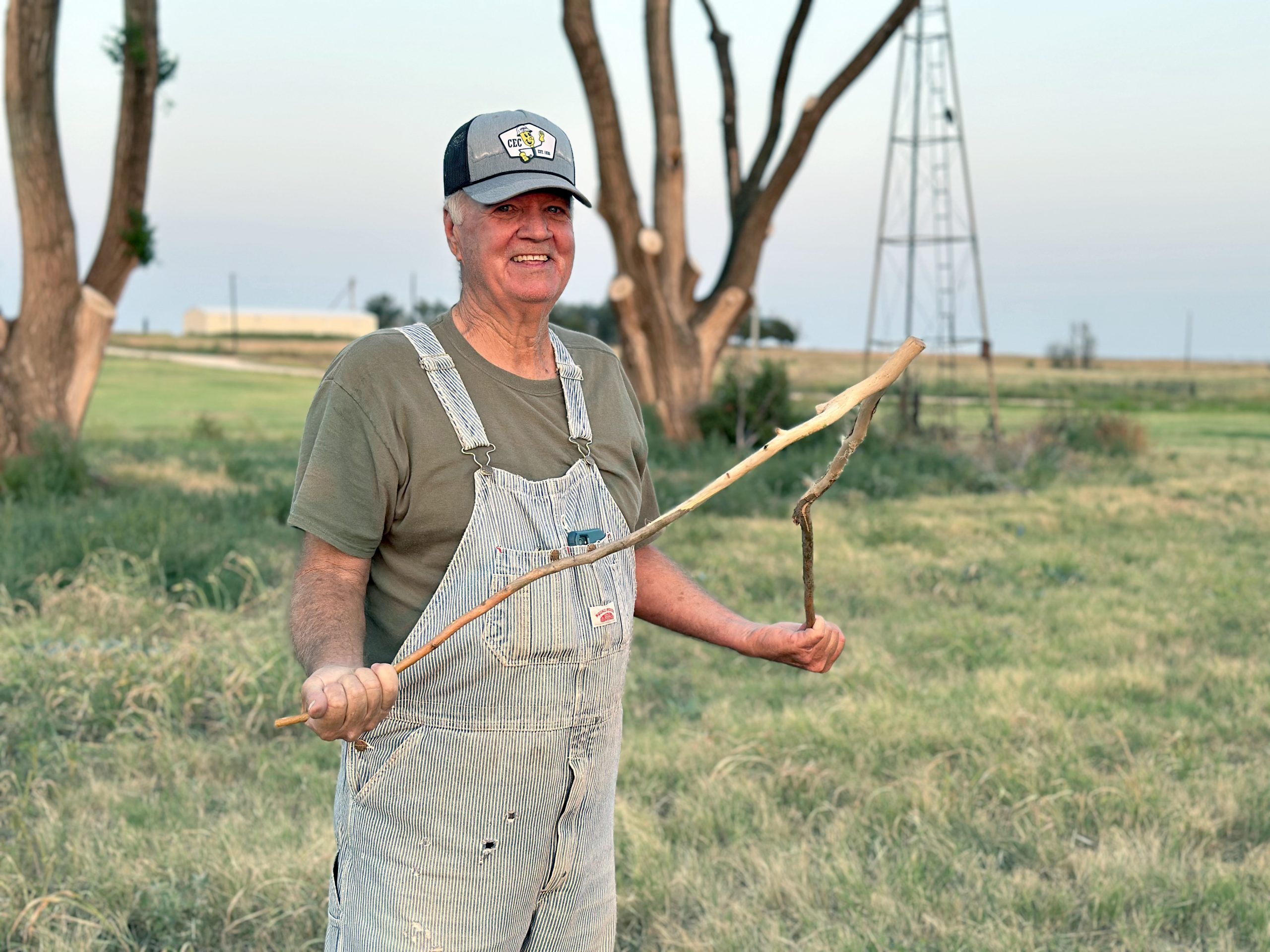
Freddy is a well douser from Oklahoma. (Journal photo by Lacey Vilhauer.)
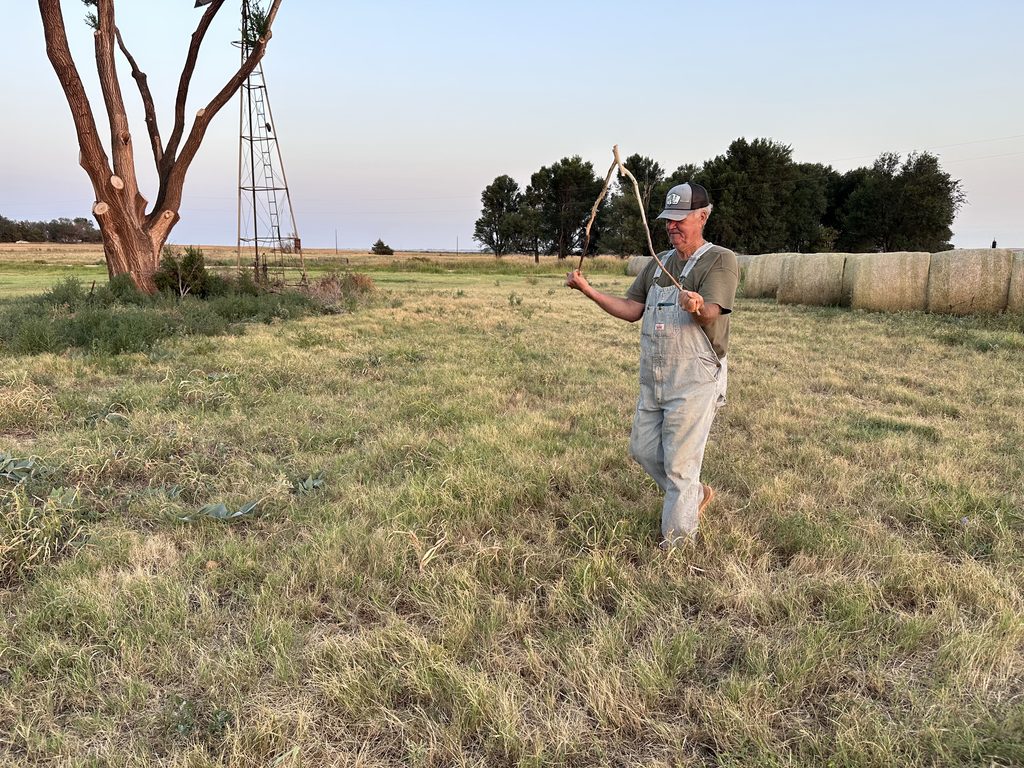
A man named Freddy, clad in overalls and wearing a CO-OP hat, walks across a pasture holding the forked ends of a Y-shaped branch, concentrating on the message the branch will tell him. He takes another step, concentrates and feels the branch pull toward the ground. To Freddy, that’s the signal he’s looking for.
For 40 years, the Oklahoma farmer has used tree branches and metal rods to locate underground water. He never advertised his services, but word of mouth kept his phone ringing. To prevent an influx of phone calls, Freddy asked his last name to be omitted from this article. Today, he still dowses 30 to 40 livestock, irrigation and personal wells a year.
“I have witched all the way from Two Buttes, Colorado, all the way to the other side of Lake Texoma,” Freddy said. “I get more work than I really need. It’s just amazing how word of mouth does travel.”
Water dowsing
Well dowsing—also called water witching—is the practice of using a forked tree branch or metal rods to locate underground water. The practice dates to 16th century Germany and has changed little over the years.
When a dowser believes water is beneath the surface, the branch is expected to pull toward the ground or the rods cross one another, marking a potential location to drill a well.
Although water dowsing has not been scientifically validated, it continues to be used by some farmers, ranchers and well drillers.
“Freddy is about the best I’ve ever seen,” said Brent Lang, owner of B & L Water Well, a well-drilling company in Enid, Oklahoma. Freddy dowses many of the wells Lang later drills for his customers.
Freddy said certain disturbances can throw him off and the practice of dowsing is never perfect. He always stresses this to anyone who asks him to dowse for water.
“I’m not 100%, because nobody’s 100%,” he added.
Understanding the process
Freddy said he considers water dowsing to be a gift, and not everyone has this innate ability. In his view, some people have the ability to dowse, while others don’t. So, what exactly does Freddy believe he is detecting during a search for groundwater?
According to Freddy, underground water veins, or streams of groundwater moving through rock or soil, follow patterns similar to rivers flowing from higher to lower ground. He said Oklahoma rivers generally run from northwest to southeast. Like rivers, underground water veins don’t run in straight lines.
“Wherever the fissures are in the ground, that’s the weakest and that’s where it passes through,” Freddy said. “I’m always hoping to find a vein as big as your thumb.”
Once he locates a main vein, Freddy looks for a cross section where another vein intersects with it. He said the intersection gives the well driller two good chances to hit water.
“The water’s been going through that ground for thousands of years,” Freddy said. “The chemicals that are down there, like flint rock, shale and gravel, are built up with static. It’s a charge in the ground, so that’s why the brass rods or the green limb pick that static charge up.”
Not just any branch will do
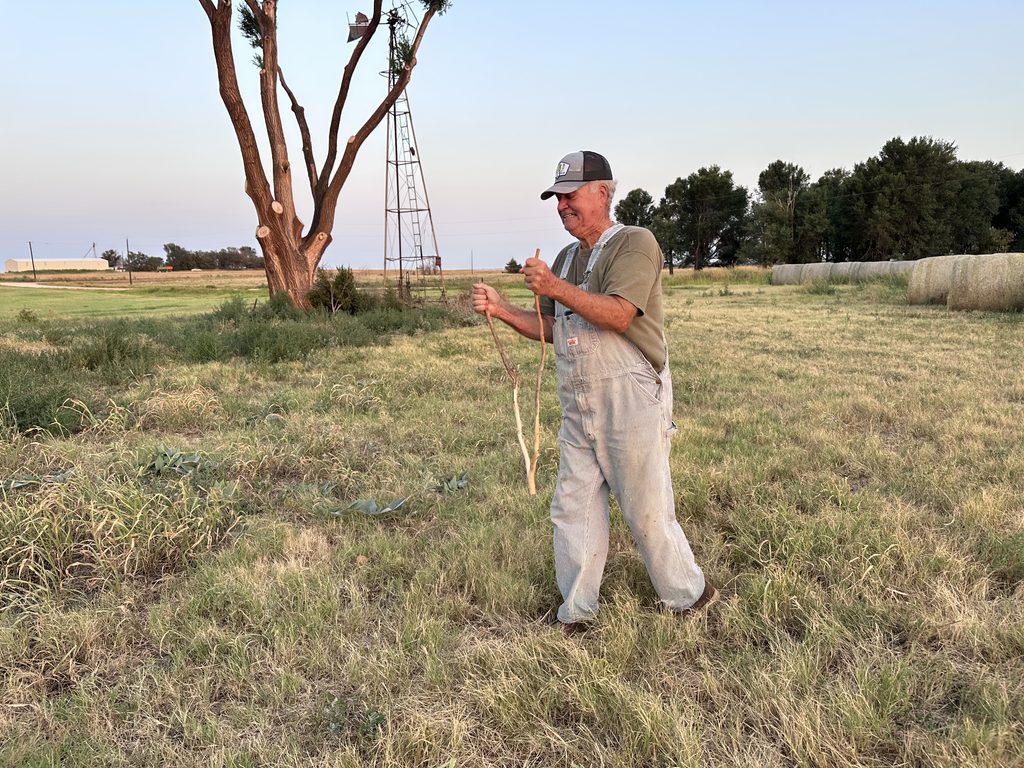
Over the years, Freddy learned which tools and tree branches worked best for him.
“I was so amazed when that older gentleman showed me everything,” Freddy said. “He used a willow branch. I couldn’t make that willow branch work on my own, but then he put his arm around my shoulder, and the branch went down. He said, ‘You’ve got to find which tree limb will work best for you.’”
The man recommended trying different types of fruit tree limbs to see which worked best. Freddy tried apricot, peach and pear branches before finding success with an apple branch.
“Apple is what really goes good for me, but there aren’t many apple trees around,” he said with a laugh.
Freddy said the next-best option is an October plum tree. If one is not available, the next best thing is a mimosa tree branch. He has found branches with some green bark work best, so he stores them in water-filled kiddie pools to keep them green longer.
Summer is the busiest time of year for Freddy’s water-dowsing work, particularly when drought sets in and cattle producers begin running short of water.
Dowsing rods
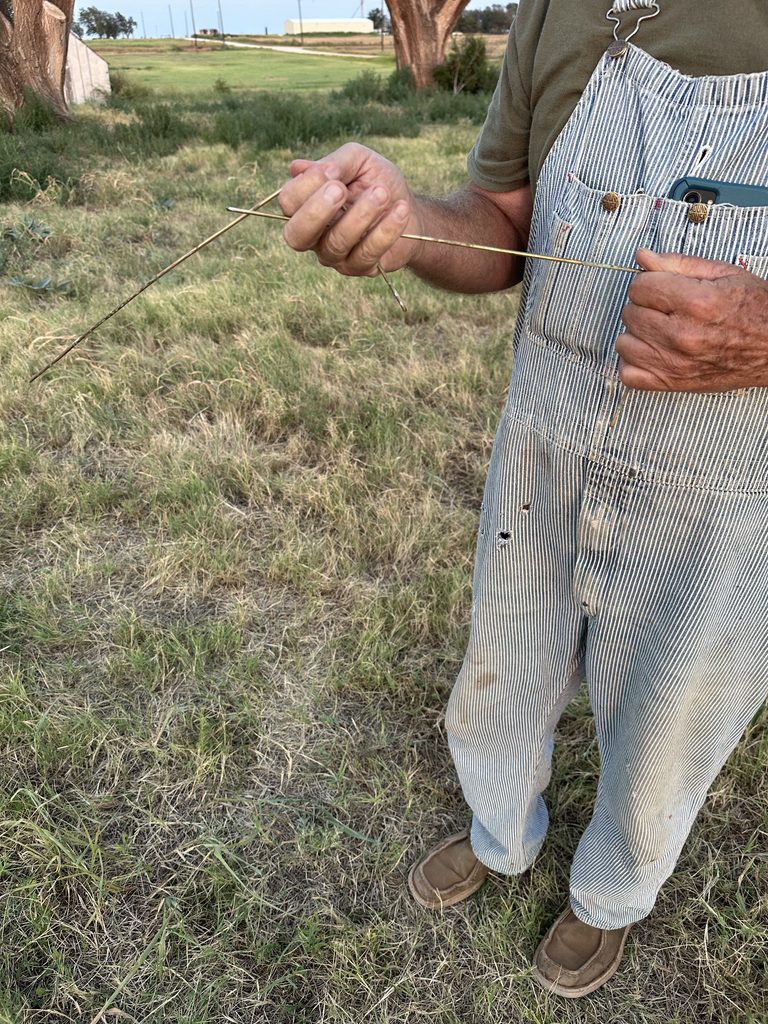
Many dowsers also use brass L-shaped rods, sometimes called dowsing rods. The dowser holds the short ends loosely while the long ends point forward, parallel to the ground. As the dowser walks around an area, the rods are free to move. When they cross each other, it signals to the dowser where water may be located.
Unlike some dowsers who use metal rods to locate underground water veins, Freddy uses the rods only after he has located water with a branch.
“These rods will find pipelines, electric wires, culverts or steel water lines,” Freddy explained. “The driller does not want to hit that.”
He then uses the rods to estimate the depth of the water at the location. He uses flux-coated brass brazing rods, which are used to repair items such as irrigation pipes and sheet metal on farm equipment with an oxy-acetylene torch.
“I beat the flux off them and use them for dousing,” he said. “A lot of guys will use metal clothes hangers, but I can’t. That metal just doesn’t work for me.”
Once the rods cross, Freddy counts the seconds as the rods move away from each other, keeping his hands steady and allowing the rods to move on their own. As the rods swing back and forth, he continues counting to estimate the number of feet to the bottom of the water veins.
Although he was coy about his methods, Freddy said he has also developed a way to determine whether groundwater is saltwater or freshwater before a well is drilled.
For Freddy, dowsing is a learned skill he uses to help farmers and ranchers search for water, particularly during drought conditions. He doesn’t claim to be perfect, but after 40 years, his phone continues to ring when people need someone to search for what they can’t see.
Lacey Vilhauer can be reached at 620-227-1871 or [email protected].