It’s hard to argue with real math, but they tell me that the new cattle barns for the World Dairy Expo were built in Madison, Wisconsin, 12 years ago. That means it has been 13 years since I attended an event that I used to never miss.

News flash: Much has changed. but quite a bit is still the same. Fewer people are milking more cows, but official reports suggest that 2,477 head of cattle were exhibited and attendees came in from 83 different countries, providing confirmation this is truly a World Dairy Expo.
I learned was the fact that we have moved from 9 million dairy cows to 9.8 million nationwide in 2026.
What is going on with per capita dairy consumption at home and around the world? Since 2000, the global per capita consumption of fluid milk has gone from 197 pounds to 130 pounds in 2025. This is a very significant drop and the lion’s share of that seems to be coming from European countries who have been the leaders in fluid milk consumption for quite some time. They are reporting a shift to “plant-based drinks”, which I refuse to call milk and it’s something we need to get a handle on here too.
To make this discussion more interesting, India is now responsible for 25% of global milk production and does not rank very well on the chart with per capita consumption at a mere 67 pounds per person a year. This means they are a threat to all countries in the import arena with their extremely low cost of production.
The U.S. Department of Agriculture has reported the following regarding trade negotiations with India:
Smart money is already pivoting from failed export-only models to local investment strategies, with technology partnerships delivering 15 to 25% annual returns versus 5-8% margins on traditional exports—a $150,000 to $400,000 revenue difference for equivalent volume deals. While U.S. dairy hit a record $8.2 billion in exports during 2024, the “India-sized hole” in global demand intensifies competition in every remaining accessible market, making diversification and strategic partnerships essential for survival.
So clearly now the question is what exactly do we import from India? The following is information supplied by the Indian government:
India is a significant exporter of dairy products to the United States, which ranks as the third-largest importer of global dairy shipments and the top destination for Indian dairy exports. In the 2023-24 fiscal year, the U.S. imported approximately 94,000 tons of Indian dairy products, valued at $180 million, making it India’s largest market for such goods.
To make matters worse Cheese Reporter has a July 2026 analysis of cheese imports into the U.S.:
U.S. dairy imports during June were valued at $467.2 million, up 20% from June 2025, according to figures released by USDA’s Foreign Agricultural Service.
Dairy imports during the first half of 2026 were valued at $2.64 billion, up 2% from the first half of 2025.
Leading sources of U.S. dairy imports during the first six months of this year, on a value basis, with comparisons to the first six months of last year, were: New Zealand, $408.5 million, up 9%; Ireland, $368.4 million, up 14%; Italy, $291.9 million, up 15%; France, $238 million, up 9%; Canada, $235.2 million, up 9%; Mexico, $141.5 million, down 29%; Denmark, $119.9 million, up 1%; and Netherlands, $113.1 million, down 17%.
Cheese imports during June totaled 38.4 million pounds, up 17% from June 2025. The value of those imports, $159.5 million, was up 32%.
June imports of butter and other milkfat-based products totaled 20.5 million pounds, up 112% from June 2025. Butter imports during June totaled 16.9 million pounds, up 182% from June 2025.
The story here is the same as it is for beef: We are importing far too many agricultural products that should be produced domestically. The reason I started this column and Loos Tales radio broadcasts was to remind Americans that domestic food and fuel are a means of national security. When will we see that the cream is being skimmed off the top and American consumers and producers are left holding the empty bottle?
Editor’s note: The views expressed here are the author’s own and do not represent the view of High Plains Journal. Trent Loos is a sixth generation United States farmer, host of the daily radio show, Loos Tales, and founder of Faces of Agriculture, a non-profit organization putting the human element back into the production of agriculture. Get more information at www.LoosTales.com or email Trent at [email protected].
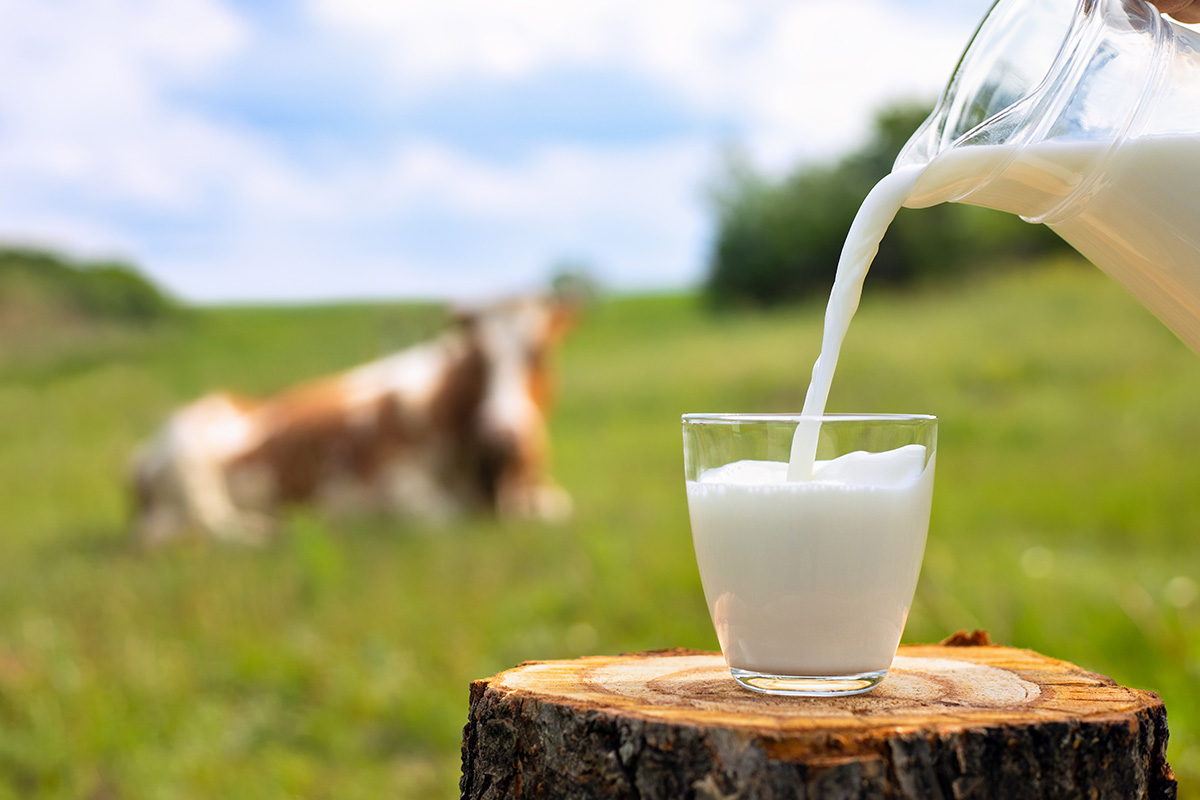
PHOTO: Milk pouring into a glass. (Adobe Stock │ #354060824 – alter_photo)