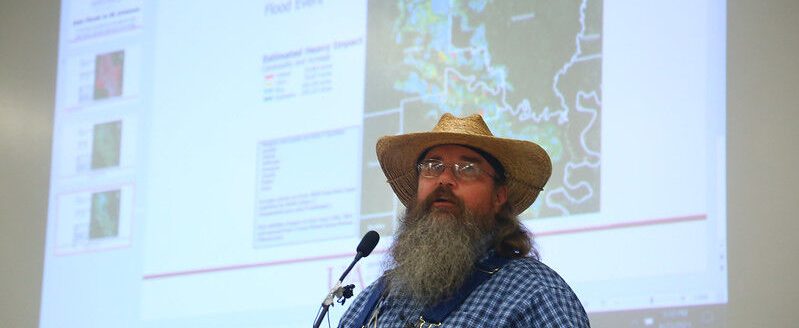
Crop circles remain a mystery for researchers and farmers
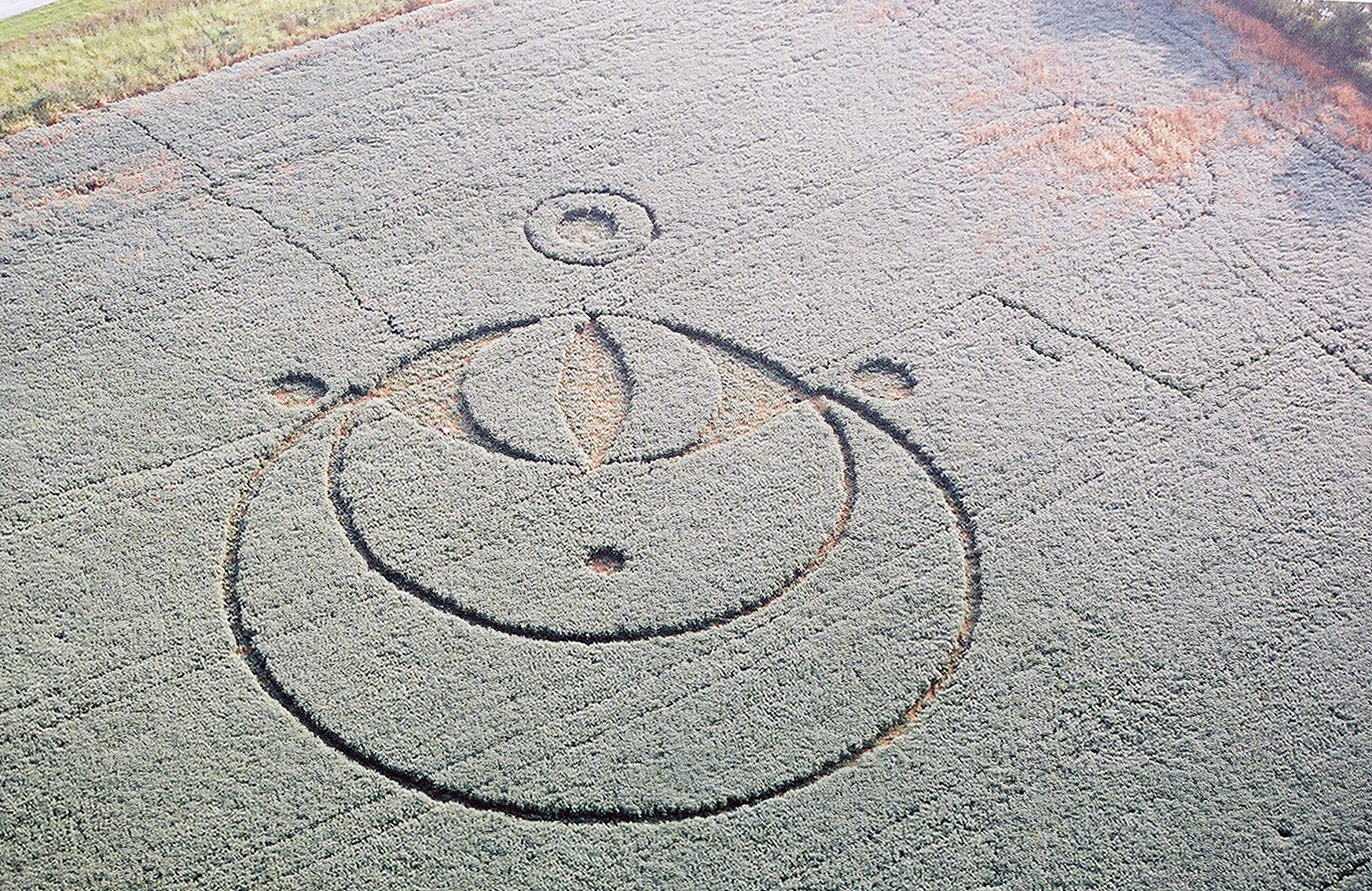
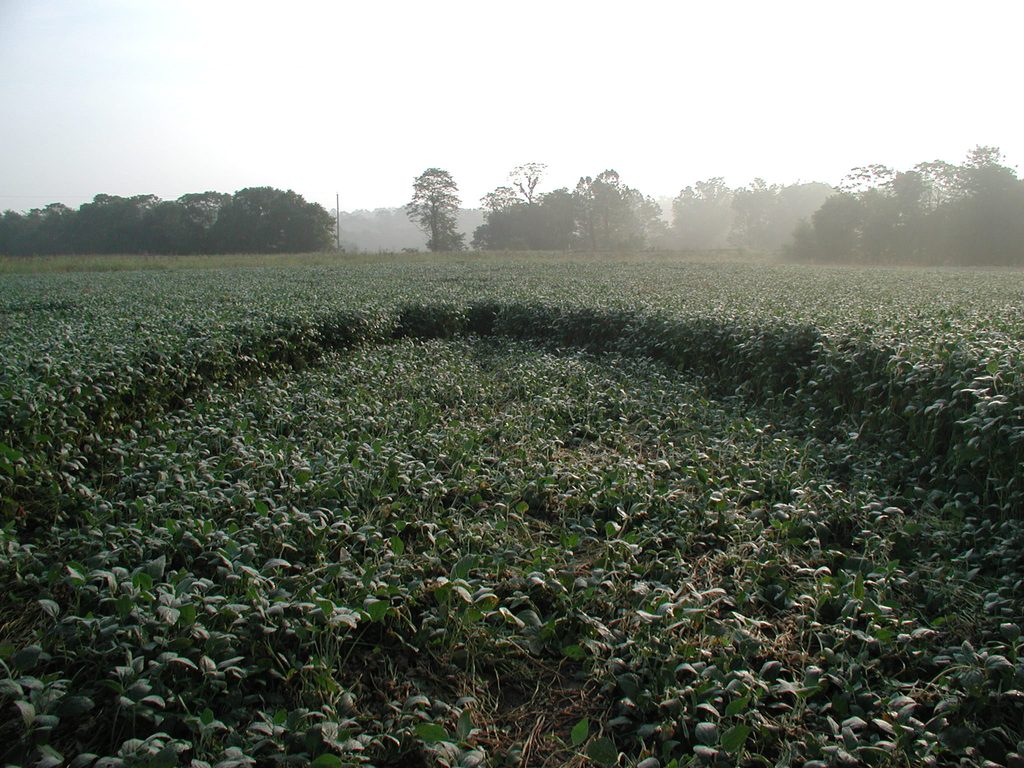
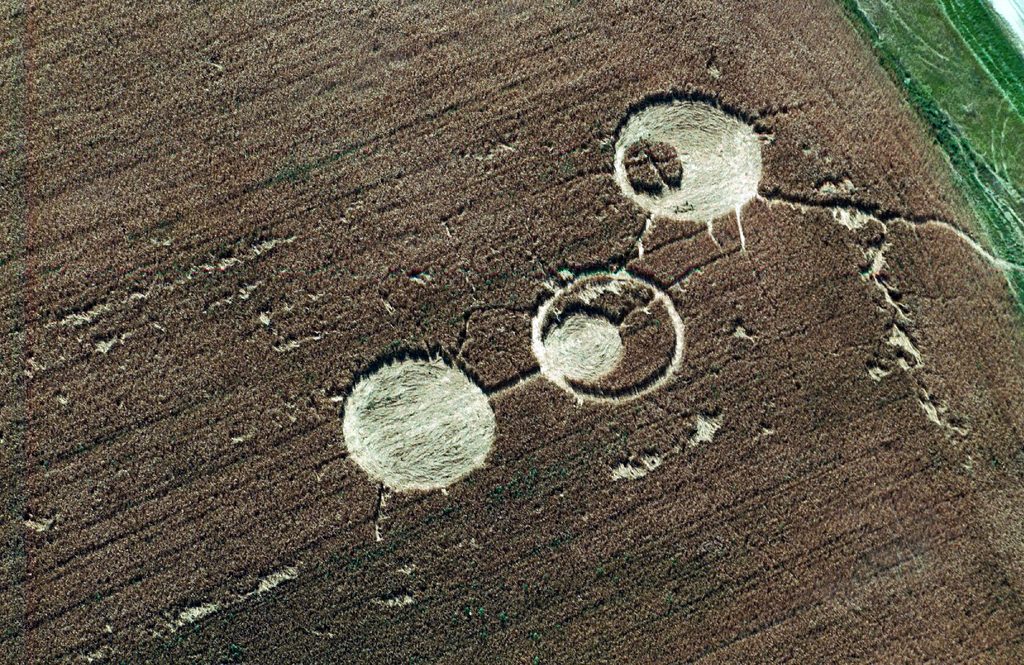
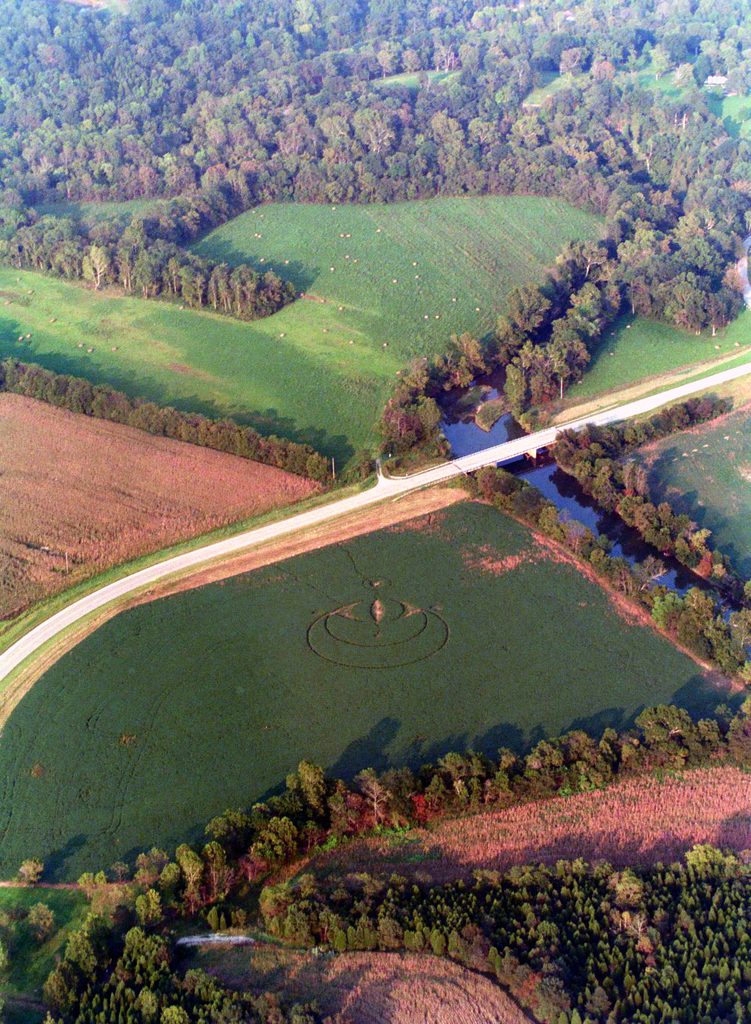
An aerial view of a soybean field with a crop circle in Locust Grove, Adams County, Ohio in August 2003. (Photo courtesy Jeffrey Wilson.)
Crop circles are one of the ultimate mysteries associated with agriculture and occupy a space between rural reality and enduring mystery.
Possible explanations for the unique formations made by flattened areas in agricultural crops range from extraterrestrials to manmade pranks to weather damage. Many opinions exist, but researchers continue to seek explanations for crop circles that cannot be explained.
Crop circle research
Jeffrey Wilson, director and leading researcher with the Independent Crop Circle Researchers Association, has spent decades documenting reported formations across North America. His work includes field investigations, plant observations, historical records, and aerial imagery.
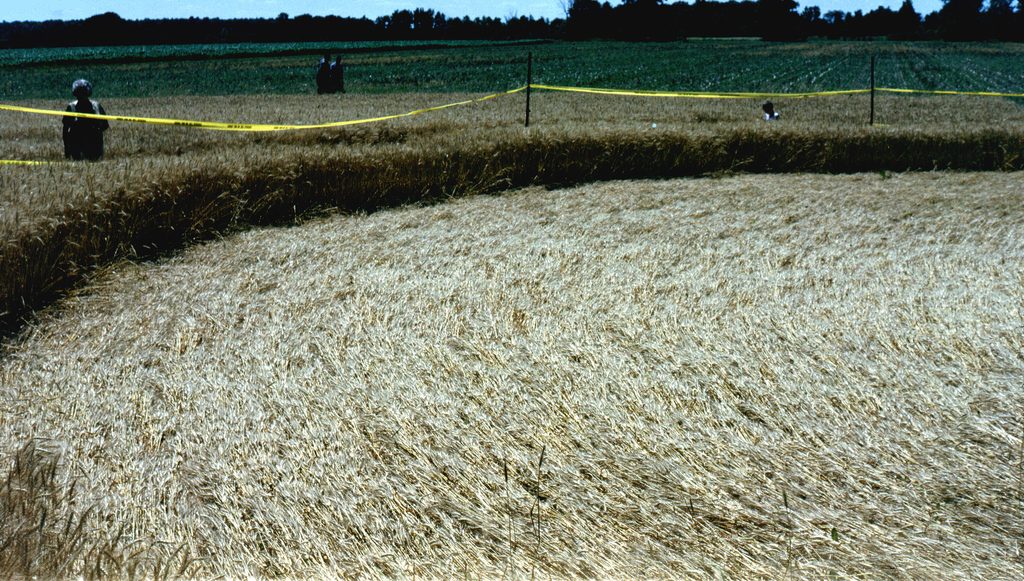
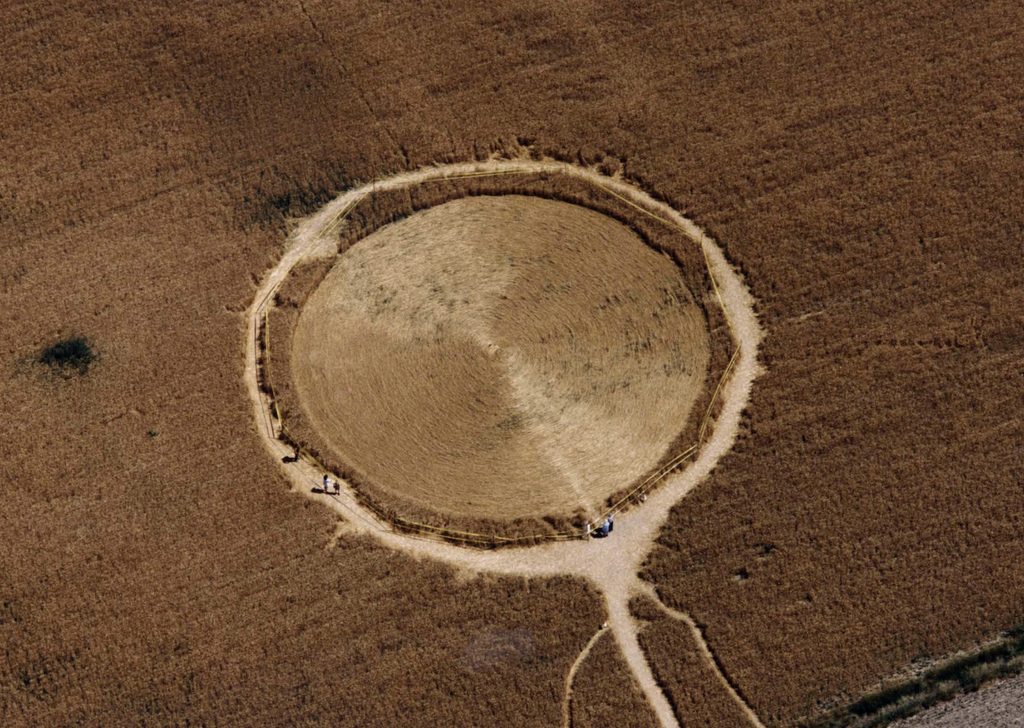
Wilson became interested in crop circles in 1988 after watching a television report about British atmospheric physicist George Terence Meaden, who was studying the formations in England. Wilson’s first field investigation came in 1996, when he traveled to northern Ohio to see a single circle about 90 feet in diameter in a wheat field.
He later helped build the association to investigate reported crop circles and document plant characteristics and surrounding field conditions.
“If anyone tells you that they know how crop circles are being made, they’re just lying to you because there’s not enough evidence that’s been collected to understand that phenomenon completely,” Wilson said. “We just don’t know.”
There have been about 1,000 cases reported across North America, according to Wilson. Iowa has the highest number of reports in his records, followed by Ohio, he said, and every state except Rhode Island has at least one reported case.
“I think crop circles are hugely underreported because people don’t want to talk about them or they just don’t know who to report them to,” Wilson said. “The government doesn’t have an ‘X-Files’ office.”
Wilson said worldwide crop circle reports peaked in the early 1990s, while reports in the United States peaked in the early 2000s. He said the association has recorded virtually no new U.S. cases in about 15 years, though the reason for the decline remains unclear.
The origins of crop circles
The term “crop circle” became widely used in England during the 1980s, Wilson said. Around that time, crop circles became associated in popular culture with extraterrestrials and spaceships. Wilson said some countries refer to crop circles as “saucer nests.”
Wilson said reports of unusual patterns in vegetation date back much further. Some European accounts he has found are dated to the 1500s, while the earliest U.S. accounts in his records date back to the mid-1800s.
The history of crop circles also includes well-documented hoaxes. In England, Doug Bower and Dave Chorley gained widespread attention after claiming they had created numerous crop circles beginning in 1976.
Before the men came forward, a British newspaper had offered a £10,000 reward for an explanation of crop circles, Wilson said. Bower and Chorley received the reward after claiming responsibility for the formations. Wilson said the men demonstrated that people could make crude patterns in crops, but he disputes the idea that their claims explain every reported formation.
“Hoaxer crop circles are out there, but it’s relatively easy to distinguish the difference once you look at them carefully,” Wilson said.
Wilson believes the publicity surrounding Bower and Chorley contributed to researchers dismissing other reported formations.
“Ever since Doug and Dave, the scientific community has ignored crop circles,” Wilson said. “They don’t want to touch it with a 10-foot pole.”
Wilson believes public discussion has largely focused on two explanations: Hoaxes or extraterrestrial activity.
“There are other possibilities,” he said. “It’s not a simple straightforward answer.”
Wilson said he encourages the media and the public to apply the same evidentiary standards to claims from people who say they made a crop circle as they do to claims about unexplained cases.
A scientific approach
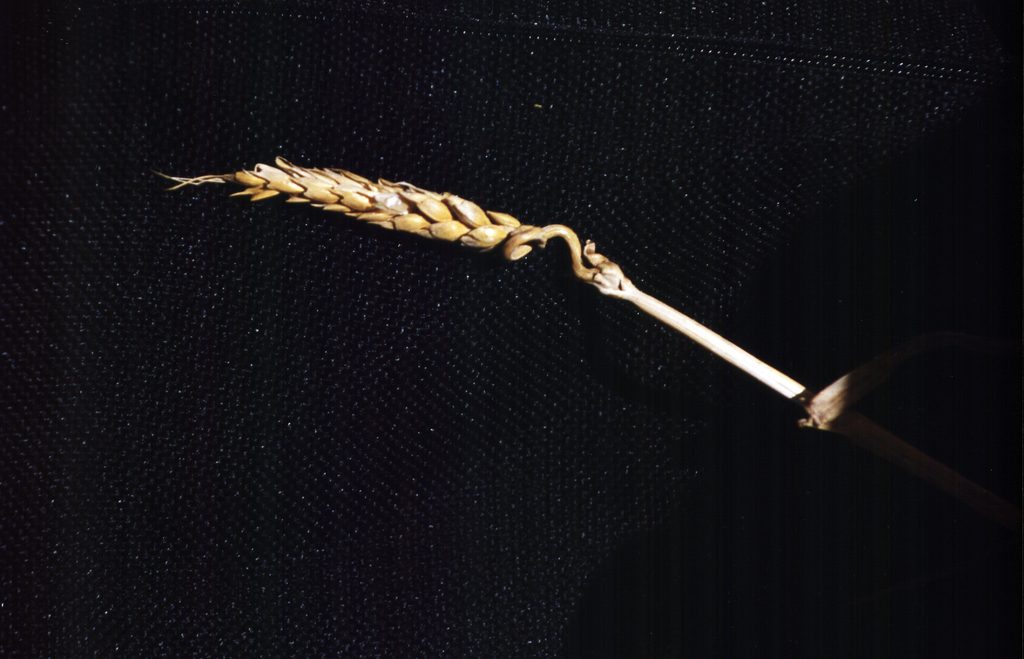
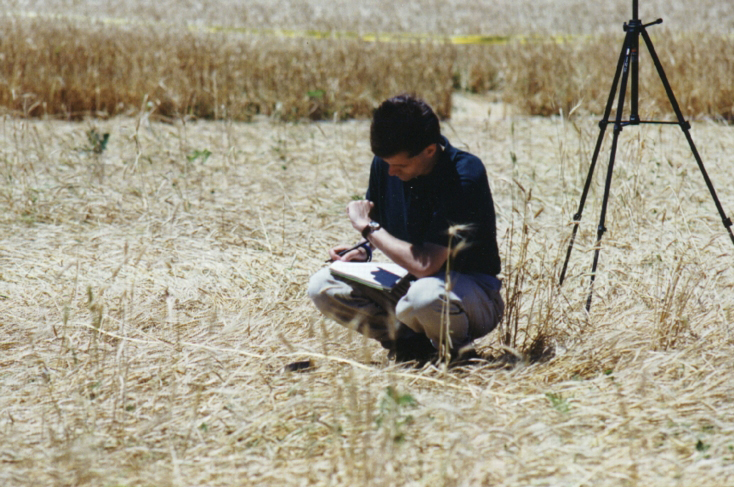
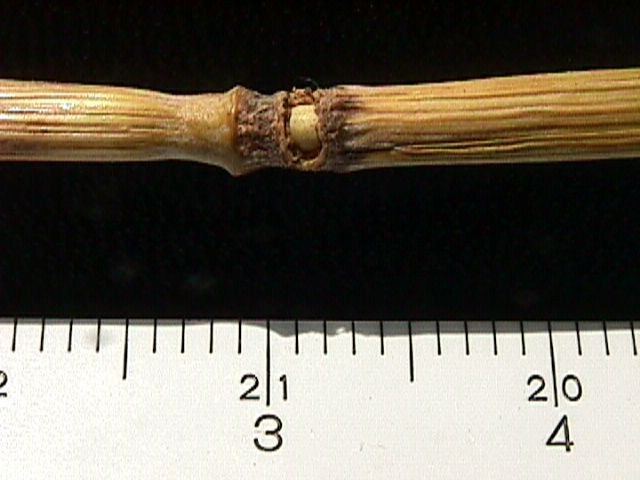
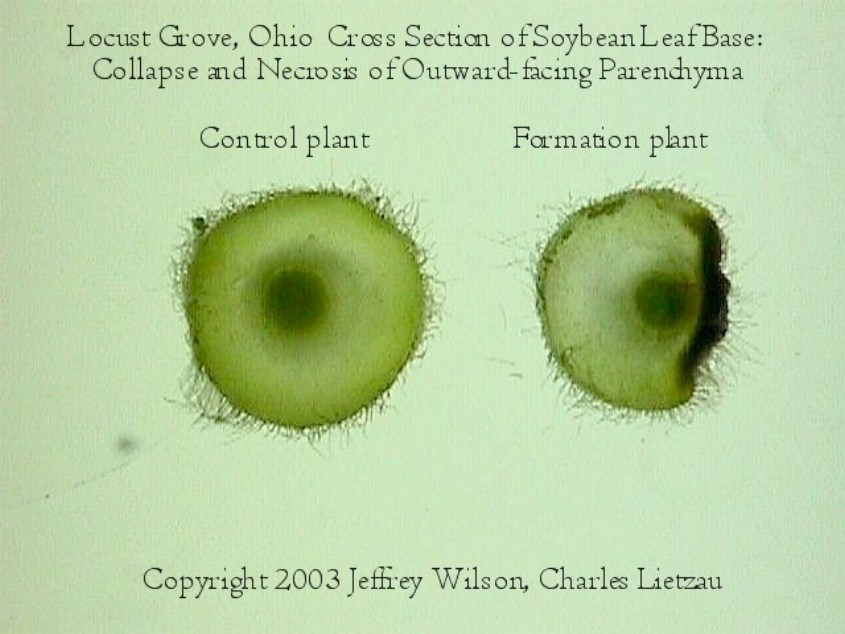
Wilson said researchers look for differences between plants within a formation and those in nearby standing crops. He believes intense heat may cause changes in some plants by increasing internal pressure.
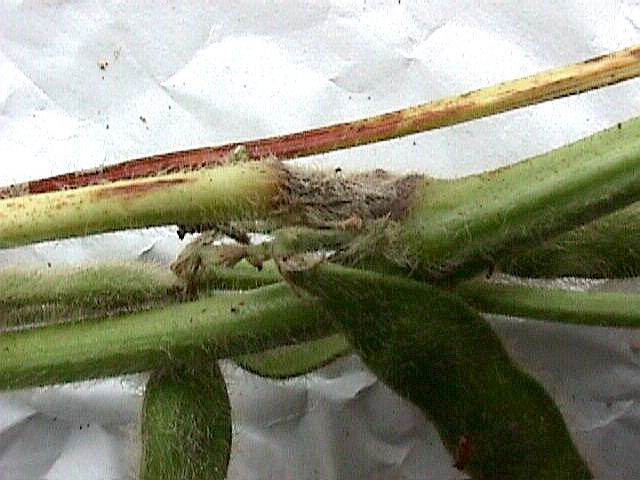
In younger, greener plants, Wilson said, this may cause growth nodes to stretch or elongate. In drier plants closer to harvest, the pressure may cause the stem to rupture at the growth nodes, creating cavities that some crop circle researchers call “expulsion cavities.”
Wilson said he believes these features cannot be reproduced simply by walking on or pressing down the plants. However, the observations alone do not establish what caused the changes.
“In soybeans, and sometimes cornfields, that energy can often cause the plant to produce a chemical called anthocyanin, which is a stress response in the plant,” Wilson said. “It’ll discolor the plants from their normal shade of green to kind of a reddish purple. And that’s not something that the hoaxers can duplicate.”
Unexplained patterns
Wilson said the association has identified recurring landscape features in cases its researchers consider unexplained. According to his analysis, about 98% of the cases examined occurred on lower hillsides or at low points in fields, near water and close to power lines. He also said 85% had a transformer on the nearest power pole.
However, Wilson cautioned that these patterns do not establish a cause.
“Correlation doesn’t equal causation,” Wilson said. “We don’t know why those features need to be present.”
Aerial photographs and mapping have helped the group identify formations that were not reported when they appeared, Wilson said. He also described cases in which formations plotted on a map appeared to align, leading researchers to search along the same line and find additional formations. Those apparent alignments, however, do not establish a connection between the formations.
Wilson also has examined whether weather conditions might be associated with crop formations. He described a case in upstate New York in which National Weather Service personnel investigating tornado damage found a crop circle in a cornfield adjacent to the tornado track. Wilson said he worked with the NWS to examine the lightning data from the period.
According to Wilson, about 100 lightning strikes were recorded during a 15-minute window, and nearly all were positively charged. He said that stood out because most lightning strikes are negatively charged, but he emphasized that the data came from a single case.
“What does that mean? We don’t really know,” Wilson said. “It’s one set of data for one case, but there seems to be at least an association with that difference in electrical polarity for that particular crop circle.”
Unique cases
Wilson said several cases stand out from his years of research. One has personal significance: In 2003, he met his future wife after she reported a crop circle in Ohio.
Another memorable case was a formation discovered in September 2012 in a cornfield near Chillicothe, Ohio. The formation contained 43 circles and rings in corn that stood 8 to 10 feet tall. The circles formed a complex, seven-armed geometric pattern known as a heptagonal hyperbolic planar tessellation, according to Wilson.
He spent a month comparing the pattern with more than 1,000 fractal patterns to identify a match. The circles ranged from more than 40 feet in diameter to less than 4 feet in an extremely complicated pattern.
“One of the interesting things about the corn was that it was not uniformly bent at a certain level,” he said. “Every single stalk was bent at a different height.”
The formation was discovered shortly before the field was scheduled for harvest, leaving researchers little time to examine it and collect data. That was the last crop circle case Wilson was at and one of the most memorable.
The eyewitness case
Wilson also described a 2003 case near Mayville in Dodge County, Wisconsin, in which a retired truck driver reported watching three circles form in a farm field as a weather front passed through the area. From his home on a hill, he had a clear view of the field and said the circles appeared in succession within about 12 seconds.
“There were no unusual lights, no unusual sounds,” Wilson said, describing the witness account of the event.
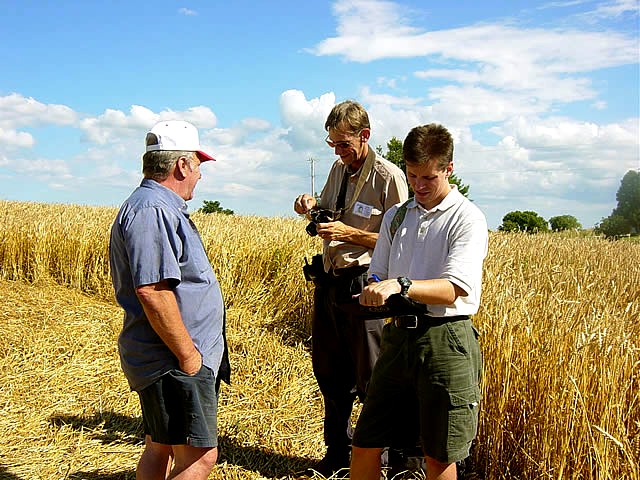
Wilson said he and other researchers later interviewed the man and examined the field. They documented plant damage that Wilson considered inconsistent with a formation made by people flattening the crops.
Wilson described eyewitness accounts of crop circle formation as rare, estimating that only about 75 cases had been documented worldwide. He said the witness’s clear view of the field made the Wisconsin case particularly significant to his research.
An agricultural mystery
For farmers, the consequences of a formation can be more immediate than questions about its origin. Flattened crops can mean lost production, and media attention can bring visitors onto private property.
Wilson recalled the wheat-field formation he visited near Paulding, Ohio, in 1996. He estimated that about 10,000 people visited the site within a week.
“It was like the crop circle circus came to town,” he said. “A lot of people don’t want to have anything to do with that. That’s like a headache and a half for a lot of farmers.”
Farmers’ responses vary, Wilson said. Some harvest the affected area quickly to limit attention and prevent visitors from entering the field. Others take an interest in the formation and help researchers document it. Wilson said farmers have also contacted him for help estimating crop losses for insurance claims.
Wilson encourages farmers who discover a formation and are comfortable allowing an investigation to document the site before harvest, when practical, and contact the association. He said the group can keep a farmer’s identity and location confidential.
“We just want to make sure that we can document it as thoroughly as possible,” he said.
For those drawn to the unexplained, crop circles offer a mystery rooted in the familiar landscape of farm fields. For some, this lingering uncertainty may be part of their appeal—but for Wilson, the search for answers comes down to collecting more data.
He said his group continues to compare observations, but the evidence collected so far has not produced a definitive explanation.
“We just don’t really have all the answers because we don’t have all the data,” Wilson said. “It’s a challenging phenomenon to get your arms around. It’s way more complicated than people think.”
Lacey Vilhauer can be reached at 620-227-1871 or [email protected].