
Beef and pork show slight drop in production
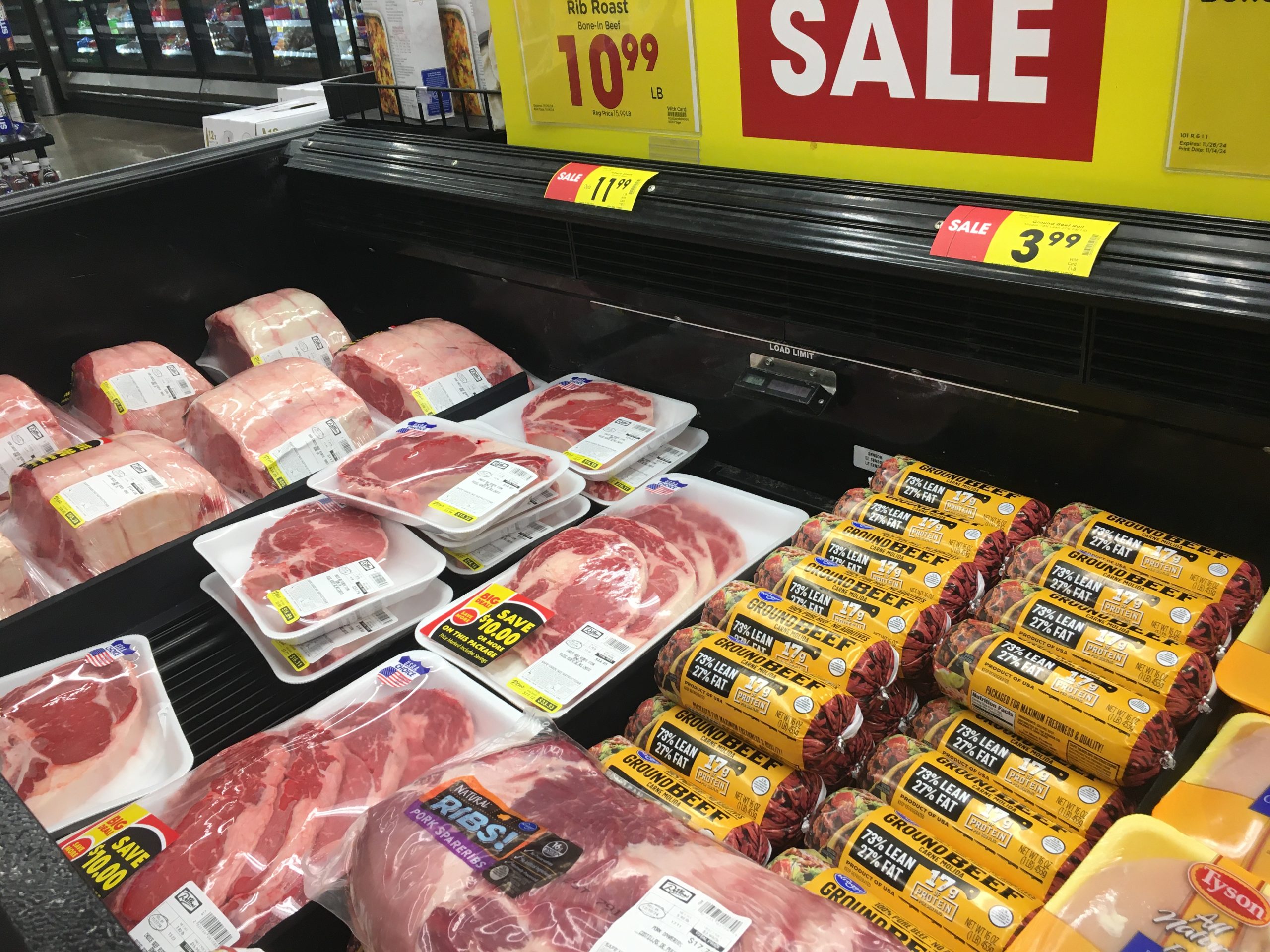
A recent U.S. Department of Agriculture report provided an expected slight drop in beef and pork production.
The Sept. 12 World Agricultural Supply and Demand Estimates report showed lower beef production in 2025 based on reduced steer, heifer and cow processing for the third and fourth quarters. Beef production in 2026 was raised slightly with higher fed cattle processing more than offsetting lower bull slaughter.
Production for 2025 was estimated at 25,826 million pounds compared to a month’s ago projection of 25,926 million pounds. Production in 2026 was estimated at 25,490 million pounds.
Glynn Tonsor, a professor in the department of agricultural economics at Kansas State University, said the reduction in steer, heifer and cow processing was something he noted, too.
“The herd size was already smaller, and any heifer retention efforts will further reduce near-term fed cattle slaughter volumes,” he said.
Cattle prices were forecast higher in the third and fourth quarters of 2025 with higher prices carrying into 2026, the report noted. The price for steers was based on the five-area direct price and was $240 and $244 per hundredweight for final quarters of 2025 and expected to reach $247 and $248 per hundredweight, respectively, in the first and second quarters of 2026.
High beef prices are expected to continue into fall, said Derrell Peel, Oklahoma State University Extension livestock marketing specialist.
The USDA Choice boxed beef cutout was $404.77 per hundredweight about two weeks ago, down from the year-to-date peak of $413.60 per hundredweight in the first week of September, Peel said in Cow Calf Corner, a weekly newsletter from OSU. The current boxed beef value is 31.7% higher than one year ago, with all primal values higher year over year.
USDA recently released the August retail meat prices showing that the all-fresh beef price was another record high at $9.18 per pound, up from last month and up 12.6% year over year and over $1 a pound higher than one year ago, Peel said.
The beef import forecast was raised for 2025 on continued strong demand for lean processing beef, but the forecast for 2026 was unchanged.
“Beef prices remain strong, and beef demand is robust despite the availability of favorably priced alternative proteins,” Peel said.
Moving into the fall, consumer demand shifts from a summer grilling to crock pot cooking and increased restaurant visits, he said. This may slightly change relative values among beef products, but beef product demand continues strong at all levels.
The beef import forecast was raised for 2025 on continued strong demand for lean processing beef, but the forecast for 2026 was unchanged, WASDE noted.
“We historically import a large volume of lean beef to support domestic ground beef production,” Tonsor said. “The source of that varies by exchange rate, now tariff terms, and available supplies.”
The mix of countries involved includes Australia, New Zealand and Brazil, he said.
Beef exports were reduced for 2025 and 2026 due to expectations of fewer supplies and increased price competition. Tonsor said with less beef being produced in the U.S. that makes less of it available to export.
Tonsor said the closure of the Mexican border as the U.S. and Mexico are monitoring the New World screwworm continues to have an impact. “The availability of lighter weight feeder cattle has been reduced and leading to lower live animal throughput and ultimately domestic production.”
While the USDA earlier this month noted that livestock, most notably beef, has been a bright spot in farm income, it requires producers to be diligent to details.
“As always preparation starts with knowing your numbers,” Tonsor said. “You can only manage what you measure and knowing your cost of production and implied break-even values is essential. In turn, that knowledge allows one to more accurately assess price risk management alternatives and associated marketing opportunities.”
Pork
Production was reduced on a slower rate of processing for the third and fourth quarters and lighter dressed weights for the third quarter.
“While there are seasonal aspects to pork production the bigger deal here is the cautious or limited interest in breeding herd expansion by producers,” he said.
Pork production for 2025 was estimated at 27,567 million pounds and for 2026 it was projected to be 28,380 pounds.
The USDA will release the Quarterly Hogs and Pigs report on Sept. 25 to provide a further indication of hog supplies available for processing in the first half of 2026.
Hog prices were raised for the fourth quarter of 2025, based on recent price strength, reduced pork supplies and support from higher cattle prices. Higher hog prices are expected for the first and second quarters of 2026.
The price for the fourth quarter was estimated at $69 per hundredweight and is expected to be at $65 and $70 per hundredweight, respectively.
Pork exports were unchanged for 2025 and 2026.
Milk
The milk production forecast for 2025 was raised on higher cow inventories and a faster rate of growth in output-per-cow, based on the latest Milk Production report. The WASDE report noted that milk production was expected to rise in 2026 as higher cow inventories and productivity rates are expected to carry into next year.
Fat basis exports were forecast to be higher in 2025 and 2026, as U.S. butter and cheese were expected to remain price competitive in international markets.
Exports on a skim-solid basis were raised on higher whey and cheese shipments. For 2026, skim-solids exports were unchanged, as increased shipments of cheese were offset by lower shipments of dried skim milk powder and lactose products.
Price forecasts for cheese, butter and nonfat dry milk were lowered for 2025 based on recent price declines and increased milk supplies. Class III and Class IV price forecasts were reduced on lower dairy product prices. The all-milk price for 2025 was lowered to $21.35 per hundredweight and for 2026 it was lowered to $20.40 per hundredweight.
Dave Bergmeier can be reached at 620-227-1822 or [email protected].



