K-State food scientist shares tips for cleaning kitchen appliances
A bad smell in the refrigerator or freezer might be more than just an unpleasant inconvenience for homeowners; it could signal a potential food safety issue, says a Kansas State University food safety specialist.
Karen Blakeslee, coordinator of K-State’s Rapid Response Center for food science, said spoiled food can lead to a large amount of bacterial growth, and cooking these foods may not destroy those high levels of bacteria. Food residues, from spills or leaking packages of food, can lead to cross-contamination with other foods.
“Spoiled food can spill or leak into the interior of the appliance and is difficult to impossible to remove,” Blakeslee said, adding that it’s important to clean thoroughly and remove any questionable food before it poses a health risk.
The U.S. Department of Agriculture’s Food Safety and Inspection Service recommends disposing of any spoiled or questionable food. Cleaning should begin by removing all shelves, crispers and trays. Wash them with hot water and detergent, then sanitize with a bleach solution made from 1 teaspoon of bleach per quart of tap water.
Blakeslee said it’s also important to clean the inside walls, door, and gasket of the appliance using a mix of hot water and baking soda, followed by a bleach sanitizing rinse. After cleaning, leave the door open to allow the appliance to air out.
If odors linger, Blakeslee suggests the following tips:
- Wipe down interior surfaces with a solution of equal parts water and vinegar.
- Leave the appliance open and let it air out for several days.
- Stuff the interior with crumpled newspaper and close the door for several days; then discard the newspaper and clean with vinegar and water.
- Place fresh coffee grounds or baking soda in a shallow pan inside the appliance to absorb odors.
- Use cotton balls soaked in vanilla extract, sealed in the appliance for 24 hours.
- Consider commercial products designed to clean and deodorize appliances.
“Keep the rule of ‘when in doubt, throw it out’ in mind when cleaning out spoiled or questionable food,” Blakeslee said. “While it may seem wasteful, it is much safer to toss it than to get sick from unsafe food.”
In cases where the appliance itself is no longer functional or the odor cannot be removed, disposal may be necessary. According to the Kansas Department of Health and Environment, “white goods” such as refrigerators and freezers are permitted in Kansas landfills. However, the agency encourages alternative disposal methods such as repair, resale or recycling.
Local landfill departments may have additional guidelines, which can be found online.
Blakeslee said that regular cleaning and timely disposal of spoiled food are essential steps in maintaining food safety and avoiding contamination.
More food safety tips are available online from K-State’s Rapid Response Center for Food Science. Blakeslee publishes a monthly newsletter, called You Asked It!, with timely tips for safe food in and out of the home.
More information is also available at local extension offices in Kansas.
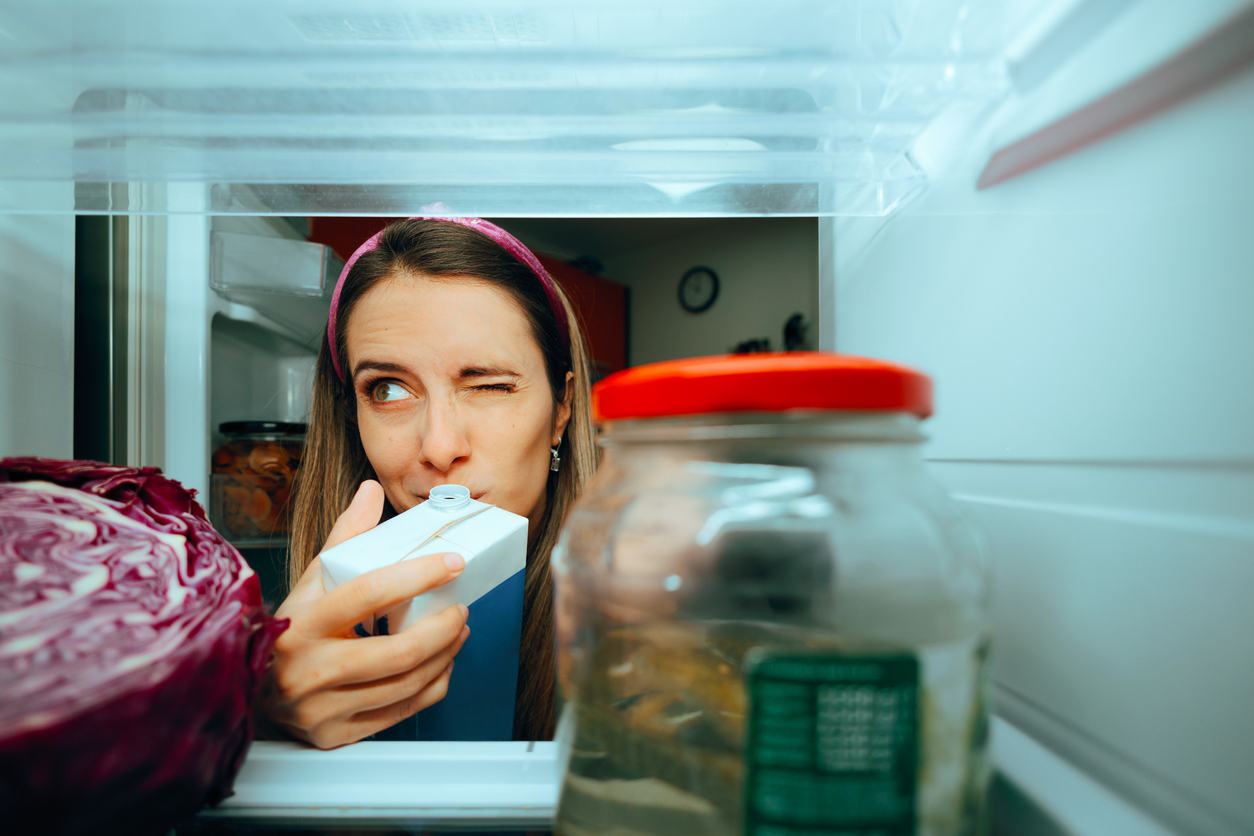
PHOTO: Cautious girl checking the smell of her diary product. (iStock │ #1838896474 – nicoletaionescu)