
Consider alfalfa as a cost-effective winter supplement for cows this year
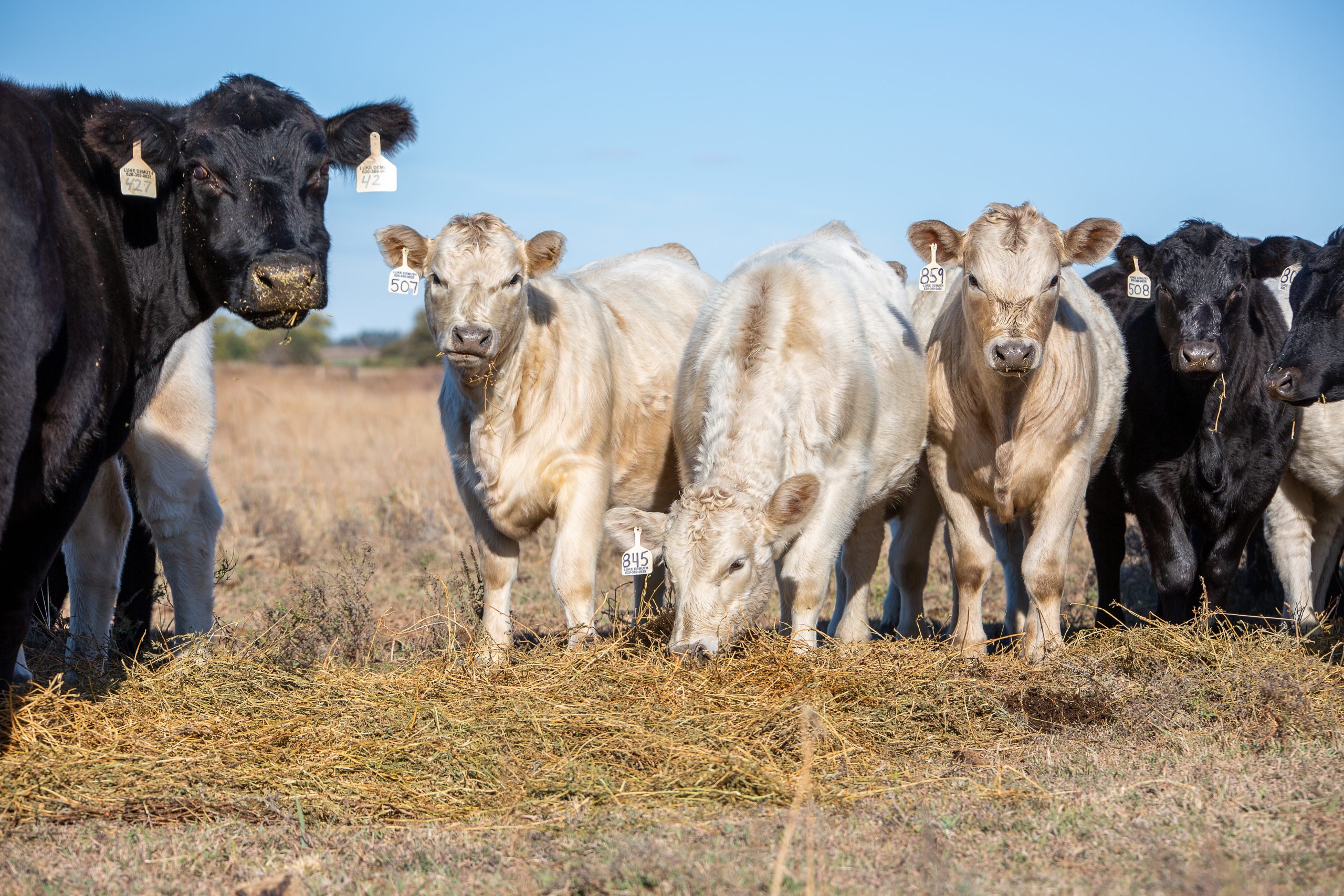
Winter is coming, and selecting an economical supplement to complement forages during the cold months should be on producers’ minds. Input costs are everything in the farm and ranch industry right now, and comparing costs between different supplements to find the most cost-effective protein and energy supplement can be a money-saving strategy.
“Ask yourself what is the best supplement for my situation,” said Dana Zook, Oklahoma State University northwest area Extension livestock specialist. “The first step is evaluating what forage sources and grazing options you have. You can’t pick a supplement properly without really knowing the value for forage sources.”
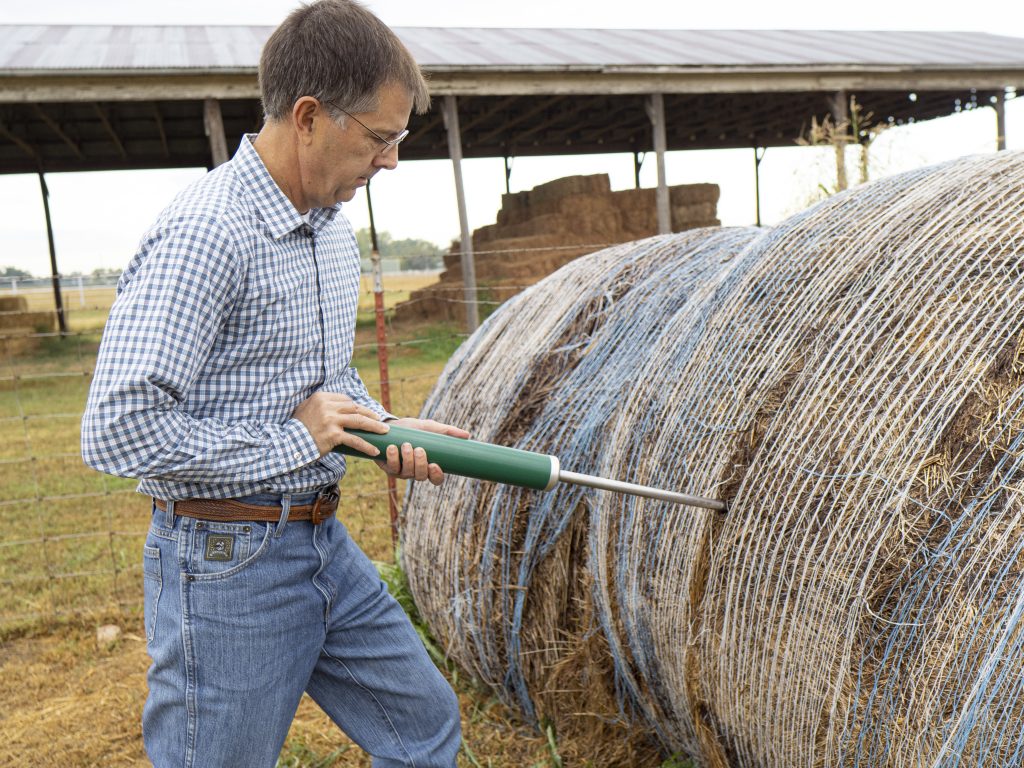
Zook recommends producers collect samples of their hay for and send them off for analysis. She said every cutting of hay will have a different nutritional makeup, so it is important to separately test each cutting.
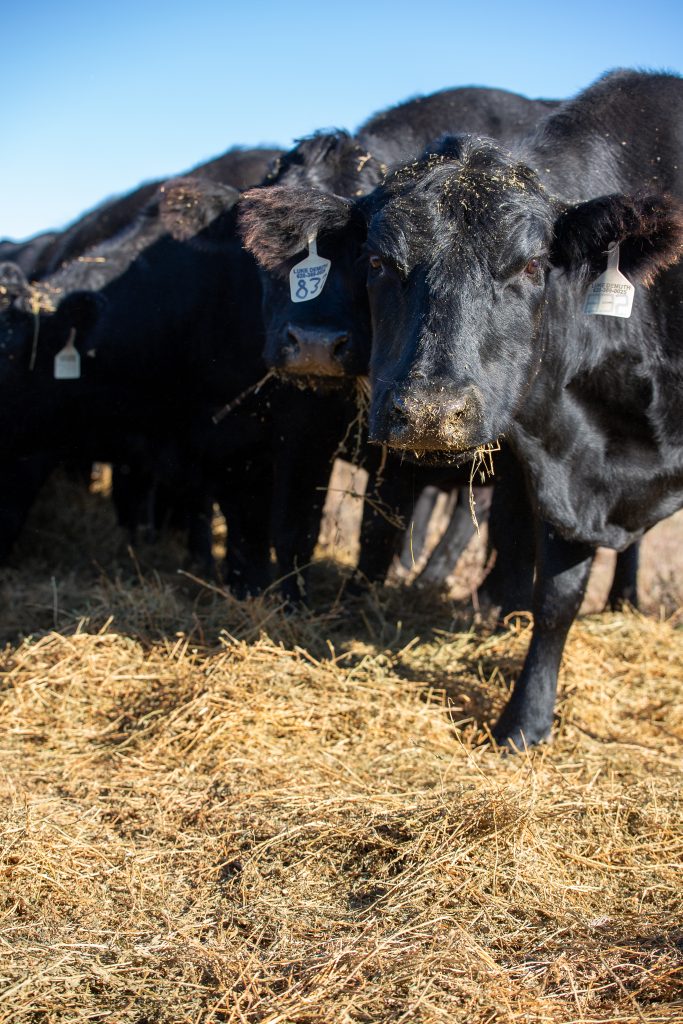
“Certain hays like Bermuda that are high enough quality may not need very much supplement,” she explained. “It could really reduce your supplement costs if you know what you have now. But if your cows are just grazing during winter, obviously there’s a natural degradation of the quality of a standing forage out in the pasture.”
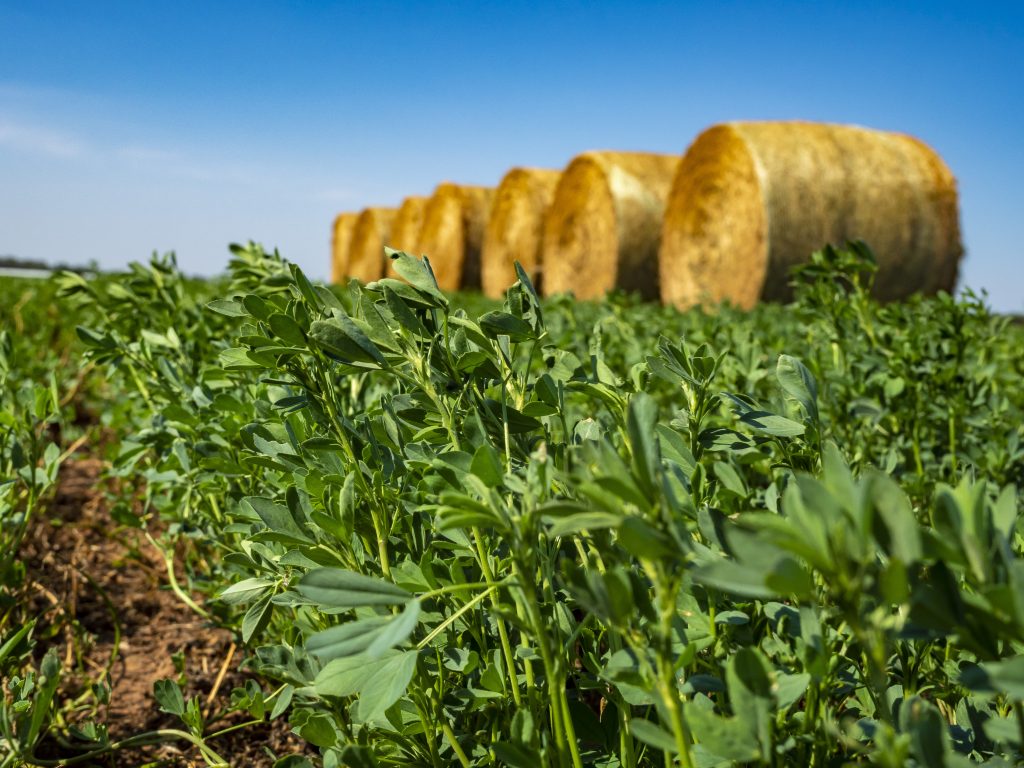
Winter supplements include corn, corn gluten, soybean meal, distillers grains, free-choice supplement tubs, range cubes, and high-protein forages, like alfalfa. Zook said 20% range cubes are the most used winter supplement in Oklahoma, even though they are usually not the most cost-efficient source of protein and energy. She said alfalfa is a forgotten supplement option that can be the least expensive on the list.
“People overlook it because it’s just hay,” she said. “It’s not something you feed with a bucket or out of the tub. When you think about alfalfa, it’s like a tale of two forages. It can be very high quality and be a supplement option, but it can also be lower quality and be a little bit higher value roughage source. Alfalfa that is 18% protein, is an alfalfa supplement option. Anything less than that is considered grinding hay. It’s still a really decent forage if it’s 15 or 16% protein, but it’s not necessarily good to use as a complement to low-quality forage. Usually, the higher quality protein supplements are cheaper, even though they’re costlier per ton per pound of feed. It’s less costly per pound of protein because you’re not feeding just for feed, you’re feeding it as a protein supplement.”
Nutritional value and storage
Alfalfa is an excellent source of protein, calcium, energy, magnesium, potassium, carotene, iron, cobalt, and zinc. Additionally, Zook said if stored properly, it contains high levels of vitamin A, which cows can become deficient in during the winter months or during drought conditions.
Vitamin A is necessary for proper bone formation, growth, a strong immune system, reproduction, energy metabolism, skin and hoof tissue maintenance, and vision. Green growing forages are high in vitamin A, which is why it is not a concern in the spring and summer, but should be provided in the cold months for cattle on dormant, native grasses.
“Historically, vitamin A has been very expensive, and some feed companies don’t offer it in a supplement,” Zook said. “In the spring, it’s something that cows retain and store it in their liver, but it only lasts a certain period of time.”
According to Zook, growing steers and heifers require 1,000 international units of vitamin A per pound of dry matter feed and 12,500 IU total per day total. Gestating cows need 1,300 IU per pound of feed and 34,000 total IU of vitamin A per day. Lactating cows require 1,800 IU per pound of feed and 54,000 IU per day. Early bloom alfalfa generally contains about 1,300 IU of vitamin A per pound, making it an ideal source.
“If alfalfa is cut properly, with the leaves on and stored well, it holds that vitamin A content better than other forages,” Zook said. “If you have poor bale quality, and it’s stored outside and the bales have gotten wet, or it’s been in a snow drift it’s probably not as great of a source of vitamin A.”
Zook said firm, tight bales that shed moisture can help to preserve the nutrient content in alfalfa. Additionally, the direction and method of storage can make a difference.
“If we think about a 6-foot round bale, in the outer 2 inches we have about 11% of the volume in that bale,” she said. “If you think about the outer 4 inches, that’s almost a quarter of the hay that’s exposed to the environment. We need to store them in a well-drained area with a slight slope and place those round bale rows, flat end to flat end and the rows running north and south. As it rains or snows, and the water runs off that bale to the ground.”
Zook said since the sun rises in the east, north to south facing bales will have the warmth of the sun to dry them as much as possible from all angles. She recommends leaving 3 to 4 feet between rows so hay can be exposed to sunlight throughout the day. Bales should be in single rows and not stacked in a pyramid formation, which allows water to run off the top bales and pool between the bottom bales, creating mold.
Cost comparisons
One reason producers feed cubes instead of alfalfa is for convenience. They require less equipment and math to figure out how much to feed. With range cubes, the nutritional analysis is provided and all that is needed is a cake feeder and a delivery from the co-op or feed mill.
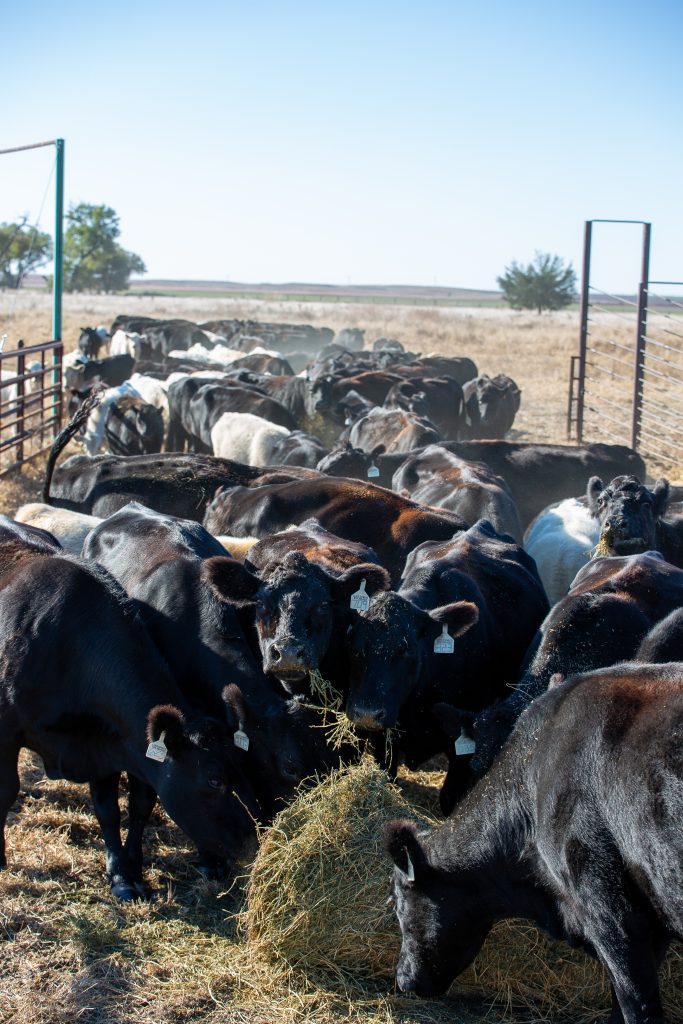
Alfalfa requires a bale bed, hay production or purchasing it from a grower and some additional homework to determine the amount that should be fed. Most range cubes will be pretty consistent across the board with price, but alfalfa can fluctuate, making it even more economical at times. Zook said Oklahoma’s monthly retail feed report for October showed alfalfa has gone down in price, mostly because of a surplus due to consistent rain this summer.
“A 20% range cube is going to be around $350 a ton, while 20% premium alfalfa is about $160 a ton,” Zook said. “It’s already cheaper per pound. Alfalfa is probably a little more than half the price of a cube per pound of protein. You can even have a little bit of error in feeding and still be a cheaper supplement than cubes.”
Accuracy when feeding alfalfa as a supplement can be challenging. Zook recommends producers weigh a few bales at the co-op scales to use for their calculations. Then take those pounds along with the percent protein and figure up how much each cow needs per day.
“For instance, if you have 25 cows, and they need 1 pound of protein, and you’re supplementing a 20% alfalfa, that’s 5 pounds of alfalfa every day,” Zook explained. “If we don’t want to feed them every day, we can feed them 5 pounds of alfalfa hay every other day and they will get the same amount. That would be 250 pounds of alfalfa to 25 cows. No producer is going to weigh out 250 pounds of alfalfa, but a good producer might know that his or her bales are about 1,000 pounds each. That means we would feed a quarter of a bale every other day. If we choose to feed them every third day, that’s 15 pounds, so about a third of a bale every third day.”
Feeding considerations
Since each cutting of alfalfa can be very different when it comes to nutrition, having a hay analysis can guide producers on when to feed it. Zook recommends consulting with an Extension specialist or nutritionist to understand what cows need at different production stages and how each cutting should be fed.
“You might have two cuttings that are really high quality, which you would want to wait to feed until calving or peak lactation, versus feeding them in the fall,” Zook explained.
The order of cutting also matters when it comes to vitamin A because the content degrades over time along with the forage. Zook said alfalfa will hold its vitamin A content for about four to five months after harvest. Because of the time of harvest, she said the first cutting is probably not the best by wintertime, but later cuttings still have high vitamin A.
Zook said feeding alfalfa could cause some digestive upset, especially if producers feed it to cows that have not had much to eat and all of a sudden have free choice alfalfa. Some producers will cite spoiled cow syndrome as a reason to not feed alfalfa as a supplement, but Zook said this behavior can be avoided if supplementation is correctly done.
“If you’re feeding alfalfa to a cow every day, it will cause them to wait at the gate for you to come back,” Zook said. “But if you’re using it as a supplement for instance, you’re feeding it less often, and they will be forced to go out and graze, and that behavior will be a less of a problem. You will probably see a reduction in grazing as the cows advance in their pregnancy. As pregnancy progresses, there’s less room in the rumen for bulky feeds. They’ll graze less of the other forages and eat more of the alfalfa just because that’s what happens in the later state of gestation. That’s one reason why it’s better to feed alfalfa every third day, and you’ll get away from that kind of behavior.”
Alfalfa supplementation can also have a positive effect on reproduction and rate of gain for calves. Zook cited a 1994 Kansas State University research paper entitled, “Performance and forage utilization by cows receiving increased amounts of alfalfa as supplement,” as evidence. This experiment evaluated the effects of the amount of supplemental alfalfa intake in steers and pregnant cows during winter by increasing alfalfa supplementation to 0.48% of body weight, 0.72% BW, and 0.96% BW.
“In this study, the overall conception rate of cows fed alfalfa was unaffected by the level of alfalfa, but cows receiving higher levels of alfalfa got pregnant earlier,” Zook explained. “This is in agreement to a whole host of studies that recognize that cows in better body condition will have a shorter interval to conception compared to cows that are below optimum BCS which is a tick over BCS 5.”
According to the study, the improvements in performance of beef cows in moderate body condition were greater when the amount of supplement was increased. Zook said the birth weights of calves were similar for the 0.72 and 0.96 levels, but both were notably larger than calves from cows fed the lowest level of alfalfa. Feeding alfalfa as a supplement is not exactly the equivalent of hitting the easy button for producers, but with some extra time spent on calculations and the proper equipment, it could cut costs in a big way allowing them to net more profit from their operation.
Lacey Vilhauer can be reached at 620-227-1871 or [email protected].



