Greer announces signing of U.S.-Taiwan trade pact
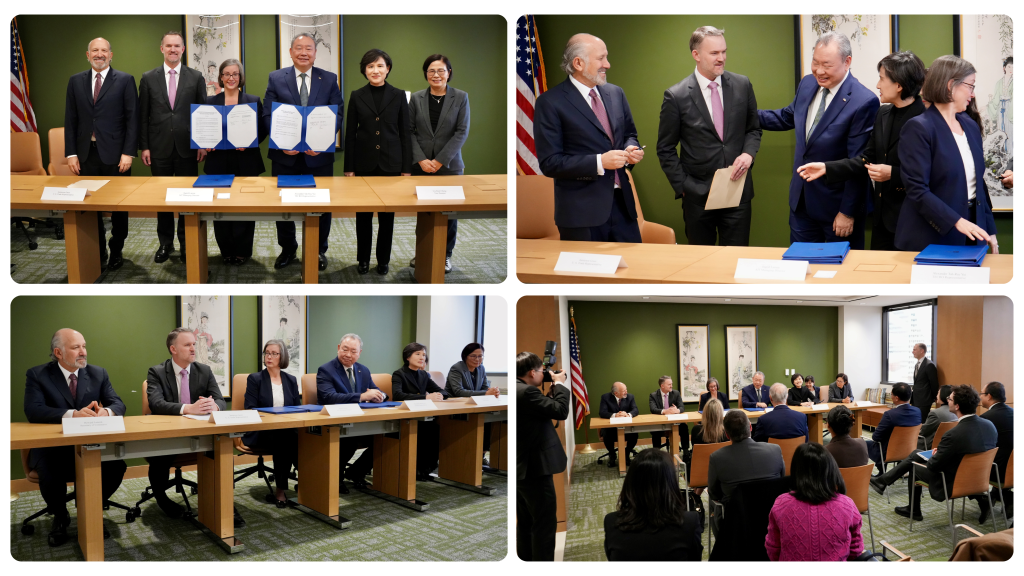
United States Trade Ambassador Jamieson Greer has announced signing of an Agreement on Reciprocal Trade between the U.S. and Taiwan on Feb. 12.
The agreement is under the auspices of the American Institute in Taiwan and the Taipei Economic and Cultural Representative Office in the U.S. Taiwan’s Vice Premier Li-chiun Cheng and Minister without Portfolio Jen-ni Yang also attended the signing.
“President Trump’s leadership in the Asia-Pacific region continues to generate prosperous trade ties for the United States with important partners across Asia, while further advancing the economic and national security interests of the American people,” Greer said. “The Agreement on Reciprocal Trade with Taiwan will eliminate tariff and non-tariff barriers facing U.S. exports to Taiwan, furthering opportunities for American farmers, ranchers, fishermen, workers, small businesses, and manufacturers. This agreement also builds on our longstanding economic and trade relationship with Taiwan and will significantly enhance the resilience of our supply chains, particularly in high-technology sectors. I want to thank my counterparts from Taiwan for their strong commitment to achieving fair and balanced trade with the United States.”
What’s in the agreement for ag
The Taiwan side will eliminate or reduce 99% of tariff barriers. The Taiwan side will provide preferential market access for U.S. industrial exports, including autos and auto parts, chemicals, seafood, machinery, health products, electrical products, metals, and minerals.
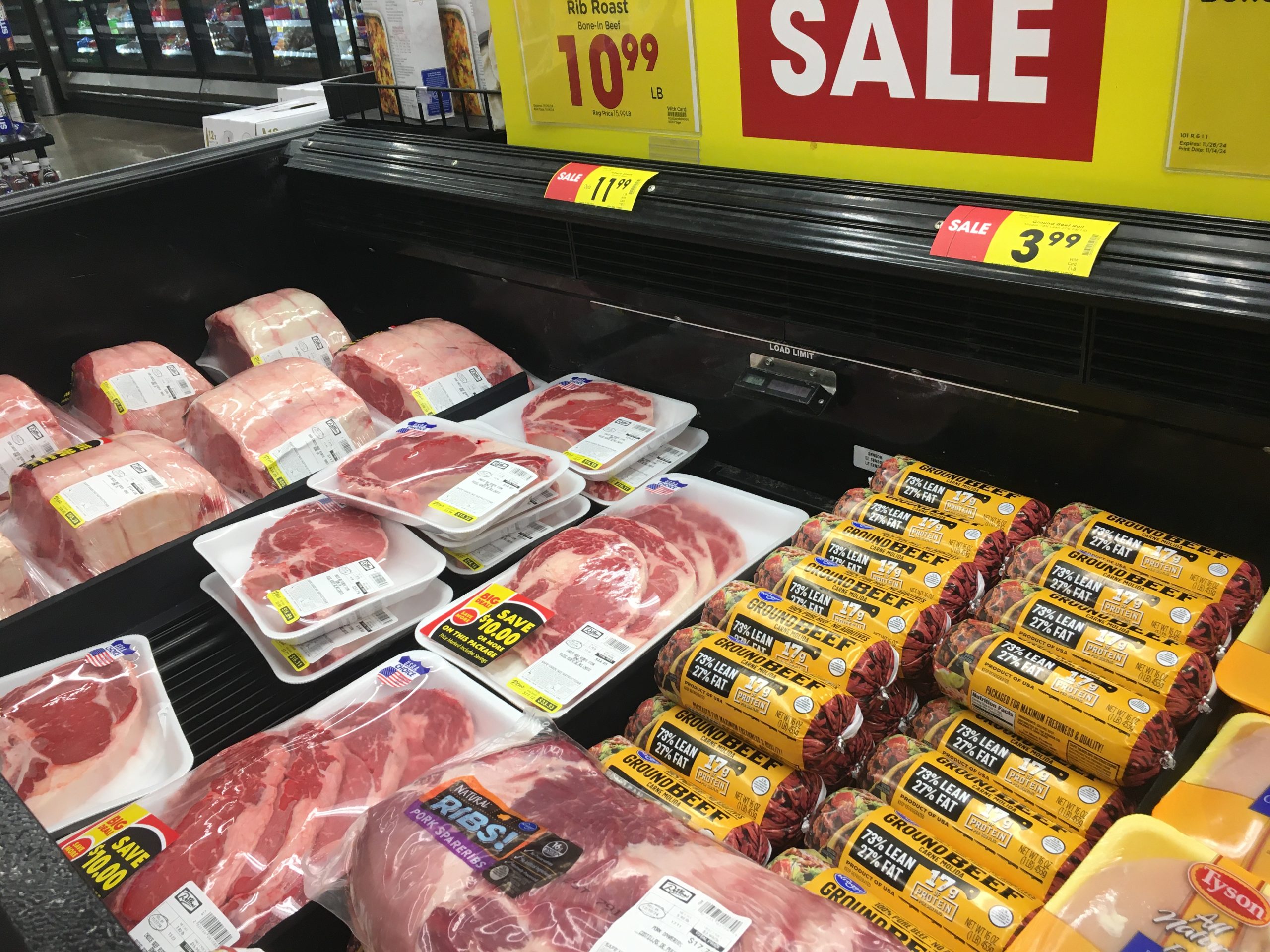
It will also provide preferential market access for U.S. agricultural exports, including horticultural products, wheat, beef and beef products, dairy products, pork and pork products, lamb and sheep meat, tree nuts, dog and cat food, ketchup, and peanuts.
Taiwan has committed to resolve and prevent non-tariff barriers to U.S. agricultural exports, including beef, pork, poultry, and processing potatoes. It will also work with the U.S. side to complete the regulatory process to allow bison meat into Taiwan.
The island country has committed to groundbreaking provisions that will preserve current and future U.S. market access for U.S. cheese and meat producers who rely on the use of common names. This includes ensuring that market access will not be restricted due to the mere use of certain cheese and meat terms.
The two sides commit to cooperate on ensuring secure, reliable, and diversified sources of supply. The Taiwan side plans to facilitate a long-term increase in its purchases of important U.S. goods, including $44.4 billion worth of liquefied natural gas and crude oil, $15.2 billion worth of civil aircraft and engines, and $25.2 billion worth of power equipment, power grids, materials, generators, storage facilities, marine equipment, steel-making equipment, and other equipment from 2025 through 2029.
Ag’s response
The U.S. Meat Export Federation greatly appreciates USTR’s dedication to resolving Taiwan’s tariff and non-tariff barriers on U.S. red meat through the Agreement on Reciprocal Trade, said President and CEO Dan Halstrom in a news release. Taiwan is the fifth largest market for U.S. beef, with exports valued at about $650 million, and the U.S. is the largest supplier of beef to the island country.
But there is still potential for more growth with the increased access for all U.S. beef products, including those in high demand for yakiniku barbecue and trendy burger concepts, Halstrom said. The elimination of tariffs on U.S. beef will definitely improve our competitiveness.
U.S. pork has been widely disadvantaged in Taiwan, and the EU and Canada dominate Taiwan’s pork imports, he said. “USMEF is optimistic that reducing both tariffs and non-tariff barriers will help enable larger U.S. pork exports to Taiwan, as USMEF remains focused on regaining Taiwanese consumer trust in U.S. pork.”
The National Pork Producers Council applauded the agreement, too.
“Our 15-plus year endeavor to break down trade barriers in the high-value market of Taiwan has paid off. This means more U.S. pork on international tables and more opportunities and prosperity for American producers,” said NPPC President Duane Stateler, a pork producer from McComb, Ohio.
Several notable provisions are in place. The agreement cuts tariffs on U.S. pork exports by half. It accepts U.S. pork exports from all plants listed in the U.S. Department of Agriculture’s Meat and Poultry Inspection Directory, which is maintained by the Food Safety and Inspection Service, without requiring audits before exporting. It also accepts USDA FSIS-issued export certificates and electronic data elements and limiting unnecessary attestations.
The agreement also includes important language clarifying access for U.S. bison and eliminates tariffs on U.S. lamb, the USMEF said.
“USMEF thanks the Trump administration for the continued focus on breaking down barriers for U.S. agricultural exports and we look forward to the successful implementation of the Taiwan agreement,” Halstrom said.
The agreement removes both tariff and non-tariff barriers, strengthening one of the most important and fastest growing markets for U.S. beef, according to Gene Copenhaver, the president of the National Cattlemen’s Beef Association.
“Strong, science-based trade agreements are essential to adding value for U.S. cattle producers, and Taiwan has emerged as one of the strongest international markets for U.S. beef. Duty-free access improves competitiveness and provides long-term certainty for producers who depend on export markets to maximize the value of every animal,” Copenhaver said. “Foreign markets play a critical role in producer profitability with beef exports accounting for more than $415 per fed cattle processed in 2024.”
Taiwan is currently the sixth largest export market for U.S. beef, valued at $709 million in 2024. The landmark trade deal eliminates tariffs on U.S. beef and breaks down non-tariff barriers by reinforcing science-based standards consistent with the World Organization for Animal Health and Codex Alimentarius.
The National Milk Producers Federation and U.S. Dairy Export Council commended the signing that will eliminate tariffs on all U.S. dairy products and preempt nontariff barriers that could otherwise limit the full potential of bilateral dairy trade.
Taiwan is the third-largest fluid milk destination for U.S. exports, and this agreement represents a transformative step forward for the growing market. By securing comprehensive tariff reductions for U.S. dairy products and incorporating meaningful commitments to ensure nontariff measures do not derail trade, the deal positions U.S. dairy suppliers to compete on a level playing field and expand their presence in one of Asia’s most dynamic food markets.
“Taiwan is a trusted partner and a high-value market for U.S. dairy,” Krysta Harden, president and CEO of USDEC, said. “This agreement improves our competitiveness compared to other suppliers and provides assurances that nontariff barriers will not hinder the expansion of U.S. dairy exports. USDEC looks forward to continuing work with the Taiwanese government and the domestic industry to increase dairy consumption and grow the United States’ contribution to supplying Taiwan’s fluid milk and other dairy needs.”
“The agreement with Taiwan builds on the incredible momentum we’ve seen from the Administration in securing new trade agreements around the world,” Gregg Doud, president and CEO of NMPF, said. “Each deal to reduce barriers and expand market access strengthens American dairy farms and the communities they support.”
Dave Bergmeier can be reached at 620-227-1822 or [email protected].