
USDA projects higher red meat and poultry production
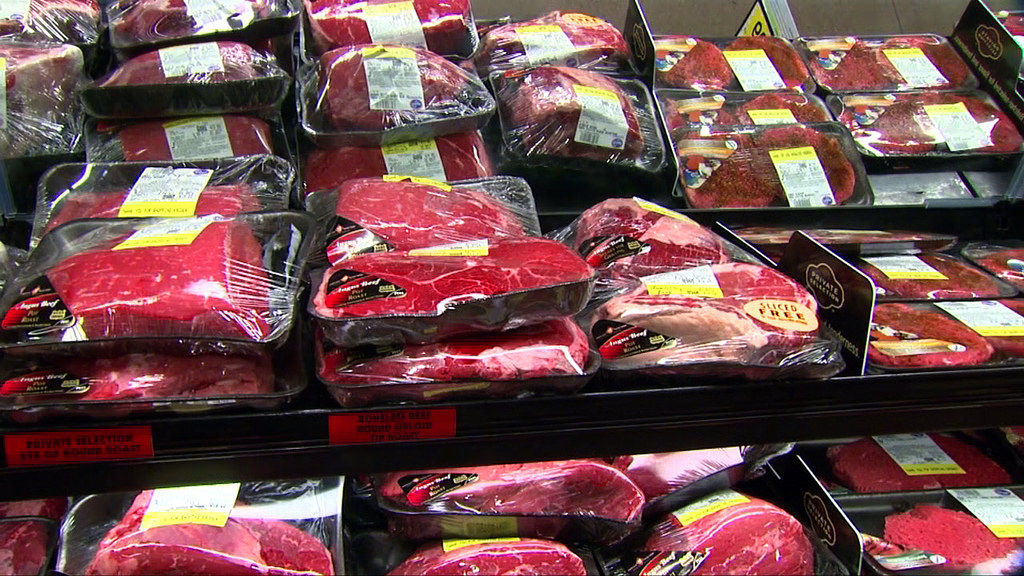
The U.S. Department of Agriculture’s March 10 World Agricultural Supply and Demand Estimates report projects higher total red meat and poultry production for 2026, driven largely by increased broiler output.
The USDA raised broiler production for the first half of the year based on recent processing levels and hatchery data. The increase more than offsets lower forecasts for beef and turkey production. Beef production was reduced due to a slower-than-expected pace of cattle processing through early March, though heavier dressed weights are expected to partially offset the decline.
Beef
Trade expectations shifted slightly in the report. Beef exports were lowered for the first half of the year due to reduced production, while beef imports were increased as tighter domestic supplies attracted more shipments from global suppliers.
One bright spot for exports appears in Colombia, according to the U.S. Meat Export Federation.
United States beef exports to Colombia rebounded last year, climbing 23% in volume (4,232 metric tons) and 77% in value ($40.8 million) compared to 2024—when the Colombian government imposed restrictions on U.S. beef due to avian influenza detected in some U.S. dairy herds.
Those restrictions were removed in the fall of 2024 and with support from USDA and the Beef Checkoff Program, U.S. beef has made an impressive recovery. Homero Recio, a Latin America representative for USMEF, credits the Meat Merchandiser Program—a team of experts who educate key customers about the unique attributes of U.S. beef—for much of this success.
Recio explains that the team was instrumental in bringing back customers who had switched to Canadian products when U.S. beef was not available to them, as well as identifying new customers throughout Colombia.
Recio adds that the U.S.-Colombia Free Trade Agreement, in place since 2012, also played a key role in getting access for U.S. beef fully restored.
On an annual basis, beef production was estimated at 25,810 million pounds.
Cattle prices were raised through the first three quarters of 2026 on strong demand for fed cattle. The price on an annual basis was estimated at $242 per hundredweight with an expected increase to $245 per cwt in the fourth quarter.
Pork
Pork production was left unchanged in the report. USDA noted that the upcoming Quarterly Hogs and Pigs report, scheduled for release March 26, will provide further insight into hog supplies available for processing later in 2026.
On an annual basis, the production was estimated at 28,275 million pounds.
Pork exports were raised for 2026 on strong demand, particularly from East Asia and Western Hemisphere markets.
Hog prices were also increased based on recent price strength and expectations for continued demand. On an annual basis, the price for barrows and gilts was estimated at $70 per hundredweight, including $74 and $77 per cwt, respectively, in the second and third quarters.
Poultry and eggs
Turkey production is forecast lower in the second half of the year as hatchery data and highly pathogenic avian influenza–related culling continue to affect supplies. Egg production forecasts were lowered for the first and second quarters due to HPAI-related losses in the egg-laying flock and recent hatchery trends.
On an annual basis, broiler and turkey production was estimated at 48,700 million and 4,930 million pounds, respectively, Egg production was estimated at 9,155 million dozen eggs.
Broiler and turkey export forecasts were unchanged.
Broiler prices are forecast lower in the second quarter due to increased production, while turkey prices are projected higher in the first half of the year because of tighter supplies. Egg prices were lowered for the first three quarters of the year amid weaker-than-expected demand.
On an annual basis, the price for broilers and turkey was estimated 124 and 156 cents a pound, respectively. The price for eggs was projected at 118 cents per dozen, respectively.
Dairy
In the dairy sector, USDA raised its 2026 milk production forecast as growth in dairy cow inventories more than offsets slower gains in output per cow.
Milk production was projected at 234.7 billion pounds on an annual basis. Exports were increased on both a fat and skim-solids basis, reflecting stronger shipments of butter, cheese and whey products.
Price forecasts for cheese, butter and nonfat dry milk were all raised for 2026, while whey prices were lowered. The Class III milk price forecast was unchanged, while the Class IV forecast was increased due to stronger butter and nonfat dry milk prices. USDA now projects the all-milk price for 2026 at $19.70 per hundredweight, up from $18.95 per cwt a month ago.
Dave Bergmeier can be reached at 620-227-1822 or [email protected].



