Selecting plants that will attract butterflies to the home garden has grown in popularity, said Kansas State University horticulture expert Matt McKernan. Knowing what species of plants butterflies prefer can help gardeners with their selections, he said.
“Butterflies are crucial for pollination and are a delight to host in the garden,” McKernan said, noting that the North American Butterfly Association has resources for gardeners wanting to certify their landscape as a butterfly habitat.
Certification includes planting at least three different caterpillar food plants; at least three different native butterfly nectar sources; and not using insecticides or pesticides.
The Monarch Watch organization also has a process to register a garden as a Monarch Waystation. McKernan said there are more than 46,000 Monarch Waystations in the world, which meet the following features:
- Receives at least six hours of sunlight each day.
- Contains at least 10 milkweed plants, preferably with two more species.
- Contains nectar plants, including annuals, biennials and perennials.
McKernan listed annual plants that attract butterflies:
- Ageratum.
- Cosmos.
- French marigold.
- Petunia.
- Verbena.
- Zinnia.
“Group similar species of annuals together to create a planting more likely to attract butterflies,” McKernan said. “Including a mix of annuals with varying bloom times can lengthen the butterfly season.”
Early blooming perennials that attract butterflies include:
- Allium.
- Chives.
- Forget-me-not.
- Lilac.
Mid-Season blooming perennials include:
- Bee balm.
- Butterfly bush.
- Black-eyed Susan.
- Buttonbush.
- Butterfly weed.
- Daisy.
- Daylily.
- Gaillardia.
- Lavender.
- Lily.
- Mint.
- Phlox.
- Privet.
- Sunflower.
- Veronica.
Late-Season blooming perennials include:
- Aster.
- Glossy.
- Abelia.
- Sedum.
“Other features you can incorporate in the garden to appeal to butterflies include areas of full sun. Butterflies are cold-blooded so they seek sunshine for warmth,” McKernan said. “Shade is also necessary so they can escape from intense sun.”
Water is important for butterflies and can be provided with a birdbath or water-filled saucer on the ground, McKernan said.
McKernan and his colleagues in K-State’s Department of Horticulture and Natural Resources produce a weekly Horticulture Newsletter with tips for maintaining home landscapes and gardens.
Interested persons can subscribe to the newsletter, as well as send their garden and yard-related questions to [email protected], or contact your local K-State Extension office.
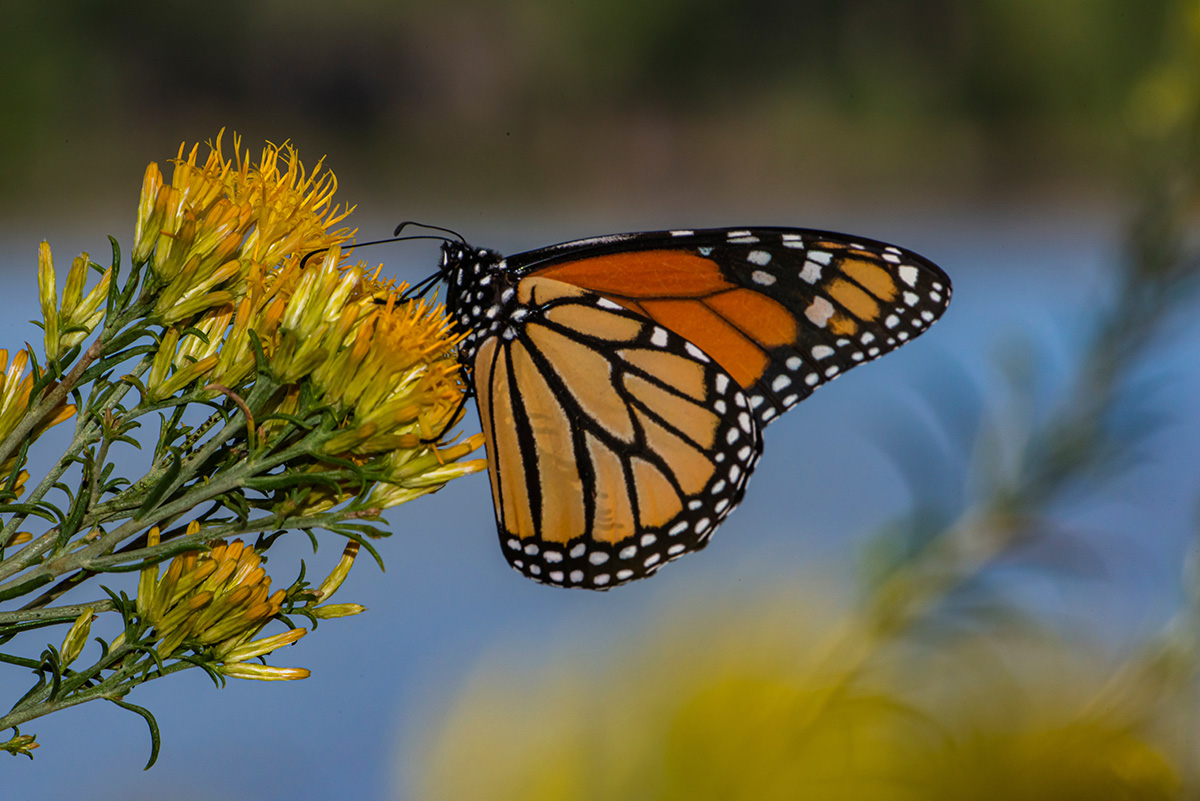
PHOTO: Monarch Butterfly feeding on a rubber rabbitbrush bloom. (Adobe Stock │ #499457615 – Jim)