Strengthen SCN control through effective weed management
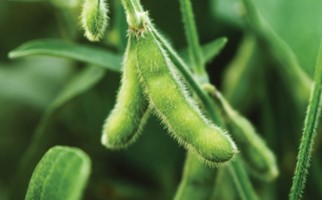
Weeds in soybean fields are doing more than competing for resources like nutrients and water. More than 100 common weed species are hosts, creating refuge for soybean cyst nematode populations and potentially undermining farmers’ active SCN management efforts.
A highly adaptable pest, SCN requires integrated management strategies like rotating to nonhost crops, such as corn and wheat, and planting SCN-resistant soybean varieties to reduce nematode population densities, says Jason Bond, nematologist at Southern Illinois University.
“Although these practices are often more effective, even a small reduction of SCN through weed management can turn into long-term yield benefits for farmers,” he said.
The SCN-weed relationship
More than 100 common weed species like purple deadnettle, chickweed and henbit can host SCN — allowing the pest to overwinter and complete at least one life cycle prior to soybean planting and possibly another after harvest during a warm fall. Depending on its environment, SCN can quickly reproduce and complete up to six generations during one soybean season.
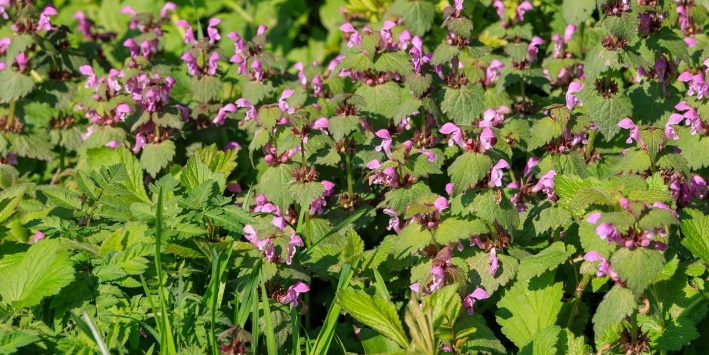
When left unmanaged, SCN in non-soybean years can complete at least one life cycle when common weeds like purple deadnettle are present. (Courtesy photo.)
“You could get a cycle of reproduction of SCN before you even plant your soybeans,” Bond said. “Instead of having three to four life cycles of SCN in that soybean year, now you could be stretching that to five or six after you harvest your soybeans.”
The slower SCN numbers decline, the greater the need to implement more active management strategies like including nonhost crops in rotation plans.
Weeds weaken crop rotation
A single year in a weed-free nonhost crop like corn can reduce SCN populations by up to 55 percent, and the greatest threat weeds pose is allowing SCN reproduction during a non-soybean year.
“For example, if you have broadleaf weeds like purslane or waterhemp emerging late in the season and growing under that canopy in corn, even though they’re not much of a threat to corn yield, you could get reproduction of SCN during the nonhost crop rotation year,” Bond said.
Other weeds like pigweed, clovers and thistles are also hosts for SCN, potentially increasing population numbers.
When managing SCN, Bond says farmers have to think beyond the current growing season.
“It’s not all about protecting the grain yield for that year,” Bond said. “There could be additional benefits going into your soybean year by doing a good job with your weeds this year.”
Herbicide resistance raises the stakes
Another layer of complexity: Fourteen of the known host weed species have resistance to eight herbicide sites of action, with four weed species resistant to more than one site of action.
Not only does this limit farmers’ current weed management options, it can also accelerate the development of weed resistance, creating long-term agronomic challenges that can become harder to manage over time.
For SCN management, the most effective rotations combine nonhost crops with resistant soybean varieties that draw from different sources of SCN resistance. Because most commercial soybean varieties rely on a common source of resistance — PI 88788 — Bond emphasizes rotating resistance sources is critical to slow SCN adaptation and maintain the effectiveness of resistant soybean varieties, including those derived from Peking.
Where to start?
To protect the effectiveness of soybean production tools and farmers’ profitability, The SCN Coalition has created the Soybean Cyst Nematode Management Guide. Putting the power directly in the hands of soybean farmers, this guide shares proven active management recommendations, including crop rotation tips and a list of SCN host crop plants and weeds to help actively manage these pests and protect yield.
The SCN Coalition is a public/checkoff/private partnership formed to increase the number of farmers actively managing SCN. The coalition’s goal is to increase soybean farmers’ profit potential and realize higher yields. Partners in The SCN Coalition include university scientists from 28 states and Ontario, grower checkoff organizations, including the North Central Soybean Research Program, United Soybean Board and several state soybean promotion boards, and corporate partners including BASF, Bayer, Growmark, Indigo, Nufarm, Pioneer (Corteva), Syngenta, UPL Ltd., Valent and Winfield United.