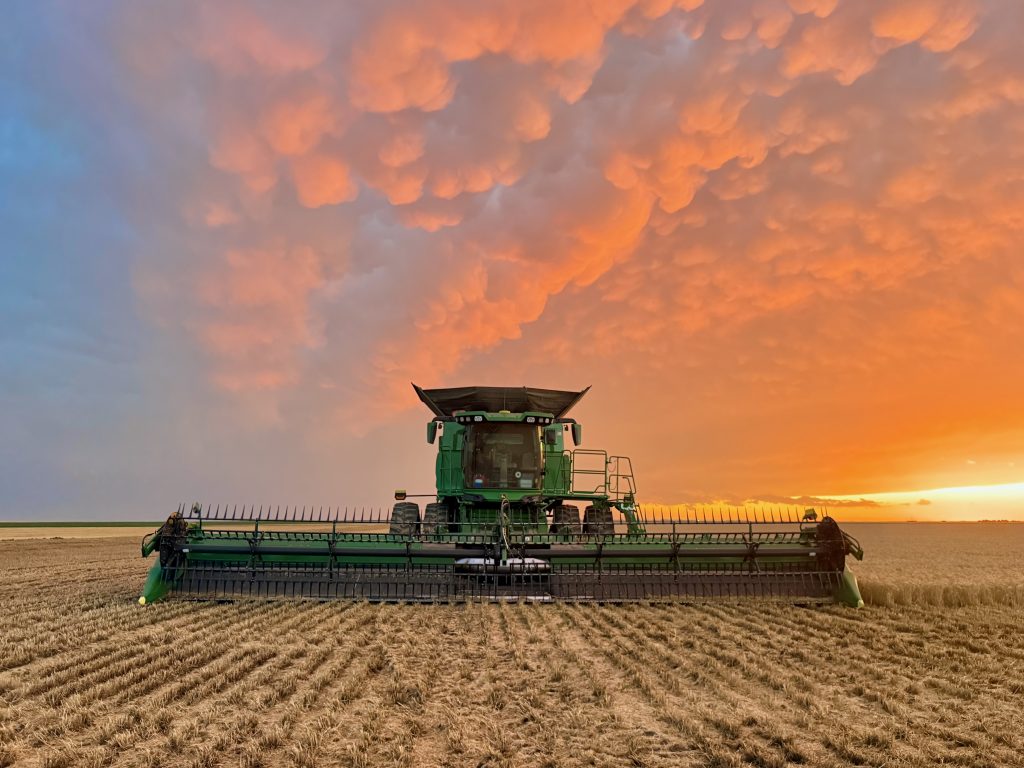
Fowler, KS – The drought in the South has made for a tough start to the harvest season this year. As we wrapped up Oklahoma, the overall yield averaged less than 20 bushels per acre…. disappointing but not a surprise. Unfortunately, much of Western Kansas suffered a similar fate. But if drought wasn’t enough, late spring freezes threw another wild card into the mix when trying to guess just how poor the crop would be. As terrible as that all sounds, something even worse recently affected this area just weeks before we arrived for harvest – wildfires.
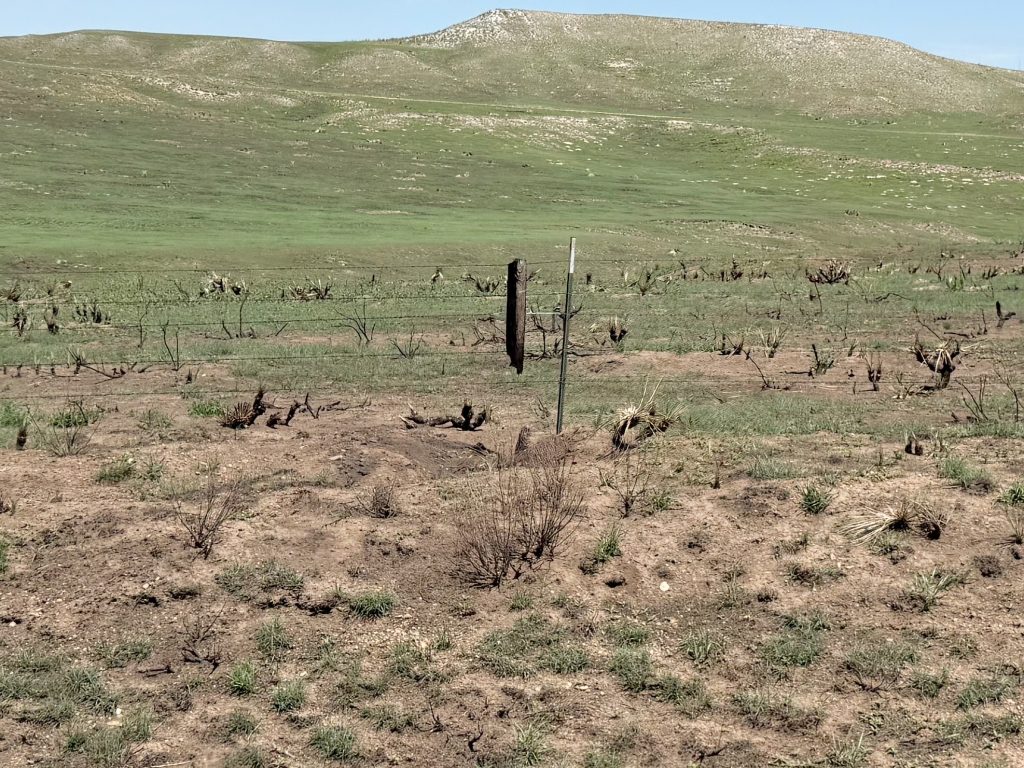
What started out as a welcomed rainstorm in this parched land turned into an inferno. It’s estimated dry lighting started nearly 20 individual fires that soon merged into one mega fire, driven by 50 mph wind gusts. The fire burned for nearly a week in this area. Ultimately over 100,000 acres were scorched in Meade and Clark counties, and the loss of grassland, crops and cattle was immense. The flames came within 6 miles of one of our fields and the campground we park at. A carpet of green grass now hides the blackened ground left behind, but clues of the fire still remain. Scorched wooden fence posts dangled from the tops of barbed wire fences where the fire consumed them at ground level, and leafless trees mark the path of the fire.
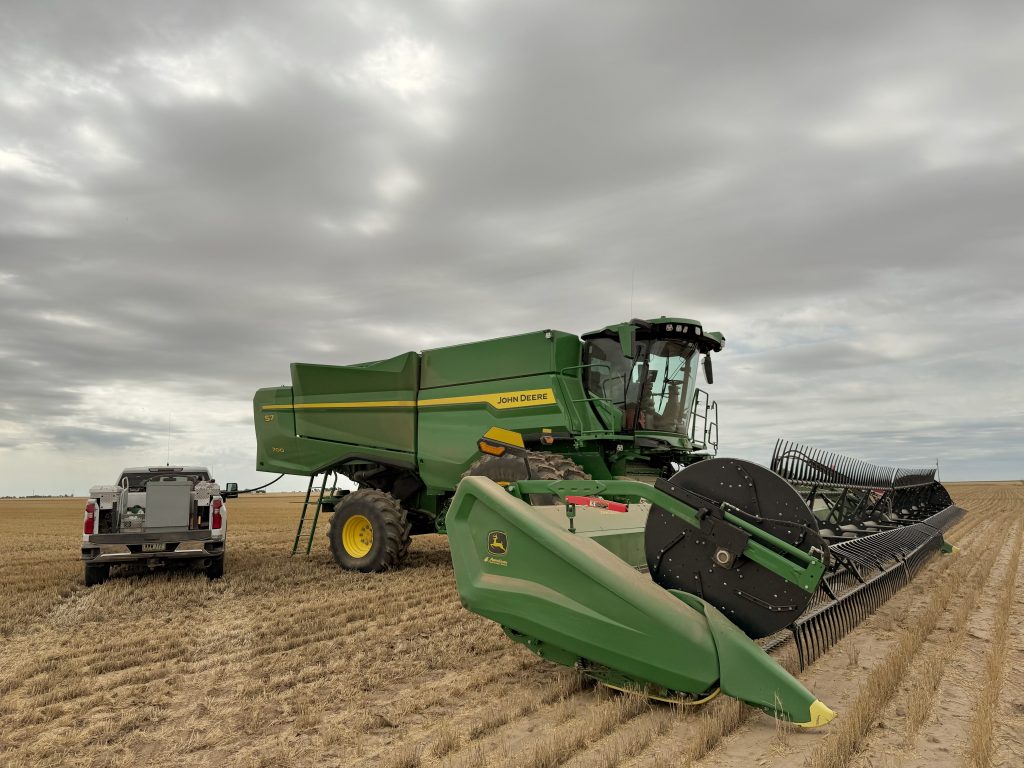
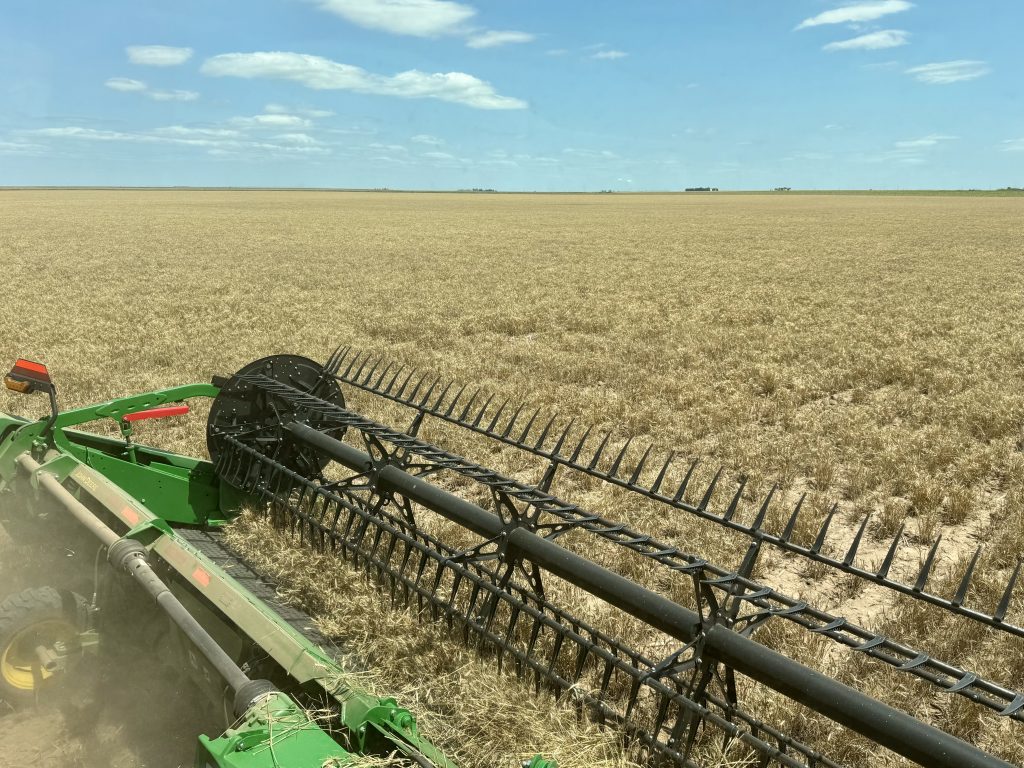
Once we started harvesting here we found the quality of the crop surprisingly good. Test weights and protein levels have been high, but yields have been more of a mixed bag. Irrigated circles maintained their expected high yields, but dry land fields weren’t so lucky. We’ve seen a range of 20-50 bushels per acre, but you don’t have to look too hard to find abandoned fields. State reports have estimated up to 20% of the acres in this area won’t be worth harvesting, and total production will likely be down by around 40% compared to a typical year.
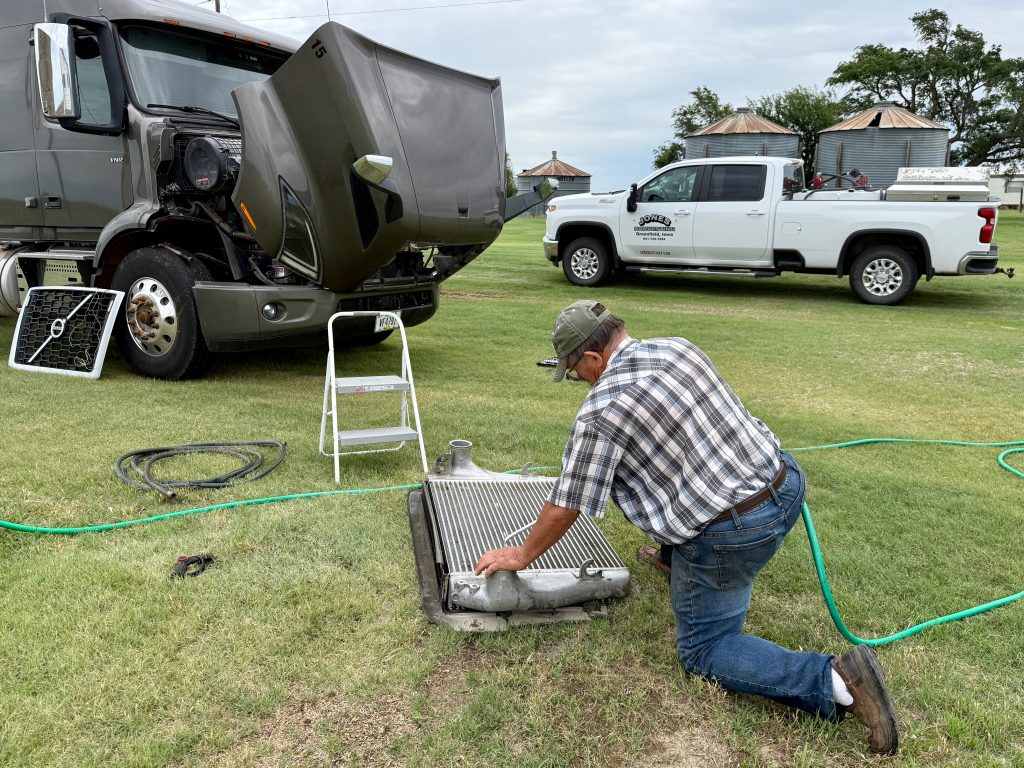
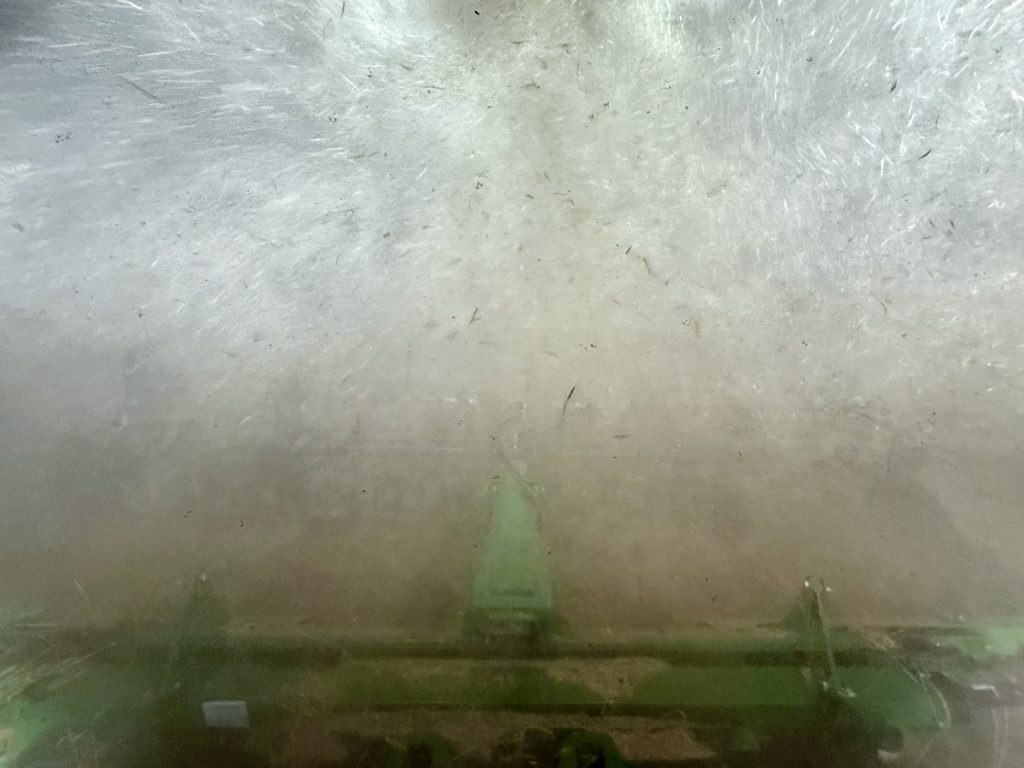
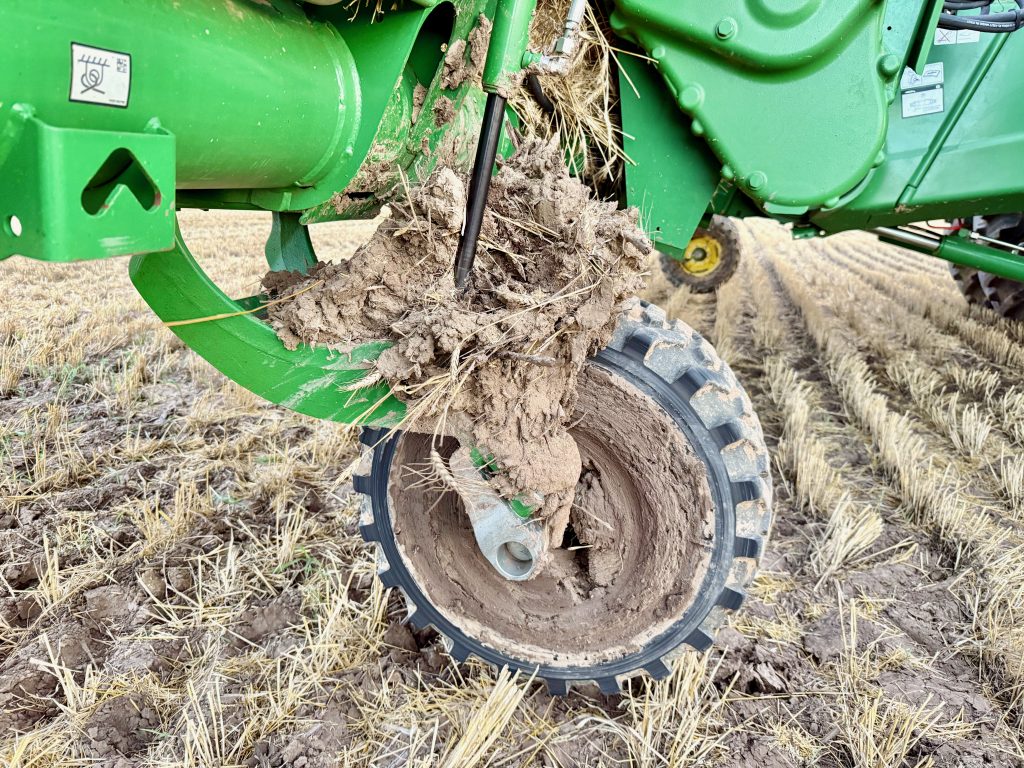
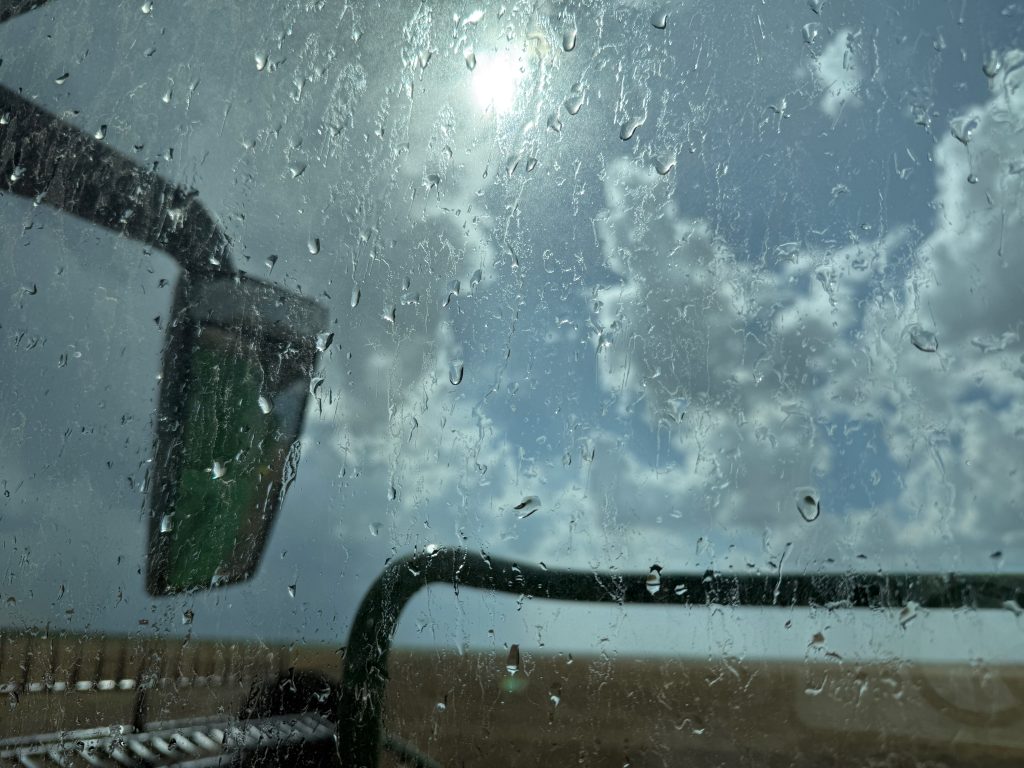
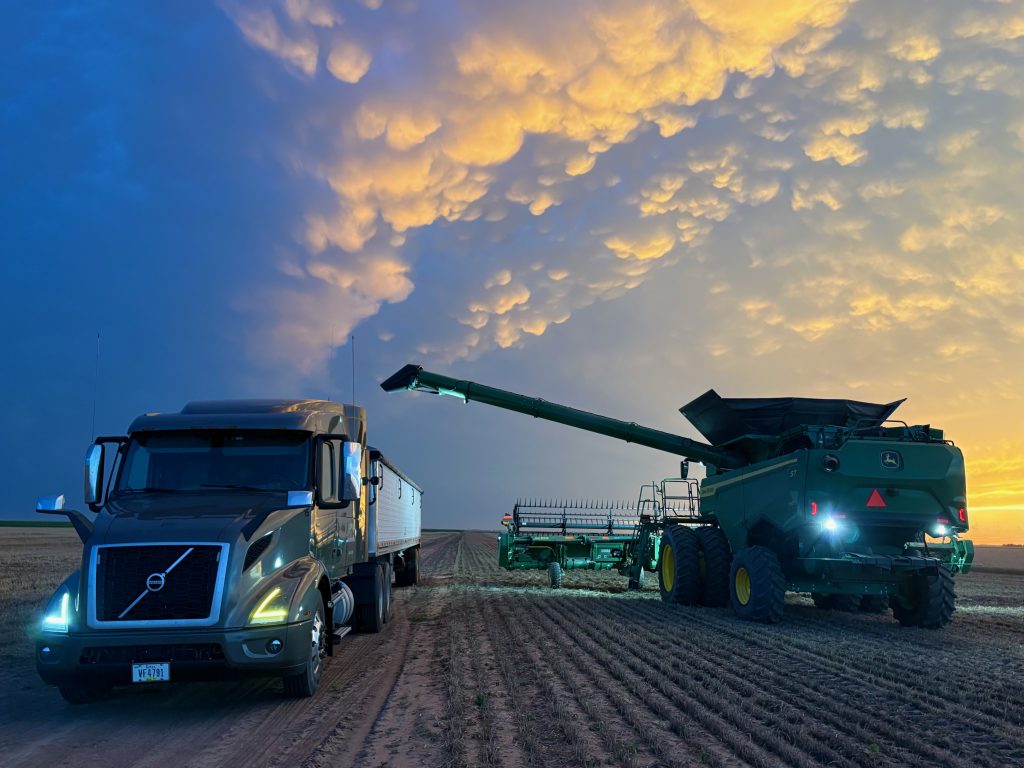
But harvest has been repeatedly interrupted by late-day storms bubbling up nearly every night. Once again, the rain is desperately needed, but the timing is rather annoying. Also annoying are the mosquitoes and mud that’s been left behind. It’s required low-lying areas to be left unharvested until the standing water soaks away. It’s true some places have received more rain in the last few weeks than the previous twelve months combined. Duals and four-wheel drive are always appreciated in these types of conditions, but it takes some of the fun out of harvesting when getting stuck at any moment is a real possibility.
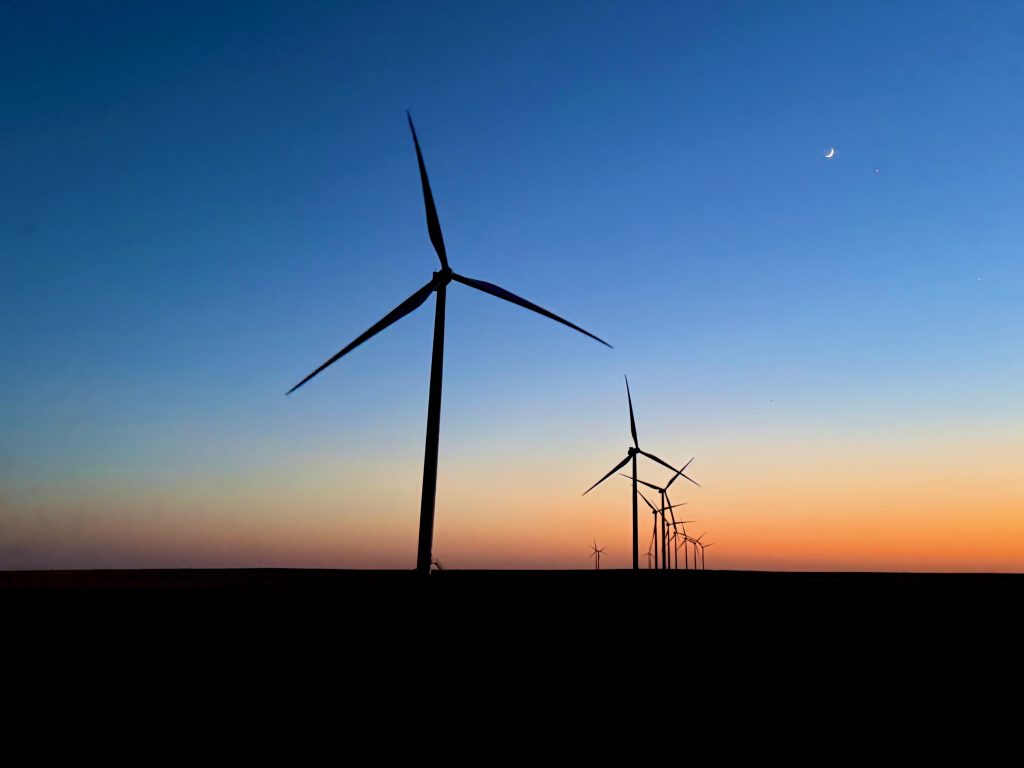
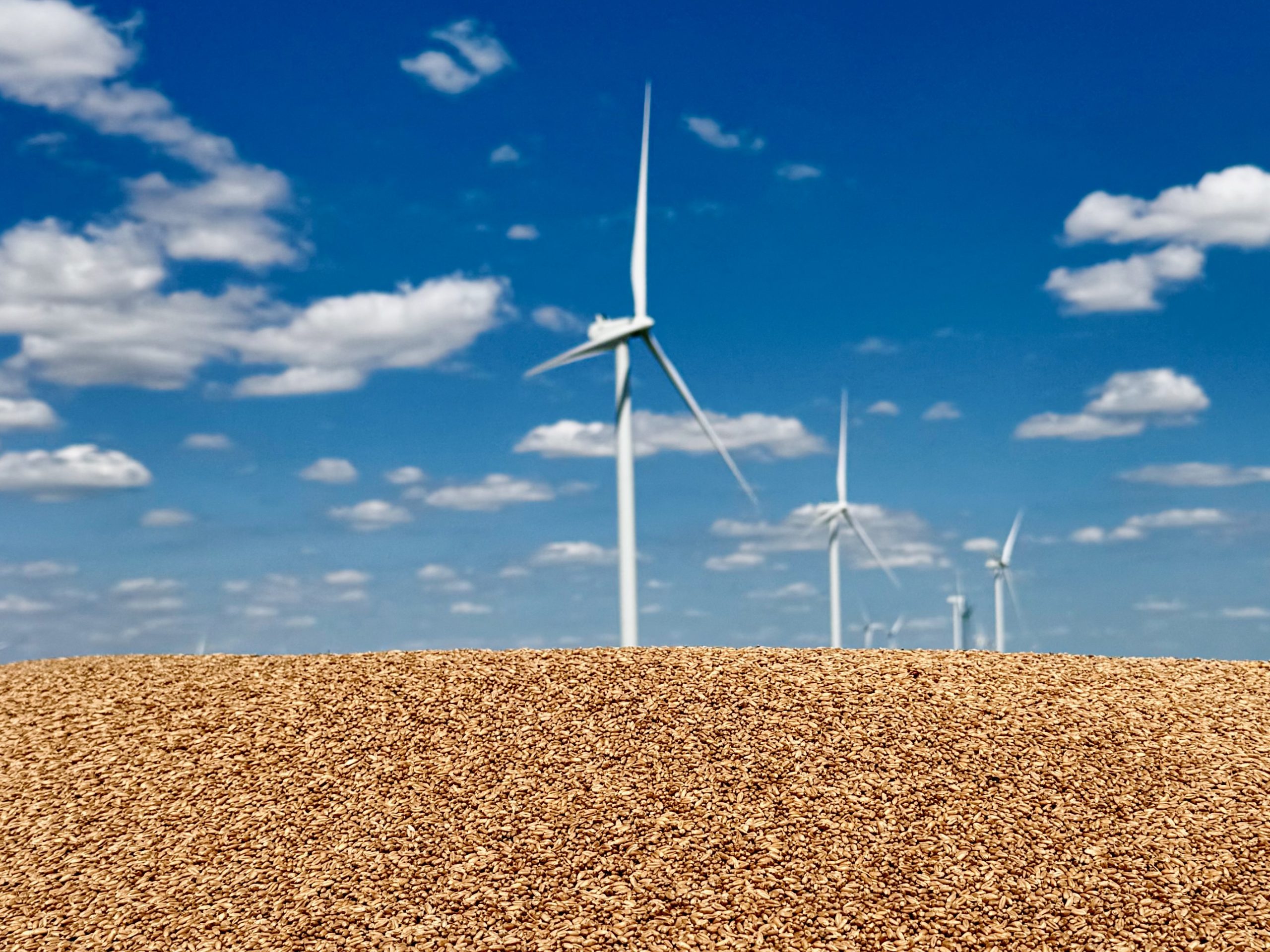
But ground conditions are improving each day, thanks in large part to 100° temps and the strong winds so prevalent here. I always think of Kansas as where the wind and wheat meet. We work around hundreds of wind towers in this area, and it’s a reminder both wind and wheat are harvested here. This year the wind seems more abundant than the wheat, but the crop has been far from a complete failure…especially when compared to Texas and Oklahoma.