The path to profitability begins with better management
With crop prices facing pressure from strong global supplies and production costs remaining elevated, producers are entering the 2027 season with tighter profit margins. For experts like Bob Maltsbarger, senior research economist with the University of Missouri’s Food and Agricultural Policy Research Institute, those conditions highlight the importance of strong financial management decisions.
“We’ve got generally softer crop prices, and yet we have elevated crop inputs,” Maltsbarger said. “Overall, that means that for the crop side especially, we’ve got tight margins.”
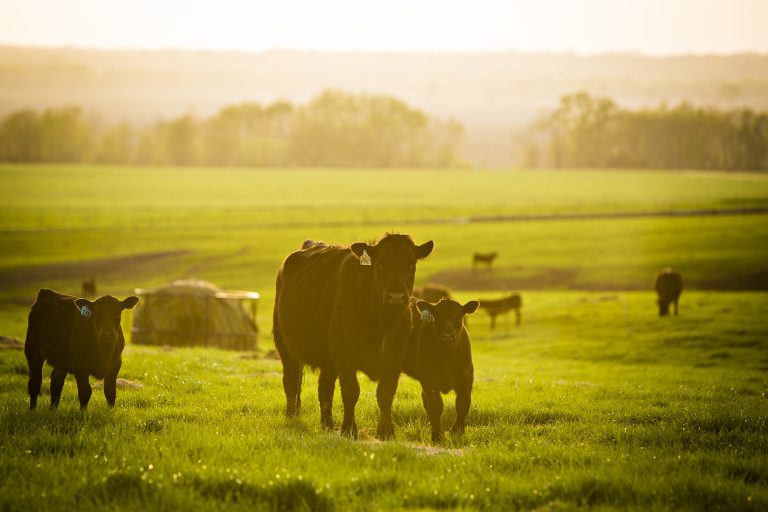
Due to these tighter margins, producers likely will have less room to make costly management mistakes. This makes financial decisions such as understanding production costs and managing expenses increasingly important. Pictured above Cattle grazing at the Thompson Research Center near Spickard, Missouri. The center is owned and operated by Mizzou’s College of Agriculture, Food and Natural Resources. Photo by Kyle Spradley (Courtesy of the University of Missouri)
Understanding the true cost of production
According to Mark Dikeman, executive director of the Kansas Farm Management Association, producers may not consider their true cost of production. While producers are likely knowledgeable about how much they spend on things like seed, fertilizer, chemicals or livestock feed, Dikeman said those figures alone can’t tell a complete financial story.
“Within KFMA, we work with producers to calculate the true economic cost of their operation,” he said.
That includes accounting for opportunity costs such as assigning a value to operator and family labor and recognizing the value of owned land or other assets used by the operation.
“From a business standpoint, in the long run, you would like to be able to cover your opportunity costs,” Dikeman said. “You also need to account for paying yourself a wage for your labor and the value of owned land that is used by the farming operation.”
Looking at each enterprise individually can also reveal opportunities that might otherwise go unnoticed. Dikeman pointed to cow-calf operations that produce their own hay as an example. While raising hay may seem less expensive than purchasing it, he said producers should include machinery ownership, labor, fuel and other ownership costs when making that comparison.
“Oftentimes we find that when looking at the true cost of production, which includes these economic costs, it is higher than what it would cost to purchase hay on the open market,” he said.
Making smarter marketing decisions
However, managing profitability requires more than controlling costs. With crop prices under pressure, Maltsbarger suggests that producers should strongly consider pricing portions of their expected production when opportunities arise instead of just waiting until harvest.
“When margins are tight and potentially in the red over total cost for farmers, taking advantage of the rallies to proactively market their crops is really what sets them up to make sure that they stay in the black for the year,” Maltsbarger said.
While looking ahead to the 2027 growing season, Maltsbarger touched on how he believes current market conditions could also influence crop rotations. For example, if corn yields remain strong and prices soften further, soybeans may become more attractive because they require less nitrogen fertilizer than corn.
“With input prices staying high, farmers may need to consider what they need to do to stay profitable next season,” he said. “That also includes if they already have all this season’s crop basically marketed or have a good plan for what they’re going to do with it.”
Maltsbarger also explained how producers should be looking into other risk management tools like crop insurance. Recent changes under the One Big Beautiful Bill give producers more flexibility when selecting coverage, creating another opportunity to review risk management strategies.
“One of the key changes under the One Big Beautiful Bill is the flexibility between ARC, PLC and crop insurance,” Maltsbarger said. “Producers can now use supplemental coverage options with either program, giving them more options to manage risk.”
Avoiding tax-driven decisions
While reducing tax liability can be part of farm management, not carefully considering how these financial decisions affect the long-term health of their operation is a trap Dikeman has seen many people fall into. He explained that producers should avoid making purchases or changes solely to lower the amount of taxes they pay.
“I think people can almost develop a fear of paying tax,” he said. “None of us like to pay taxes, that’s pretty obvious. However, I think a lot of producers fall into a mindset that leads them to make management decisions they might have not made otherwise simply to avoid income tax.”
He added that successful operators understand that taxes are a normal part of the business, and that worrying too much about taxes might make building long-term wealth more difficult.
“We like to look at things from the standpoint of maximizing after-tax dollars, rather than minimizing income tax,” Dikeman said. “That is a habit or a viewpoint I’ve seen in successful operators and successful business owners. They understand that taxes are part of a normal business operation, and it indicates that you’ve made money and ultimately isn’t that the goal of every business?”
Preparing for the future
Since agriculture operates in cycles, Dikeman heavily emphasized that producers should be using their profitable years as an opportunity to prepare for future downturns. Building financial flexibility during “strong” years can help operations withstand those more difficult periods.
He added that producers who focus on long-term financial health are better positioned to make decisions when markets become more challenging.
“There are going to be cycles in agriculture,” Dikeman said. “When things are good, set some money aside. Don’t be afraid to pay down some debt, or set some cash aside, to prepare for times when things are tight.”
Chase Pray can be reached at [email protected]
Related coverage and resources
- Related on HPJ: Mizzou’s FAPRI notes separate path for grain and beef producers
- Related on HPJ: Policy experts: Finishing farm bill still important
- Outside resource: University of Missouri FAPRI — 2026 U.S. Agricultural Market Outlook