USDA announces major investment in American fertilizer manufacturing capacity
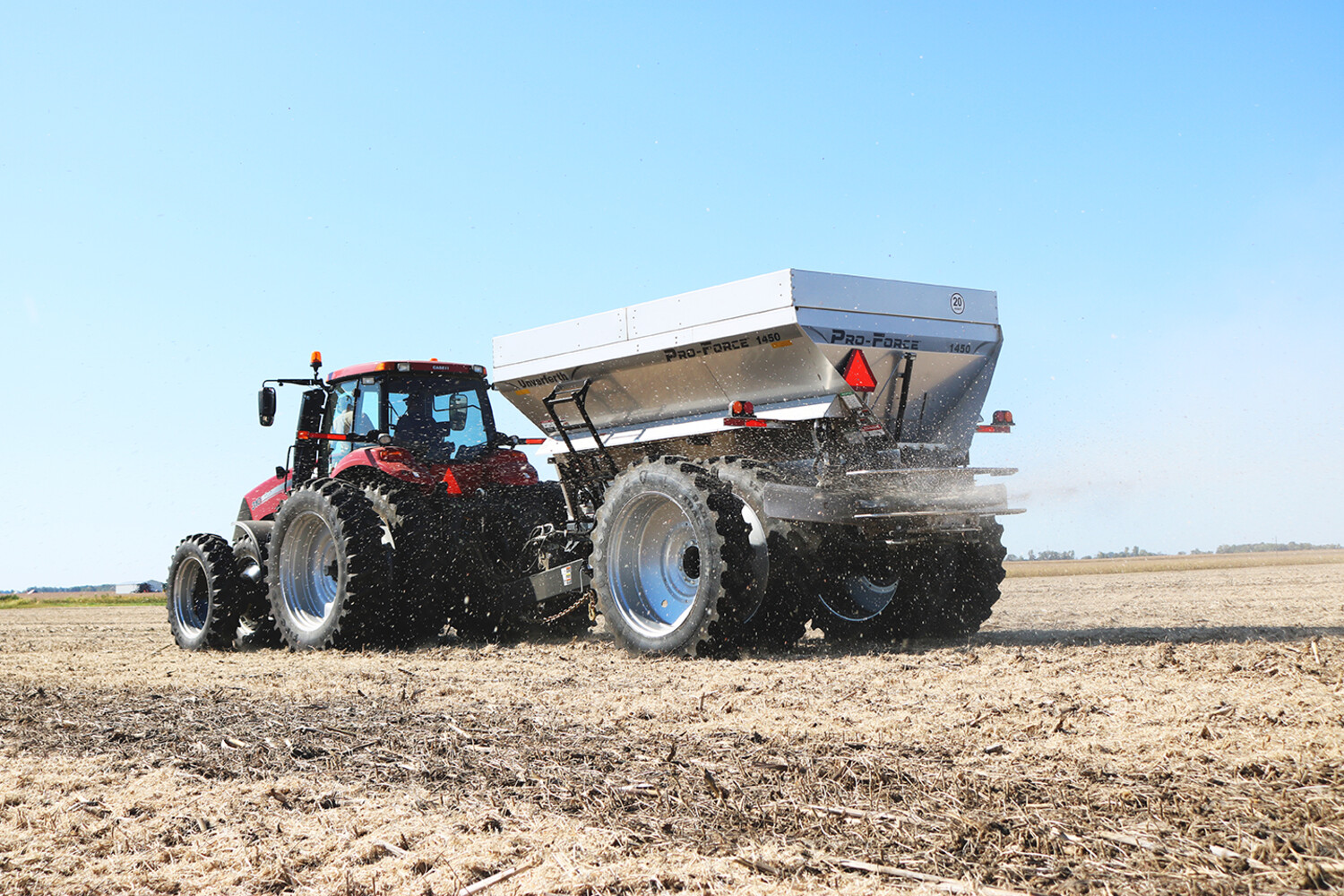
The U.S. Department of Agriculture recently selected eight projects representing more than $1.3 billion in American fertilizer investment.
On Oct. 22, Vice President J.D. Vance and Secretary of Agriculture Brooke Rollins, announced the projects to receive funding through the USDA Fertilizer Investment and Expansion for Long-Term Domestic Supply Program.
According to USDA, the selected projects represent more than $1.34 billion in total proposed investment, including approximately $573 million in proposed USDA funding, to strengthen domestic fertilizer manufacturing, reduce America’s dependence on foreign suppliers, and increase long-term fertilizer availability for American farmers.
“1.87 million farmers who are farming over 8.74 million acres all across the United States of America are going to have fertilizer at lower costs that is made by Americans,” Vice President J.D. Vance said in a news release.
Rollins called this another move forward for farmers and toward American fertilizer independence.
“As you all know, the high cost of fertilizer is not a new issue. The cost of urea, potash, MAP, DAP, ammonia, and UAN all rose very swiftly in 2022,” she said. “And compared to those highs, urea is actually down 52% today. Potash is down 50%, ammonia is down 42%, UAN 39% lower, DAP is 19% lower, and MAP is down 18%. Obviously, great progress, but we’ve got a good way to go to get it down even lower for our great American farmers.”
The administration launched the $500 million FIELDS Program to expand domestic fertilizer manufacturing. Additional funding is being made available from projects under the Biden Administration’s Fertilizer Production Expansion Program, redirecting taxpayer resources toward projects with stronger financial viability, private-sector investment, and measurable manufacturing outcomes.
Rollins said the program helps address one of the most significant supply chain vulnerabilities facing American agriculture—dependence on foreign countries for fertilizer and components to make it.
“America currently imports about 50%, about half of the 20 million tons of fertilizer that we use each year,” Rollins said. “This is a daily threat to the security of our supply chain, and therefore a daily threat to our freedom.”
Rollins said the administration has already taken “a series of aggressive actions” to expand fertilizer access and affordability. Import restrictions from Venezuela have been waived and countervailing duties on phosphate fertilizer were lifted.
“We saw, fortunately, some good results of that,” she said. “We also used targeted Jones Act waivers to keep fertilizer moving during supply disruptions, including nearly 150,000 metric tons of anhydrous ammonia and nearly 32,000 metric tons of MAP.”
Other actions aimed at helping producers include an hours of service flexibility—allowing farmers to move fertilizer where they most need it, especially before planting season. Relaxing diesel exhaust fluid rules also helped reduce repair costs and relieve extra pressure on urea. Rollins said the Department of the Interior designated phosphate and potash as critical minerals, and USDA launched new fertilizer transportation and pipeline rate data to improve market transparency.
“Just as crucial to the needs of our farmers are ongoing actions to build long-term fertilizer production capacity,” she said.
For the long-term, Rollins said there are other programs offered by various departments within the government.
Once the projects announced Oct. 22 are operational, Rollins expects the initial investments to “result in over a million tons of expanded annual domestic fertilizer production and capacity, including a 40% increase in domestic potash production, 4% increase in domestic nitrogen, 4.5% in nitrogen fertilizer price decreasing, and a 5% decrease in potash prices.”
“For the long term, we expect all of these prices to come down as we’re reshoring fertilizer back to America,” she said. “At the end of the day, this is about building greater input independence, so that America’s ability to farm and feed ourselves is no longer beholden to foreign nations and unstable global markets.”
FIELDS emphasizes financially viable, implementation ready projects with committed private investment, demonstrated market demand and measurable production outcomes, unlike previous fertilizer investments which struggled to reach construction and operation.
According to USDA, America’s fertilizer industry has become increasingly consolidated, leaving farmers with fewer suppliers and less competition. Four companies control approximately 77% of North American nitrogen fertilizer production capacity, two companies account for more than 90% of phosphate production capacity, and two companies produce approximately 90% of North America’s potash.
The projects will support new and expanded manufacturing capacity for nitrogen, phosphorus, potassium, and sulfur fertilizers across the United States. These investments are expected to support approximately 1.08 million tons of annual domestic fertilizer production and capacity across the selected projects.
The eight projects selected to move forward in the FIELDS funding process include:
TalusAg–Iowa, Kentucky, Minnesota, Tennessee, Nebraska, Illinois, and South Dakota: Selected for approximately $99.8 million in proposed USDA funding toward a $270.2 million project to deploy 20 modular ammonia manufacturing units across 11 locations in seven states. Using American energy, air, and water, the systems are expected to produce approximately 130,000 tons of anhydrous ammonia annually, bringing domestic fertilizer manufacturing closer to the farmers who depend on it.
Peace Valley–Florida: Selected for approximately $19.9 million in proposed USDA funding toward a $50.6 million project to expand fertilizer manufacturing in Bartow, Florida. The project is expected to produce approximately 250,000 tons annually of nitrogen, phosphorus-, potassium-, and sulfur-containing fertilizer products.
PCI Nitrogen–Texas and Oregon: Selected for approximately $100 million in proposed USDA funding toward a $200 million project to modernize fertilizer manufacturing facilities in Pasadena, Texas, and St. Helens, Oregon. The improvements are expected to support approximately 148,280 tons of annual fertilizer production, including ammonium sulfate and urea.
Intrepid Potash–New Mexico: Selected for approximately $139 million in proposed USDA funding toward a $265 million project to construct a sulfate of potash manufacturing facility near Carlsbad, New Mexico. The proposed facility would produce approximately 220,000 tons annually and establish an additional domestic source of this important specialty fertilizer.
AdvanSix–Virginia: Selected for approximately $47.4 million in proposed USDA funding toward a $98.1 million project to modernize and expand an existing ammonia manufacturing facility in Hopewell, Virginia. The project is expected to produce approximately 84,000 tons of anhydrous ammonia annually.
SUL4R-PLUS Illinois–Illinois: Selected for approximately $34.9 million in proposed USDA funding toward a $69.7 million project to expand an existing sulfur fertilizer manufacturing facility in Marissa, Illinois. The project will add a manufacturing line and improve storage and transportation infrastructure to support approximately 100,000 tons of annual sulfur fertilizer production.
True Organic Products–California, Oregon, and Arizona: Selected for approximately $15.3 million in proposed USDA funding toward a $30.6 million project to expand fertilizer manufacturing at facilities in Helm, California; Boardman, Oregon; and Arlington, Arizona. The project is expected to support approximately 142,805 tons of annual fertilizer production using agricultural byproducts.
Agriculture Project Holdco–Kansas and Indiana: Selected for approximately $116.9 million in proposed USDA funding toward a $360 million project to develop fertilizer manufacturing facilities in Lewis, Kansas, and Fair Oaks, Indiana. The facilities would convert dairy manure into approximately 4,100 tons of liquid ammonium nitrate fertilizer annually, creating additional domestic fertilizer production capacity.
The FIELDS Program is administered by USDA Rural Development’s Rural Business-Cooperative Service using Commodity Credit Corporation authorities.
Additional information is available through USDA Rural Development at www.rd.usda.gov.
Kylene Scott can be reached at 620-227-1804 or [email protected].